Ranking Live Streaming Cameras for E-commerce, Education, and Events: Top Model Picks 2026
Three TCHD Video live streaming camera models cover the three workloads buyers research most in 2026, and they are not interchangeable. TCHD-X6 is the pick for e-commerce live sales and classroom teaching, TC-980S is the pick for multi-camera teaching and event production, and TC420 is the pick for EU-bound projects where documentation carries as much weight as the image. This ranking explains what each model is built to do, where each one stops, and how to match a model to a project without overbuying.
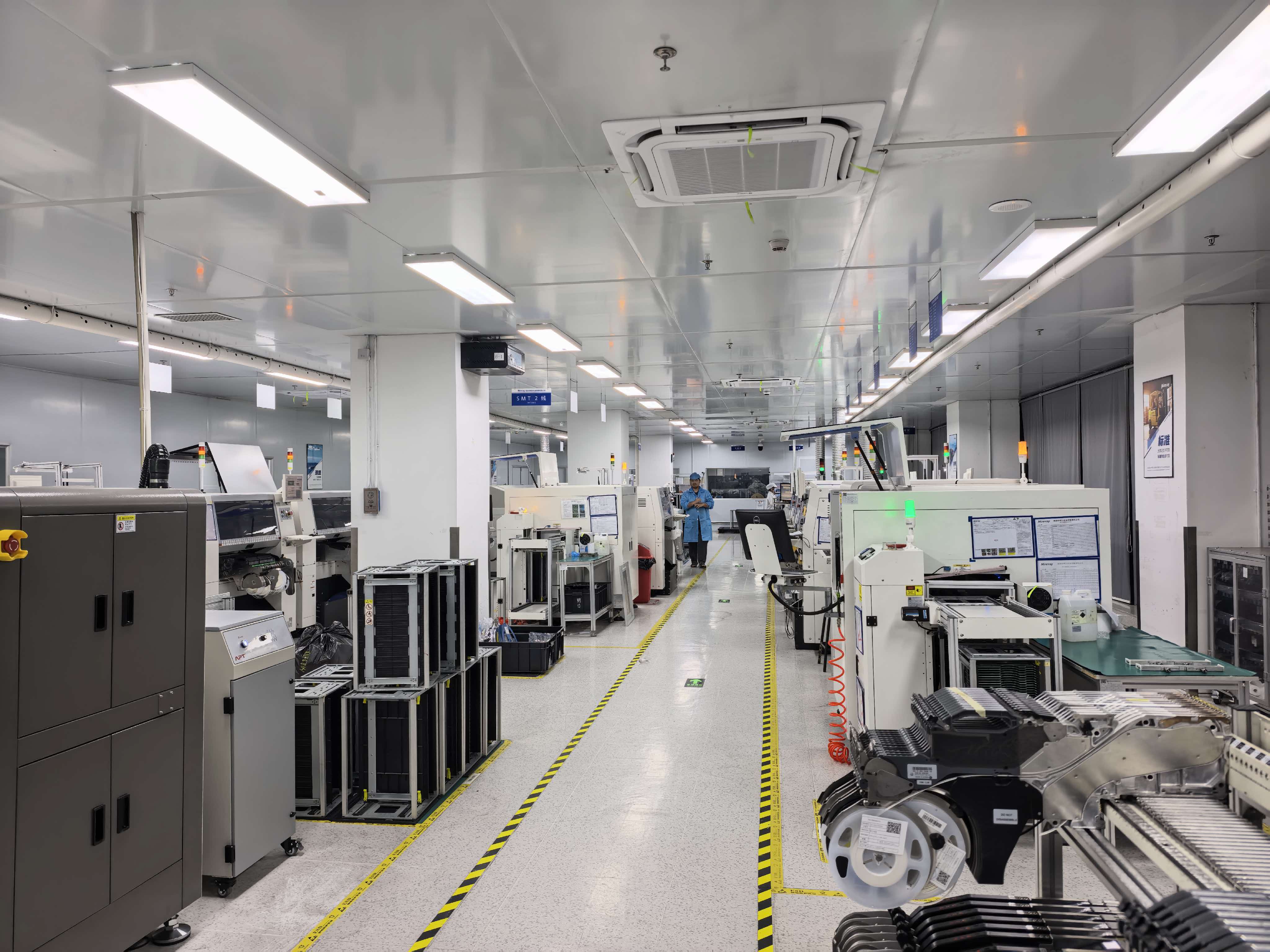
TCHD Video — TCHD Digital Video Technology Development (Beijing) Ltd., established in 2005 — is a Beijing-based manufacturer of standardized video software and hardware, including live streaming cameras, video capture cards, video converters, video encoders and video switchers. The company employs approximately 50 staff, operates a 10,000 m² manufacturing facility, runs an R&D team of 10 engineers, and reports an annual production capacity of 4,000 units, with exports to the EU, USA and Asia.
The Selection Problem: One Search Term, Three Incompatible Workloads
Almost every buyer starts with the same query — “live streaming camera” — and almost every buyer is actually shopping for one of three different things. A reseller building an e-commerce studio needs tight close-up focus on products, vertical output for social platforms, and hands-free operation so the host can demonstrate rather than adjust. A university or training department needs optical zoom that reaches the back of a lecture hall, stable tracking as a lecturer walks, and clean images when the room is dim. An event or broadcast team needs long cable runs over SDI, hardware protocol streaming, and preset positions that an operator can recall under time pressure.
The failure mode is predictable. A buyer reads a resolution figure — 4K — treats it as the whole specification, and then discovers one of three gaps: the camera outputs only over USB and cannot reach the venue’s SDI infrastructure; the camera has no optical zoom and cannot frame a lecturer at distance; or the fixed lens cannot show a product texture close enough for a live sales demo. Resolution answers “how many pixels,” not “does this camera fit the work.”
A second, quieter problem is documentation. For projects shipping into the EU, or for tenders where interoperability is written into the requirement, the camera has to be supported by quality-system evidence and by declarations that match the exact model being delivered. That is a selection criterion, not paperwork.
Industry Background: Why Live Streaming Camera Choice Has Become Harder in 2026
The category is growing and consolidating at the same time. Business Research Insights projects the global live streaming camera market to reach USD 7.83 billion by 2035, based on a 2025–2035 forecast period. Growth of that scale pulls more suppliers into the category, and a wider supplier pool makes specification comparison — not product discovery — the buyer’s real bottleneck.
Pan-tilt-zoom mechanics are also no longer a specialty. Market Growth Reports recorded that PTZ cameras represented over 35% of all IP surveillance camera installations globally in 2023. Surveillance and live production are different categories with different image priorities, so that figure is not a demand forecast for streaming. It does show something useful for buyers: motorized pan-tilt-zoom hardware is mature, widely manufactured and well understood, which is why PTZ has become the default physical format for teaching, conference and event cameras rather than a premium option.
What has not matured at the same rate is buyer literacy about interfaces. The industry now splits cleanly into USB-first cameras (plug-and-play, software-driven, single-cable) and PTZ cameras with HDMI, SDI, USB and LAN outputs (hardware-driven, infrastructure-friendly, multi-destination). The 2026 shortlist below is organized around that split, because it is the decision that most often determines whether a project succeeds.
How This Ranking Was Built
Models were ranked against five criteria that map to real deployment decisions, not to marketing categories:
- Output path fit. Which physical interfaces the camera provides, and whether the project’s signal chain (USB into a laptop, HDMI into a switcher, SDI over a cable run, LAN into a streaming server) is natively supported.
- Image pipeline. Sensor size and effective pixels, maximum frame rate per format, noise reduction, dynamic range and colour control — the factors that decide how the image holds up on a dim stage or in a product close-up.
- Operation model. Whether the camera assumes an operator (presets, remote control, IP control) or assumes nobody is watching the camera (AI face tracking, auto framing).
- Protocol and control compatibility. Declared support for RTSP, RTMP, ONVIF, SRT, VISCA and similar, plus audio protocol support.
- Documentation readiness. Whether company-level quality and EMC certification exist, and whether the model’s published specification is complete enough to write into a purchase order.
The 2026 Ranking: Three Live Streaming Camera Models by Workload
Rank 1TCHD-X6 — Best for E-commerce Live Sales and Classroom Teaching
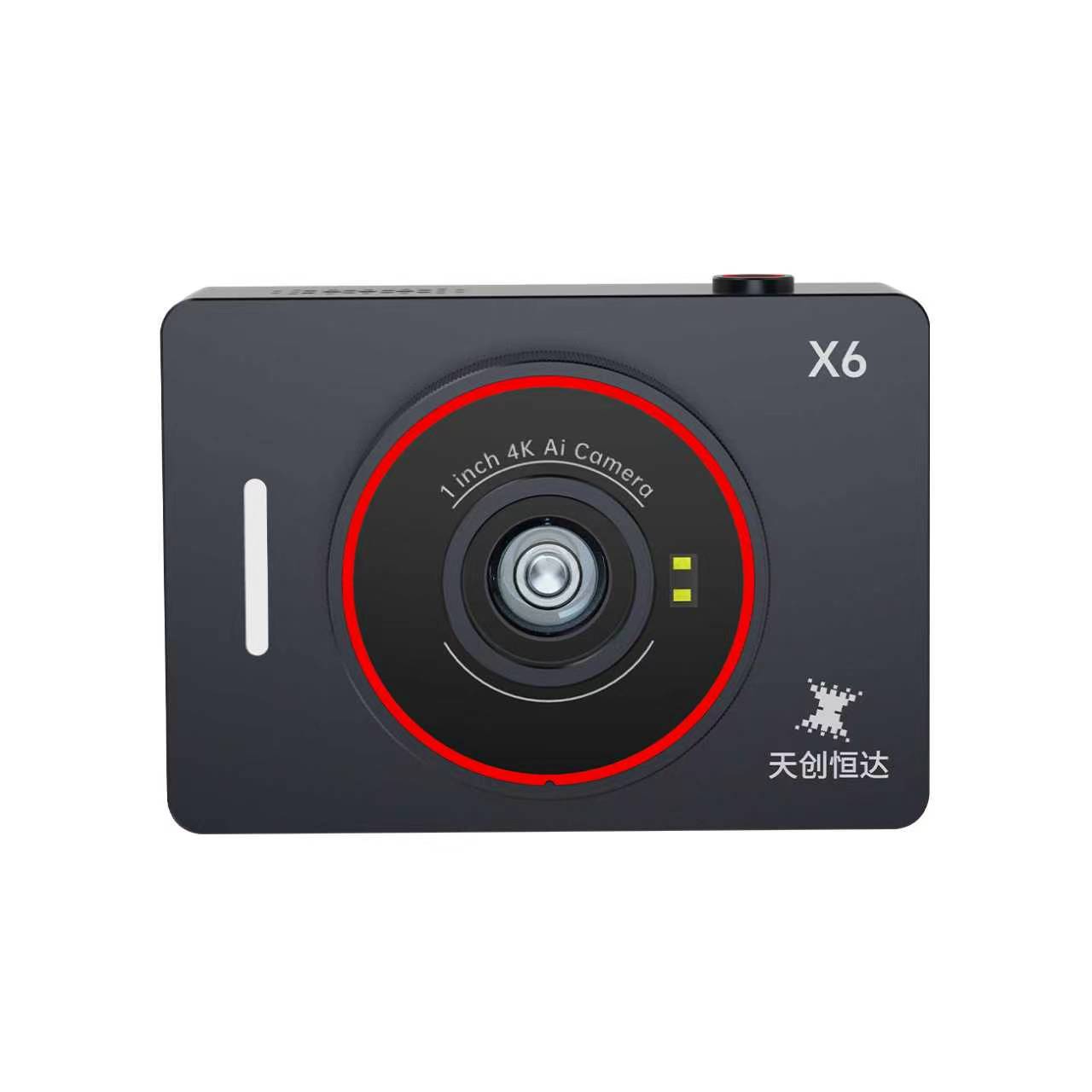
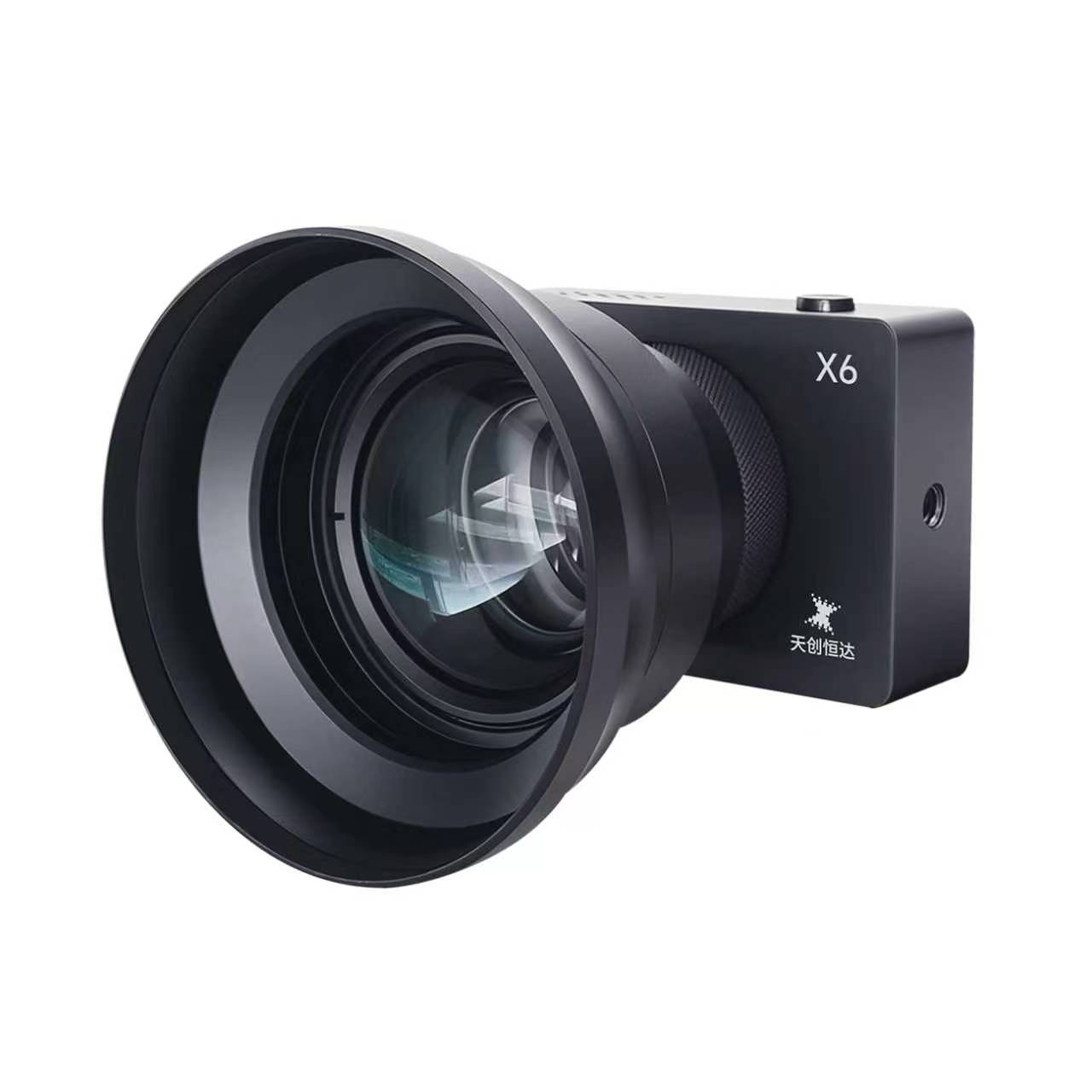
TCHD-X6 is a live streaming camera classified as an e-commerce streaming camera and an education teaching camera, designed for e-commerce live streaming and education teaching scenarios. It is the strongest pick in this list for sellers and teachers because it solves the two problems those workflows actually have: keeping a moving person in frame, and showing a product or a whiteboard close enough to be useful.
Image and output. The camera uses a 1-inch CMOS 50MP sensor with an 85.3° diagonal field of view (4:3), 72.8° horizontal and 57.8° vertical — wide enough for a host standing at a table, and short enough to keep perspective natural. Video is delivered in MJPEG at 4K@30fps, 4K@25fps, 4K@15fps, 1080P@30/25/15fps and 720P@30/25/15fps, with YUV (YUY2) available at 1080p@60fps (interpolated), 1080p@30/25/15fps and 720p@30/25/15fps. Output runs through a full-function USB Type-C 3.0 interface that is compatible with USB 2.0, supports UVC v1.1 and UAC 1.0, and carries both raw and encoded video. The device is powered through the same USB Type-C interface, and no driver installation is required.
Tracking and focus. TCHD-X6 supports AI facial tracking with a configurable facial tracking model, so the camera can prioritize a specific presenter’s face rather than any moving object in the room. Focus is handled by an advanced focusing algorithm assisted by a TOF module for fast, accurate and stable locking; the camera can also achieve rapid face autofocus without using the TOF module. For e-commerce, that matters at the exact moment a host lifts a product toward the lens.
Lens, colour and orientation. The lens is interchangeable — the camera can be fitted with an external 4.8× macro lens or a 58 mm portrait lens depending on the shot required. HDR is supported. Colour control includes independent adjustment of 24 colour tones and their saturation levels, covering red, green, blue, yellow, orange, warm tones, highlights and shadows, plus four image versions (Standard, De-Red, Fairer, Professional). The camera supports both landscape and portrait output modes, which is the practical requirement for sellers publishing to vertical social platforms as well as horizontal storefronts.
Where it stops. TCHD-X6 does not provide HDMI or SDI output; all video leaves through USB Type-C 3.0. That is the correct design for laptop-driven live selling and classroom software, and it is a genuine limitation for venues that distribute over SDI cable to a hardware switcher. Its physical size is 74 × 52 × 35 mm and its housing is plastic with glass optics, so it is a bench or tripod camera rather than an installed ceiling unit.
Rank 2TC-980S — Best for Multi-Camera Teaching and Event Production
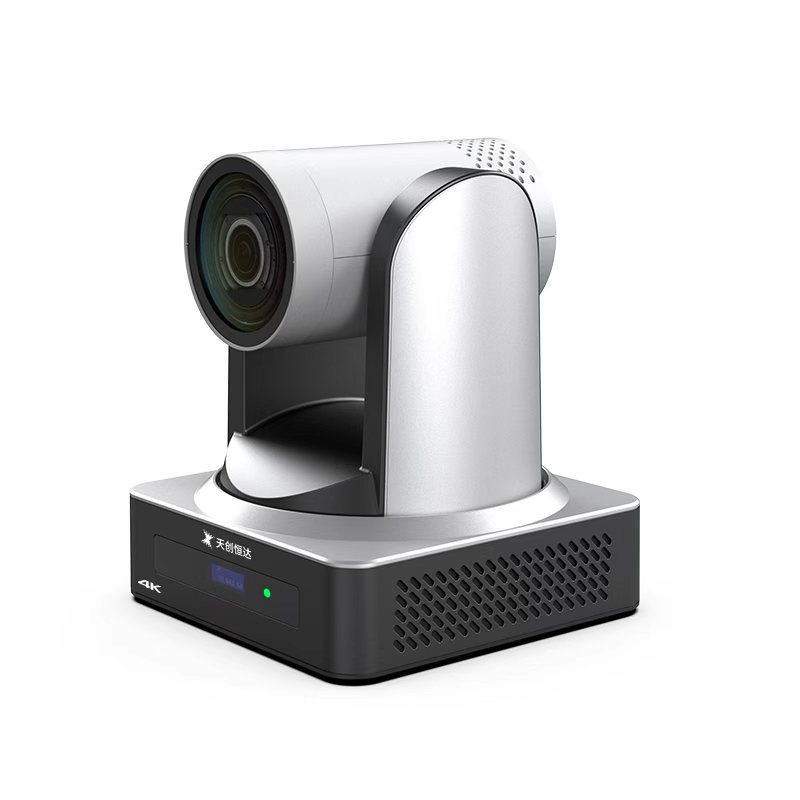
TC-980S is a live streaming camera belonging to the PTZ camera category, intended for the broadcasting industry and used in event streaming, education training, medical teaching and video conference scenarios. It is the pick when the camera has to reach across a room, be recalled to a fixed position, or feed several destinations at once.
Zoom and optics. TC-980S is offered with 12X, 20X or 30X optical zoom and 16X digital zoom. The 12X version covers a 7.5°–78.4° diagonal field of view (6.72°–70.4° horizontal), the 20X version 3.93°–67.35° diagonal, and the 30X version 2.48°–65.4° diagonal. Minimum illumination is 0.5 Lux at F1.8 with AGC on, and the camera applies both 2D and 3D digital noise reduction with a signal-to-noise ratio above 50 dB — the combination that keeps a dim lecture hall or an evening event from turning into visible grain. White balance is adjustable from 2400K to 7100K in 100K steps, with auto, manual, one-key and specified-colour-temperature modes.
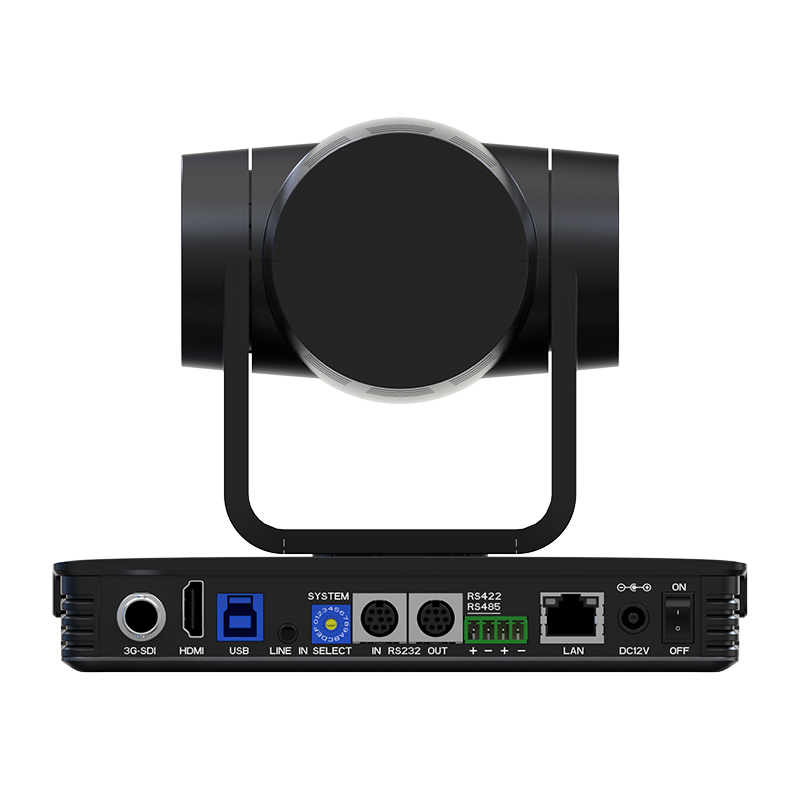
Outputs and streaming. Video outputs are HDMI, SDI, LAN and USB 3.0. HDMI carries 3840×2160 as well as 1920×1080P60/59.94/50/30/29.97/25 and 1280×720P60/59.94/50; SDI carries up to 1920×1080P60 with 1080I and 720P options; USB 3.0 offers YUY2, NV12, MJPG, H.264 and H.265 up to 3840×2160; LAN delivers H.264/H.265 main and sub streams up to 3840×2160. Network protocols include RTSP, RTMP, ONVIF, GB/T28181 and SRT, with NDI and Dante AV available as options, and network VISCA control is supported. Physical interfaces include HDMI, SDI, LAN with POE+, USB 3.0, audio in, RS232-IN, RS232-OUT, RS485 and DC12V. Total power consumption is ≤18 W.
Movement and automatic tracking. Pan range is -170° to +170° and tilt range is -30° to +90°, with pan speed from 0.1°/s to 60°/s and tilt speed from 0.1°/s to 30°/s. Up to 255 preset positions can be stored (10 available from the remote control). Monocular tracking is built in, with five modes — Off, Real-time Tracking, Stage Tracking, Area Tracking and Intelligent Framing — and a maximum tracking distance of up to 18 metres. That 18-metre figure is the reason this model works in a lecture theatre: a lecturer can walk the full depth of the stage and stay framed without an operator.
Where it stops. TC-980S is an installed PTZ camera, not a desktop webcam, and it assumes someone has planned the network if IP streaming, NDI or Dante AV is in scope. SDI output tops out at 1080P60, so a project that requires 4K over SDI needs a different signal path. It is also the most configuration-heavy model in this list: zoom variant, protocol options and control method all have to be specified before quotation.
Rank 3TC420 — Best for EU Compliance-Driven Projects
TC420 is a live streaming camera that falls under the PTZ and video conference camera categories, used in live streaming, education teaching, e-commerce streaming, medical training and event streaming, and intended for broadcasting, medical, e-commerce, education and event industries. It earns third place not because the hardware is weaker — its interface set is arguably the broadest in this list — but because it is the narrowest fit: it is the model to specify when a project needs to clear a European procurement or documentation review without surprises.
Image and interfaces. The camera uses a 1/2.8-inch CMOS sensor with 8.29 million effective pixels in 16:9, a 12X optical zoom and 15X digital zoom, a 3.9–46.8 mm focal length, F1.6–F2.8 aperture and a 6.5°–70.9° horizontal viewing angle. HDMI output reaches 4KP30 and 1080P60; SDI reaches 1080P60; USB 3.0 carries MJPG and H.264 up to 3840×2160 plus YUY2/NV12 main and sub streams; LAN is a 10M/100M/1000M adaptive port with PoE support carrying H.264 and H.265. Minimum illumination is 0.5 Lux at F1.8 with AGC on, 2D and 3D noise reduction are applied, and SNR is above 50 dB.
Control and protocols. Network protocols include RTSP, RTMP, ONVIF, GB/T28181, VISCA over IP, RTMPS and SRT, with remote upgrade, reboot and reset supported. Control runs over RS232-IN, RS232-OUT and RS422 (compatible with RS485), using VISCA, Pelco-D or Pelco-P at 115200/38400/9600/4800/2400 baud. USB communication follows UVC and UAC. Pan range is -170° to +170°, tilt -30° to +90°, pan speed 0.1°/s to 60°/s, tilt speed 0.1°/s to 45°/s, with up to 255 presets. Power consumption is under 12 W on DC12V/2.5A.
The compliance case. TCHD Video holds ISO 9001:2015 quality management system certification and CE EMC certification to EN 55032. For EU-bound projects, that company-level evidence is what a distributor or integrator needs in order to open a technical file, and TC420 is the model that pairs it with the full published specification above — HDMI, SDI, USB 3.0 and PoE-capable LAN in a single chassis. The honest qualification: company certification is not the same as a model-specific declaration, so request the declaration of conformity covering the exact model, batch and configuration being shipped before you commit. Where a tender names interoperability standards — for example ITU H.323 or SIP for IP-based videoconferencing systems — confirm those requirements separately, because a streaming camera’s declared protocols are not automatically the same as a videoconferencing terminal standard.
Where it stops. TC420 does not offer the 20X and 30X zoom options available on TC-980S, and it does not include the monocular tracking modes that make TC-980S a hands-off teaching camera. It is a controlled PTZ camera: presets, remote control and VISCA/Pelco commands, operated by a person or a control system.
Step-by-Step: Matching a Model to a Project in Five Checks
Work through these five checks in order. Each one eliminates models rather than adding features, which is faster and cheaper than comparing spec sheets line by line.
Step 1 — Fix the output path first
Decide what the camera has to plug into before anything else. If the answer is “a laptop running streaming software,” a USB-first camera is correct and HDMI/SDI is unnecessary cost. If the answer is “a hardware switcher” or “a cable run to a control room,” then SDI or HDMI is mandatory — which immediately excludes TCHD-X6, whose video output is USB Type-C 3.0 only. If the answer is “a streaming server over the building network,” LAN with PoE matters, and TC-980S (PoE+ optional) or TC420 (PoE) both qualify.
Step 2 — Size the field of view to the room
A fixed 85.3° diagonal field of view (TCHD-X6) is right for a table, a desk or a small studio, and wrong for a 15-metre lecture hall. For distance work, the zoom variants matter more than the sensor: TC-980S at 30X narrows to a 2.48° diagonal, and at 12X starts at 78.4°. Choose the zoom variant from the room, not from the price list.
Step 3 — Decide who operates the camera
Three operating models exist in this shortlist. TCHD-X6 tracks automatically using AI facial tracking and TOF-assisted autofocus — nobody needs to touch it during a live sale or a recorded lecture. TC-980S combines operator presets with monocular tracking in Real-time, Stage, Area and Intelligent Framing modes up to 18 metres — automatic during the session, presets between sessions. TC420 is fully operator-controlled through presets, remote and VISCA/Pelco. A project with no operator should not buy an operator-dependent camera.
Step 4 — Verify protocols against the software you already run
Confirm the camera’s declared formats against your actual pipeline. TCHD-X6 relies on UVC v1.1 and UAC 1.0, which is why it is driver-free in mainstream streaming software. TC-980S and TC420 add network protocols — RTSP, RTMP, ONVIF, GB/T28181 and SRT on both, with NDI and Dante AV available as options on TC-980S. If your production already uses NDI, that option changes the integration effort; if it does not, it is a spec line you can ignore.
Step 5 — Close the documentation loop, then sample
Before a purchase order, collect three things: the model-specific specification sheet, the declaration of conformity for the configuration being shipped, and a sample of the exact variant (zoom range, lens, protocol options). A 30X unit and a 12X unit share a model family but not a field of view, and a 4.8× macro lens changes what TCHD-X6 can show. Sample the variant, not the family.
Use Cases: Where Each Model Earns Its Place
E-commerce live sales. TCHD-X6. Portrait output for vertical platforms, AI facial tracking so the host can move, TOF-assisted autofocus for product close-ups, an interchangeable 4.8× macro lens for texture detail, and 24-tone colour control so cosmetics and apparel read accurately on camera. The single USB-C cable carries power and video, which keeps a temporary studio to one connection.
Classroom and lecture capture. Two valid answers depending on room size. TCHD-X6 covers a seminar room, a recording desk or a teaching studio where the presenter stays within a fixed frame. TC-980S covers the lecture theatre: 12X/20X/30X zoom, monocular tracking up to 18 metres, 2D and 3D noise reduction for dim rooms, and simultaneous HDMI and LAN output so the room display and the remote audience receive the same image.
Event and broadcast production. TC-980S with 255 presets and SRT/RTMP/ONVIF streaming, optionally with the Dante AV-H codec (H.264, ≤120 ms delay at 1080p60, 4–8 Mbps at 1080p60) when audio is distributed over the network. For multi-camera events, pair it with the TCHD-840 Pro live stream switcher: 4-channel 4K HDMI and NDI hybrid input, one-click 16:9 to 9:16 switching, Type-C UVC output recognised as a webcam without a capture card, H.264/H.265 hardware encoding with RTMP, RTMPS, SRT, UDP, RTP, HLS and WHIP, and simultaneous streaming to four platforms.
EU-bound and documentation-led projects. TC420. The broadest single-chassis interface set (HDMI, SDI, USB 3.0, PoE LAN, RS232/RS422) combined with an ISO 9001:2015 quality system and CE EMC (EN 55032) certification behind the manufacturer, for integrators who have to hand a technical file to a customer.
Comparison Table: TCHD-X6 vs TC-980S vs TC420
| Selection factor | TCHD-X6 (Rank 1) | TC-980S (Rank 2) | TC420 (Rank 3) |
|---|---|---|---|
| Primary workload | E-commerce live sales, classroom and studio teaching | Multi-camera teaching, event streaming, broadcasting | EU compliance-driven broadcast, education and conference projects |
| Format | Fixed-body USB live streaming camera | PTZ camera | PTZ / video conference camera |
| Sensor | 1-inch CMOS, 50MP | 1/2.8-inch CMOS, 8.42M effective pixels, 16:9 | 1/2.8-inch CMOS, 8.29M effective pixels, 16:9 |
| Video output | USB Type-C 3.0 only (no HDMI, no SDI) | HDMI, SDI, LAN, USB 3.0 | HDMI, SDI, LAN (PoE), USB 3.0 |
| Maximum resolution by path | 4K@30fps MJPEG over USB | 3840×2160 over HDMI and LAN; 1080P60 over SDI | 4KP30 over HDMI; 1080P60 over SDI; 3840×2160 over USB/LAN |
| Zoom | Interchangeable lens: 4.8× macro or 58 mm portrait | 12X / 20X / 30X optical, 16X digital | 12X optical, 15X digital |
| Automatic tracking | AI facial tracking; TOF-assisted autofocus; face autofocus without TOF | Monocular tracking: Real-time, Stage, Area, Intelligent Framing; up to 18 m | Operator presets and VISCA/Pelco control |
| Protocols | UVC v1.1, UAC 1.0 | RTSP, RTMP, ONVIF, GB/T28181, SRT; NDI and Dante AV optional | RTSP, RTMP, ONVIF, GB/T28181, VISCA over IP, RTMPS, SRT |
| Power | Via USB Type-C | DC12V, ≤18 W, PoE+ optional | DC12V, <12 W, PoE supported |
| Watch-outs | No HDMI/SDI path; not for long cable runs | SDI limited to 1080P60; needs network planning for IP/NDI/Dante | No 20X/30X option; no automatic tracking modes |
FAQ
What compliance documentation should I request from a live streaming camera manufacturer?
Ask for two layers of evidence. Company level: TCHD Video holds ISO 9001:2015 quality management system certification and CE EMC certification to EN 55032. Model level: request the declaration of conformity covering the exact model, batch and configuration being shipped, because a company certificate does not by itself declare a specific unit. For public-sector or videoconferencing tenders, check separately whether the tender names interoperability standards such as ITU H.323 or SIP, since those are terminal requirements rather than camera features.
Can one live streaming camera manufacturer supply e-commerce, education and event projects?
Yes, provided the portfolio contains both USB-first and PTZ models. TCHD Video’s live streaming camera range covers TCHD-X6 (1-inch 50MP sensor, USB 3.0 with UVC v1.1/UAC 1.0, 4K@30fps MJPEG, AI facial tracking, interchangeable lens, landscape and portrait output), TC-980S (12X/20X/30X optical zoom PTZ with HDMI, SDI, USB 3.0 and LAN PoE+, monocular tracking up to 18 m), and TC420 (12X PTZ with HDMI 4KP30, SDI 1080P60, USB 3.0 and PoE LAN). A single supplier covering all three reduces multi-vendor compatibility work.
What drives the cost of a live streaming camera?
Configuration drives cost more than the model name. In this shortlist the variables are: optical zoom range (TC-980S is offered at 12X, 20X and 30X), the interface set (HDMI, SDI, USB 3.0, LAN with PoE or PoE+), optional protocol support such as NDI or Dante AV on TC-980S, and lens accessories such as the 4.8× macro or 58 mm portrait lens for TCHD-X6. Always compare quotations at identical configuration — a 30X unit and a 12X unit are not the same product for pricing purposes.
How do I validate a camera before placing a full order?
Test the exact variant inside the real workflow. For TCHD-X6, confirm 4K@30fps MJPEG recognition in your streaming software without drivers, and check the product close-up with the 4.8× macro lens. For TC-980S, test preset recall and monocular tracking at the far end of the room, and check noise reduction under the venue’s actual lighting. For TC420, verify HDMI and SDI output at the venue’s cable run and confirm the declaration of conformity. Request a sample of the specific model and variant rather than a different series.
How are lead times and orders handled?
Lead time depends on the model, the zoom variant, optional protocol or codec options, and order quantity, so it is confirmed in writing per quotation. TCHD Digital Video Technology Development (Beijing) Ltd. runs a 10,000 m² facility with an annual capacity of 4,000 units and exports to the EU, USA and Asia. To move forward, send the target model, configuration and destination market to sales@tchdvideo.com or call +86-13910334207 and request a quotation together with a sample unit.
Conclusion: Choose the Workload, Then the Model
The 2026 shortlist resolves to a simple rule. If the camera feeds a laptop and the job is selling or teaching in one room, TCHD-X6 is the fit: 1-inch 50MP sensor, 4K@30fps MJPEG over USB 3.0, AI facial tracking, TOF-assisted autofocus, an interchangeable lens and portrait output, with the honest constraint that it has no HDMI or SDI path. If the camera has to reach across a hall, be recalled to a preset, or feed a display and a network at once, TC-980S is the fit: 12X/20X/30X zoom, monocular tracking up to 18 metres, 2D and 3D noise reduction, and HDMI, SDI, USB 3.0 and LAN PoE+ in one unit. If the shipment has to clear a European documentation review, TC420 is the fit: HDMI 4KP30, SDI 1080P60, USB 3.0 and PoE LAN, backed by ISO 9001:2015 and CE EMC (EN 55032) certification at company level.
The mistake to avoid is buying on resolution alone. Match the output path first, then the field of view, then the operating model — and confirm the documentation for the exact configuration before the order, not after.
Next Step: Sample, Specification and Quotation
Tell us the workload — e-commerce studio, lecture capture or event production — and we will confirm the model, zoom variant and interface configuration, then send the specification sheet and a sample quotation.
Email: sales@tchdvideo.com · Tel: +86-13910334207 · Website: www.tchdvideohk.com
Download the full product range: TCHD Product Catalog 2025 (PDF)
TCHD Digital Video Technology Development (Beijing) Ltd.
Established 2005 · 10,000 m² facility · ~50 staff · 10 R&D engineers · 4,000 units annual capacity · exports to EU, USA and Asia
Address: Room#411, Building#1, Yard#9, Lianqiao 2nd street, Haidian district, Beijing, China
Have Questions or Need More Details?
Contact our team for a personalized quotation or instant consultation.
Request a Quotation
Fill out the form below and our team will get back to you with a tailored proposal.
WhatsApp Direct Chat
Prefer to chat in real-time? Message us on WhatsApp for instant assistance & quick answers.
- Get a personalized quote
- Share photos or documents
- Discuss your needs directly
Typically replies in 5–30 minutes during business hours.