How to Evaluate a Production Switcher Supplier: Hardware, Protocol, and Support Checklist
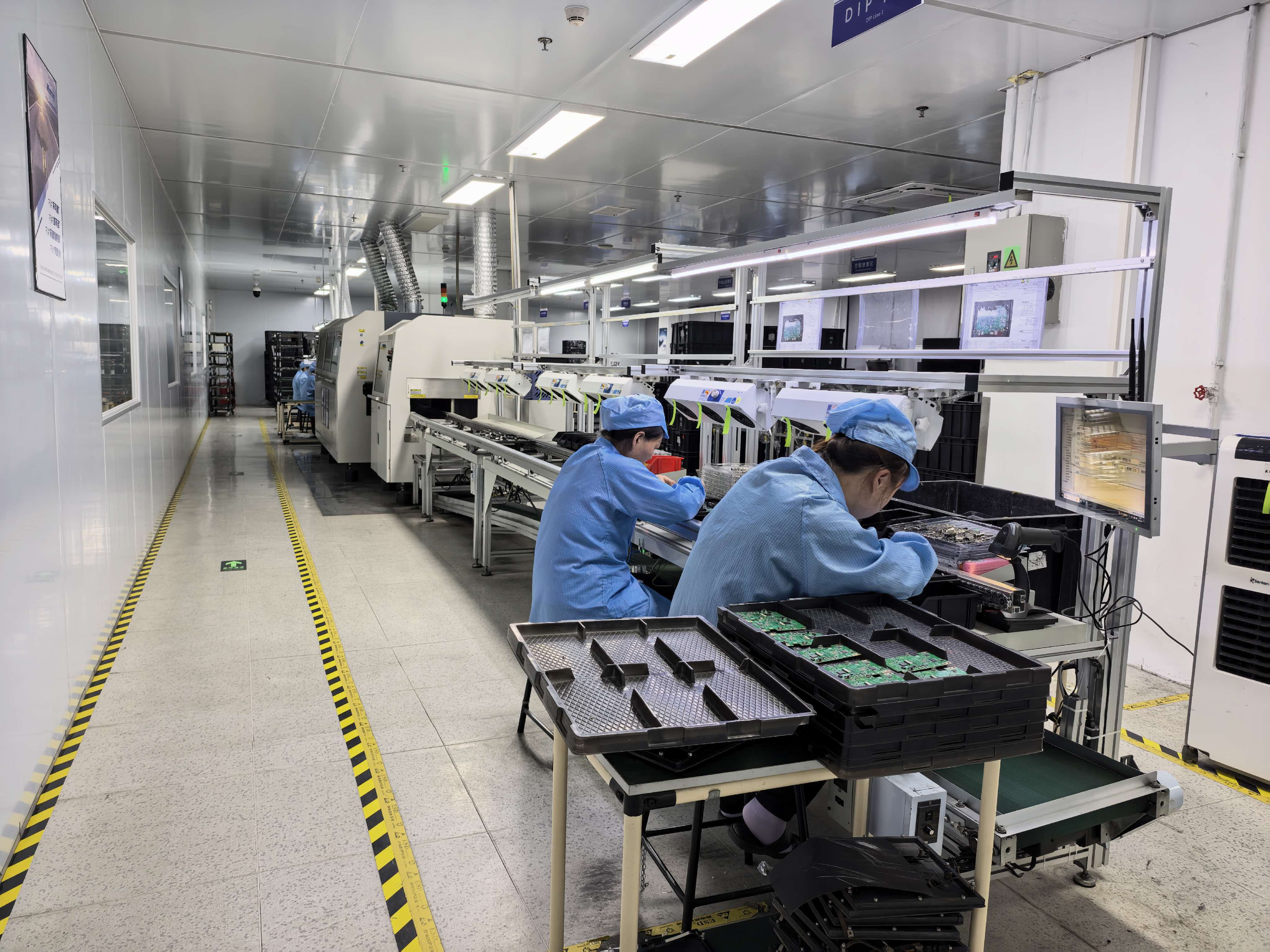
TCHD Video production facility. A decision-stage supplier evaluation should rest on evidence a manufacturer is willing to put in writing.
Shortlisting a production switcher supplier is a decision that has to hold up during the first live event, not just during the quotation stage. Two suppliers can present the same headline numbers and still behave very differently at 20:00 on a Saturday: one chassis stays thermally stable through a six-hour run, one USB output is recognised by the host computer without a driver, one unit really runs four platform streams at the same time, and one supplier can ship a replacement before the next booking.
Short answer: score every production switcher supplier on three layers before you compare price. Hardware — chassis construction, switching architecture, and input/output topology. Protocol — 12G-SDI and HDMI 2.0 input behaviour, driverless UVC output, and how many streaming platforms run concurrently. Support — documented production capacity, R&D headcount, compliance scope, firmware policy, and spare-part flow. Anything the supplier cannot put in writing should be scored as absent, not as probably fine.
TCHD Video (TCHD Digital Video Technology Development (Beijing) Ltd) is a Beijing-based manufacturer of video hardware — live streaming cameras, video capture cards, converters, encoders and production switchers — established in 2005, with a 10,000 m² factory, 50 employees, an annual output of 4,000 units and exports to the EU, USA and Asia. Its switcher line, which includes models such as TCHD-812 Ultra, TCHD-840 Ultra, TCHD-840 Super and TC-UV08, is used in this article as the working reference for how each evaluation item should be evidenced.
Why Supplier Evaluation Breaks Down at the Decision Stage
By the time a buyer reaches the decision stage, the shortlist is usually down to two to four suppliers and the question has quietly changed. It is no longer whether a supplier can build a switcher that handles 4K. It is which of these suppliers can prove, in a document that can be attached to a purchase order, that the unit will behave the way the production needs it to behave.
Three things make that harder than it looks.
Headline specifications converge. Resolution, port counts, SDI and HDMI labels, USB output and multi-platform streaming appear on almost every datasheet in the category. The word supports is rarely defined. A unit that supports four platform outputs sequentially and a unit that runs four platform outputs simultaneously can be described by the same sentence and still deliver different workflows.
The differences sit where datasheets are thin. Thermal behaviour under sustained load, whether switching happens inside an embedded FPGA or in software on a general-purpose CPU, whether the USB port enumerates as a driverless UVC device, how the unit recovers after a power interruption, and whether the multiview layout can be reassigned mid-show are all decision-relevant and all frequently undocumented.
The cost of a wrong answer is paid on site. A switcher that fails a specification check during commissioning costs integration time. A switcher that fails during a live event costs the event. Evaluation exists to move that risk forward, into procurement, where it can still be priced and mitigated.
What the Industry Context Actually Tells a Buyer
Market context is useful at the decision stage only when it changes what you ask for. Four data points are worth carrying into a supplier conversation.
Market size and direction. Precision Reports estimates the global production switcher market at USD 2,596.79 million in 2025, driven by IP-based broadcasting and multi-camera streaming transitions. Fortune Business Insights projects the broader video switcher market to reach USD 11.48 billion by 2034, growing at a CAGR of 7.10% from 2026.
Those two figures should not be compared directly. Published estimates for this category diverge because the definitions differ: some research counts production-specific vision mixers, other research counts video switching equipment more broadly. The practical lesson is that category-level numbers are a scope statement, not a supplier benchmark, and that a supplier quoting market size as evidence of its own position is answering a different question than the one being asked.
Demand is being pulled by streaming commerce. Precedence Research projects the livestream e-commerce market to reach USD 312.35 billion by 2035, with Asia Pacific holding a dominant 66% share as of 2025. Multi-camera, multi-platform switching is a direct consequence of that demand: a seller running a live store needs several camera angles, a clean programme feed and simultaneous distribution, not a single fixed camera.
The 4K transport layer has a standard to check against. The 12G-SDI standard (SMPTE ST 2082) supports uncompressed 4K video at 60 fps over a single coaxial cable at a data rate of 11.88 Gbps. That number matters in procurement because it converts a vague claim into a testable one: either the port carries 12G-SDI on one coax, or the unit is aggregating multiple 3G links, or the 4K claim depends on HDMI only.
The goods have a trade classification. HS Code 85437062 is specifically classified for video mixing systems or consoles in various customs jurisdictions. Buyers importing switchers should confirm the code used on the commercial invoice and packing list, because misclassification surfaces at the border, not at the quotation.
The Three-Layer Evaluation Model
Layer 1 — Hardware: What the Box Is Actually Built From
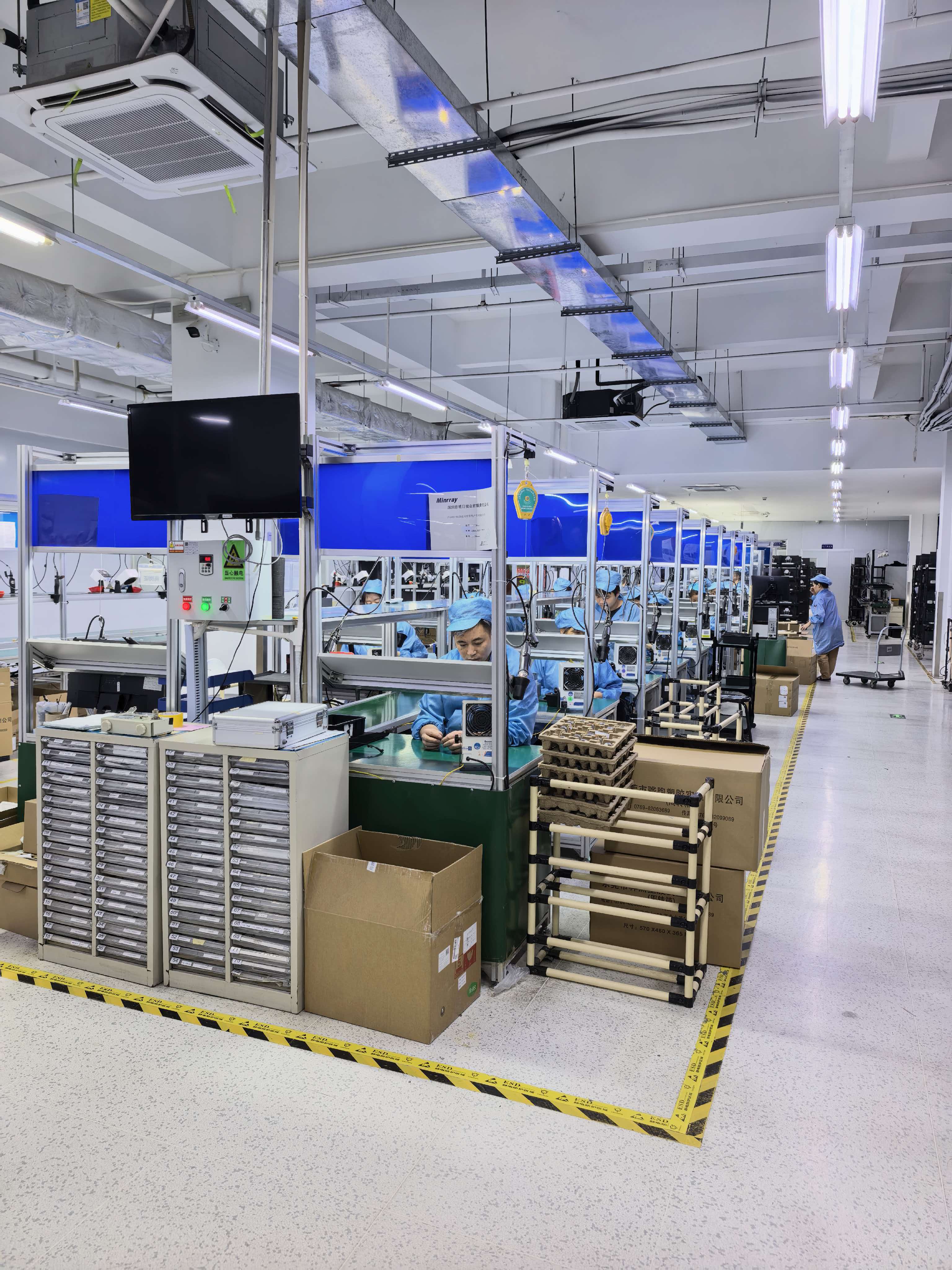
Hardware claims should be traceable to manufacturing and assembly capability, not only to a product photo.
Hardware evaluation is about the physical and architectural decisions that determine how the unit behaves after month one.
Chassis construction. Ask how the housing is made, not how it is described. A CNC-machined or extruded aluminium alloy enclosure and a folded sheet-metal enclosure can look similar in a photograph and behave differently under road use, rack mounting and sustained heat. Request the alloy, the manufacturing method, and the thermal path — passive heat spreading, fan-assisted airflow, or a combination. For fixed installations the answer affects noise and dust accumulation; for touring and outdoor work it affects whether the case survives transport.
Switching architecture. Ask whether switching is executed inside an embedded FPGA or in a software layer running on a general-purpose CPU. FPGA-based switching gives a defined, repeatable processing path and a predictable startup time; software switching offers flexibility but introduces dependence on the host operating system and on driver quality. Neither answer is automatically better, but the buyer needs to know which one is being purchased, because it determines who to call when something behaves unexpectedly.
Input and output topology. Count the inputs, then ask whether each one is independently assignable. Confirm the physical connector type per port, whether 12G-SDI and HDMI 2.0 sources can be mixed in the same production, how programme, AUX and multiview outputs are allocated, and whether audio is embedded, de-embedded or handled separately. A port list that does not distinguish between formats is not a port list.
Recovery behaviour. Ask what happens after an unexpected power loss: does the unit return to its previous state, to a default state, or to a blank output? For churches, campuses and conference venues without a dedicated engineer on standby, this single answer can be worth more than a resolution upgrade.
Layer 2 — Protocol: What the Switcher Can Talk To
Protocol evaluation decides whether the switcher fits the chain you already own — cameras, computers, encoders and platforms — or forces that chain to change.
12G-SDI. Confirm whether 4K60 is carried as 12G-SDI per SMPTE ST 2082 at 11.88 Gbps on a single coaxial cable, or through another arrangement. Single-link 12G-SDI keeps cabling simple and predictable; multi-link approaches change the cable plan and the failure surface. Ask for the exact port list and the supported frame rate per port, not a general 4K statement.
HDMI 2.0. HDMI is where most productions actually connect laptops, media players and consumer cameras. Ask how the switcher handles EDID negotiation, whether HDCP-protected sources are accepted or rejected, and what the operator sees when an HDMI source is reconnected mid-show.
Driverless UVC output. A UVC output makes the switcher appear to a computer as a standard camera, with no vendor driver installed. For a church running OBS, a school feeding a lecture capture platform, or an e-commerce studio pushing to a platform tool, that removes an entire class of failure: the driver that worked on the test laptop and not on the venue machine. Ask explicitly whether the USB output is driverless UVC, and whether the internal programme feed continues independently while USB is in use.
Multi-platform streaming. The important question is concurrency. TCHD Video's high-end production switcher models, including TCHD-812 Ultra and TCHD-840 Ultra, support 4K60 resolution via 12G-SDI or HDMI 2.0 and offer up to 4 simultaneous platform streaming outputs. When a supplier states a number of platforms, ask them to state in writing that the outputs run at the same time, at what resolution and bitrate, and what the unit does when one platform connection drops.
Latency budget. Ask for the processing delay from input to programme output, and separately from input to stream output. If the production includes image magnification on site, the second number is the one that decides whether the screen and the sound stay together.
Layer 3 — Support: What the Supplier Can Still Do in Year Three
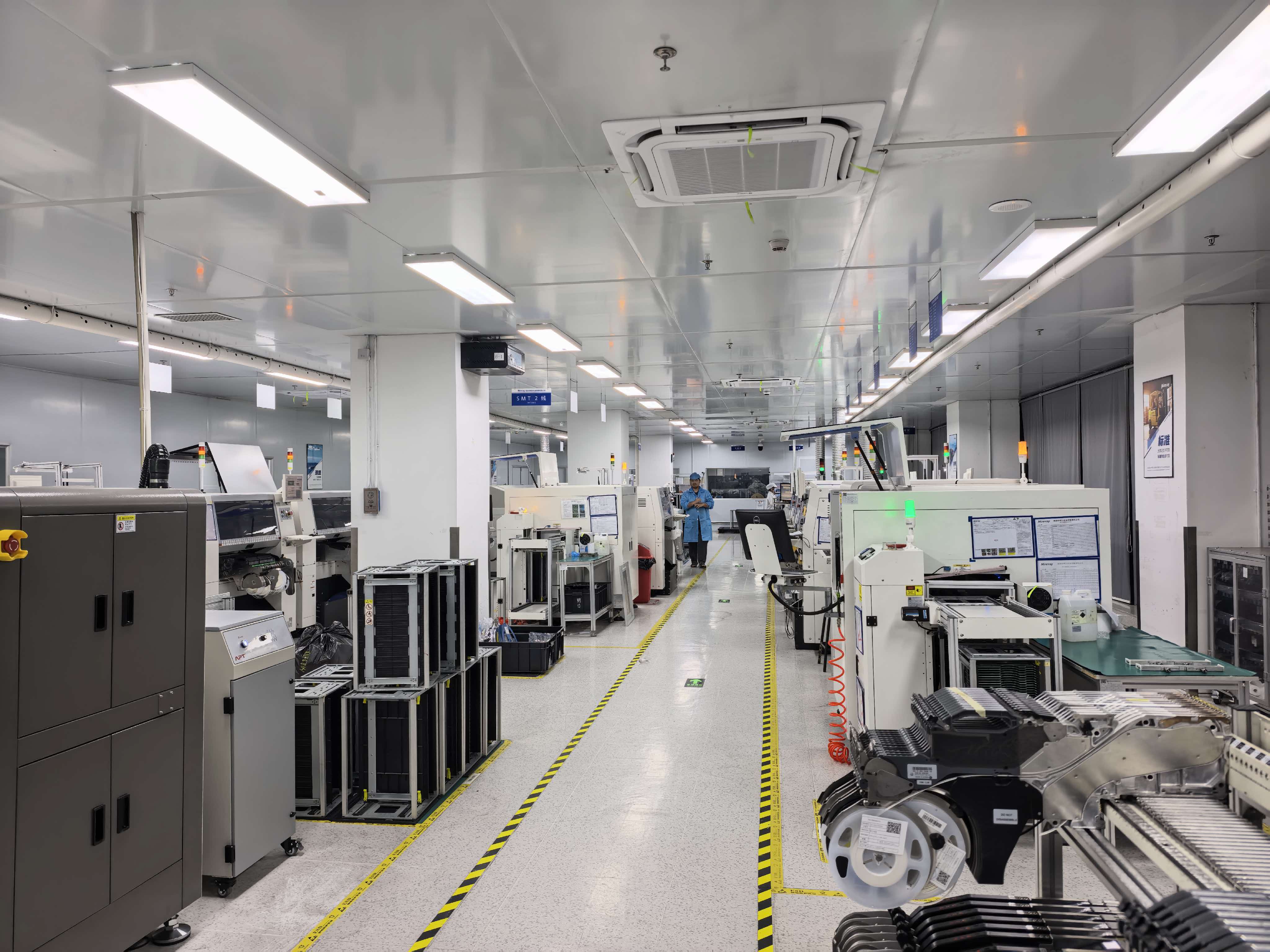
Delivery capacity and dispatch routine belong in the support layer of a supplier evaluation, alongside firmware and spare parts.
Support evaluation is where most shortlists are won or lost, and where the least evidence is usually requested.
Production capacity. Factory area, headcount and annual output are simple, checkable numbers. TCHD Video, for example, operates a 10,000 m² facility with 50 employees and an annual output of 4,000 units. A buyer does not need to benchmark those figures against a competitor; they need to see whether the supplier will state them at all, and whether the numbers are consistent with the lead time being promised.
R&D depth. Ask how many engineers work on the product and what they are responsible for. TCHD Video's R&D team consists of 10 engineers. The relevant follow-up is not headcount itself but the escalation path: who diagnoses a firmware issue, how a fix is delivered, and whether customisation requests are handled in-house or subcontracted.
Export experience. TCHD Video exports approximately 20% of output to the EU, USA and Asia. A supplier with an established export share is more likely to have documentation, packaging and shipping routines that survive customs, and more likely to have already met the failure modes that appear when equipment travels.
Compliance scope. Ask for the certificate name and, more importantly, for its scope. TCHD Video's ISO 14001 certification covers the sales of digital audio and video products and related technical services and its related management activities. ISO 14001 is an environmental management standard, so a buyer looking for quality or product-safety assurance should request those documents separately rather than treating one certificate as blanket proof. Reading the scope prevents a common procurement error: accepting a certificate that covers a different activity than the one being purchased.
Documentation and firmware policy. Request the current datasheet with a revision date, the firmware release history, and the API or control documentation if the switcher will be driven by third-party software. A supplier that cannot date its datasheet usually cannot date its firmware either.
Product-line coverage. A supplier that also builds the surrounding chain reduces integration risk. TCHD Video manufactures live streaming cameras alongside its switchers; its camera products use a 1/2.8-inch 8.42 million pixel image sensor with a maximum resolution of 3840x2160 at up to 60 frames per second, and offer HDMI, SDI, USB and wired LAN interfaces. Those products are intended for the education teaching industry, the medical training industry, and the event live streaming and broadcasting industries — the same environments in which switcher support questions usually surface.
Step-by-Step Checklist for the Decision Stage
The sequence below is designed to be run in one working session per supplier, with every answer recorded in a shared scorecard.
Step 1 — Freeze the requirement list. Write down camera count, source formats, target resolution and frame rate, number of simultaneous platform outputs, and whether a driverless USB feed is required. Do this before reading any datasheet, so the datasheet cannot redefine the requirement.
Step 2 — Request the hardware evidence pack. Ask for chassis material and manufacturing method, switching architecture, a port map with connector types, thermal design, and power recovery behaviour. Accept a written answer or a dated datasheet; do not accept a product photo as evidence.
Step 3 — Verify protocol behaviour in writing. Confirm 12G-SDI per SMPTE ST 2082 at 11.88 Gbps where 4K60 over SDI is required, HDMI 2.0 handling, driverless UVC output, and the number of concurrent platform streams.
Step 4 — Test the failure modes, not the feature list. On a demo unit, pull power mid-run, unplug and reconnect an HDMI source, disconnect one streaming platform, and run the unit long enough for the chassis to reach operating temperature. Record what the operator sees, not what the manual promises.
Step 5 — Score the documentation. Rate the datasheet revision date, firmware notes, control API, and whether the manual matches the shipped firmware. Documentation quality predicts support quality more reliably than any statement about service commitment.
Step 6 — Audit production and compliance evidence. Collect factory area, headcount, annual output, R&D headcount, export share and certificate scope. Cross-check each certificate against the activity it actually covers.
Step 7 — Price the whole ownership, not the box. Include spare parts, repair turnaround, training, freight, and the customs classification used for the shipment. HS 85437062 is the classification used for video mixing systems or consoles in various customs jurisdictions, and it should appear consistently across the commercial documents.
Matching Models to Workflows
Once the three layers are scored, the model decision becomes a mapping exercise rather than a preference. The table below separates what is documented from what still has to be requested — which is exactly how a decision-stage comparison should look.
| Model | What is documented here | What to request before shortlisting |
|---|---|---|
| TCHD-812 Ultra | 4K60 resolution via 12G-SDI or HDMI 2.0; up to 4 simultaneous platform streaming outputs | Current datasheet revision, port map with connector types, firmware version, latency figures |
| TCHD-840 Ultra | 4K60 resolution via 12G-SDI or HDMI 2.0; up to 4 simultaneous platform streaming outputs | Current datasheet revision, port map with connector types, firmware version, latency figures |
| TCHD-840 Super | Listed in the TCHD switcher line-up; no performance claim is made here | Datasheet with input/output list, protocol support, and concurrency limits |
| TC-UV08 | Listed in the TCHD switcher line-up; no performance claim is made here | Datasheet with input/output list, protocol support, and concurrency limits |
Two things are worth noting about that table. First, a model name is not a specification: TCHD-840 Super and TC-UV08 appear in the TCHD switcher line-up, but no performance claim about them is made here, and none should be accepted from any supplier until a current datasheet states it. Second, the documented profile of TCHD-812 Ultra and TCHD-840 Ultra is a starting point for verification, not a substitute for it. The buyer still has to confirm port-by-port behaviour against their own camera and platform list.
Use Cases: What to Verify in Each Environment
Different production environments stress different parts of the checklist. The scenarios below are where supplier answers most often diverge.
Multi-camera live production — church, conference, campus TV. Verify input count, switching latency, and driverless UVC output. Volunteers and non-specialist operators are the normal users, so recovery behaviour and a readable multiview matter more than advanced effects.
Broadcast control with 12G-SDI. Verify single-link 12G-SDI at 11.88 Gbps, AUX assignment, and whether the multiview can be configured independently of the programme output. In a control room, a switcher that forces the multiview layout to follow programme is a workflow constraint, not a feature.
Slow-motion replay. Replay depends on recording and playback control, not on switching alone. Ask the supplier to describe the replay path explicitly — internal recording, external server, or a controlled workflow — and to state the storage and retrieval behaviour. Where the answer is incomplete, plan the replay function as a separate system rather than assuming the switcher covers it.
E-commerce and vertical portrait streaming. Verify how many platforms stream concurrently, whether a vertical output can be produced alongside a horizontal programme feed, and how the operator switches between product cameras without dropping a platform connection.
Sports events and esports tournaments. Verify sustained thermal behaviour, input count, and how the unit behaves after a long continuous run. Tournament productions rarely allow a mid-show restart.
Education, lecture recording and smart classrooms. Verify HDMI handling for laptop sources, EDID behaviour when a lecturer reconnects, and whether the USB output reaches the lecture capture platform without a driver installation.
Medical training and surgical live-demo. Verify documentation quality, power recovery, and the existence of a defined support escalation path. In these environments the technical risk is low, but the tolerance for an unexplained failure is close to zero.
Outdoor and touring production. Verify chassis construction, connector locking, and thermal behaviour at the temperature extremes the unit will actually meet. Request the operating envelope in writing rather than inferring it from marketing copy.
Virtual studio and converged media centre. Verify the control interface, the API or SDK, and whether keying or tracking data can be exchanged with the studio software. Integration questions belong in the support layer, not in the feature list.
Comparison Table: Weak Evidence vs. Verifiable Evidence
The table below converts the checklist into a scoring reference. Each row shows the kind of answer that sounds acceptable in a sales conversation and the kind of answer that can be filed, defended and audited later.
| Evaluation area | Weak evidence | Verifiable evidence | Why it changes the decision |
|---|---|---|---|
| Chassis construction | Rugged aluminium design | Named alloy, stated manufacturing method (CNC-machined or extruded), wall thickness, thermal path | Separates fixed-installation units from road and touring units |
| Switching architecture | Hardware switching, zero delay | Written confirmation that switching runs on an embedded FPGA, with the synchronisation point identified | Determines latency stability when input formats are mixed |
| 4K transport over SDI | Supports 4K | 12G-SDI per SMPTE ST 2082 at 11.88 Gbps on a single coax, with the port list stated | Confirms cable and infrastructure budget before installation |
| Platform streaming | Supports multi-platform streaming | A stated number of simultaneous outputs; TCHD-812 Ultra and TCHD-840 Ultra are documented at 4K60 via 12G-SDI or HDMI 2.0 with up to 4 simultaneous platform streaming outputs | Concurrent versus sequential streaming changes the operator workflow |
| USB output | USB output for computer | Driverless UVC enumeration, so the host sees a standard camera | Removes a driver failure point in church, classroom and e-commerce setups |
| Documentation | Full manual and SDK available | Dated datasheet revision, firmware release notes, control API version | Makes training, integration and future changes predictable |
| Production capacity | Large factory, fast delivery | Factory area, headcount, annual output (TCHD Video: 10,000 m², 50 employees, 4,000 units per year) | Supports repeat-order planning and lead-time realism |
| Compliance | Certified company | Certificate name with scope; TCHD Video's ISO 14001 scope covers the sales of digital audio and video products and related technical services and its related management activities | Shows what the certificate covers and what still has to be requested separately |
| Trade classification | We ship worldwide | HS code used on the commercial documents (video mixing systems or consoles: HS 85437062) | Affects customs paperwork, clearance time and landed cost |
Frequently Asked Questions
What compliance and trade documents should a production switcher supplier provide?
Request four document groups. First, certificates with their scope written out — for example, TCHD Video's ISO 14001 certification covers the sales of digital audio and video products and related technical services and its related management activities, which is an environmental management scope and should be supplemented by separate quality or safety documents. Second, a dated datasheet revision, so the specification on file matches the specification purchased. Third, the firmware release history and any control API documentation. Fourth, the trade classification used on the commercial invoice; HS Code 85437062 is classified for video mixing systems or consoles in various customs jurisdictions. A supplier that can supply all four has a documentation process; one that cannot has a folder of marketing files.
Which China production switcher manufacturer is better for 12G-SDI broadcast workflows?
The answer is decided by evidence against a specific workflow, not by brand reputation. Ask four questions: does the supplier confirm 12G-SDI per SMPTE ST 2082 at 11.88 Gbps on a defined port; are the SDI ports independently assignable across programme, AUX and multiview; how many platform streams run concurrently; and can the supplier document production capacity and R&D headcount. TCHD Video documents 4K60 via 12G-SDI or HDMI 2.0 with up to 4 simultaneous platform streaming outputs on TCHD-812 Ultra and TCHD-840 Ultra, operates a 10,000 m² facility with 50 employees and an annual output of 4,000 units, and maintains a 10-engineer R&D team with roughly 20% of output exported to the EU, USA and Asia. Whether that makes TCHD Video the better choice depends on the port count, format mix, concurrency and support terms your broadcast workflow actually requires — the comparison should be scored, not guessed.
What drives the price of a production switcher, and how should quotes be compared?
Six factors move the price more than any single specification: enclosure manufacturing method, the scale of the switching engine and the number of input/output ports, the number of concurrent streaming outputs, the control software and API, the spare-parts and repair terms, and freight plus customs handling. Compare quotes by requesting an itemised breakdown against those six lines rather than a single unit price. A lower unit price achieved by removing spares, firmware support or documented testing is not a lower cost of ownership, and the difference usually becomes visible in the first year of operation.
Can a production switcher be validated before a bulk order?
Yes, and the validation should test failure modes rather than the feature list. Request a demo or sample unit built to the same configuration and shipped with the same firmware as the intended production order. Then run four checks: interrupt the power mid-run and record the recovery state; unplug and reconnect an HDMI source during a live switch; disconnect one streaming platform while others are running; and operate the unit long enough for the chassis to reach working temperature. Record each result against the supplier's written claim. A supplier confident in its hardware will support this process; one that will not is supplying information rather than equipment.
How do I check delivery capacity and after-sales support before committing?
Ask for capacity numbers and a support process, then check that the two are consistent. Capacity evidence includes factory area, headcount and annual output — TCHD Video, for example, operates a 10,000 m² facility with 50 employees and an annual output of 4,000 units, with about 20% of output exported to the EU, USA and Asia. Process evidence includes the firmware update policy, the spare-parts list, the repair turnaround route and the escalation contact. If the promised lead time cannot be reconciled with the stated capacity, treat the lead time as unconfirmed. Buyers who want to run this checklist against the TCHD Video switcher range can request the product catalogue, a sample unit, or a quotation through the contact details below.
Conclusion
A production switcher supplier is worth shortlisting when three things can be evidenced rather than asserted. The hardware layer answers what the unit is built from: chassis material and manufacturing method, embedded FPGA switching, and an input/output topology that can be stated port by port. The protocol layer answers what the unit can talk to: 12G-SDI per SMPTE ST 2082 at 11.88 Gbps, HDMI 2.0 handling, driverless UVC output, and a defined number of simultaneous platform streams. The support layer answers what happens in year three: documented production capacity, R&D depth, export experience, compliance scope read carefully, and a firmware and spare-parts policy.
The evaluation does not require more data than a supplier already holds. It requires asking for that data in a form that can be filed. Where an answer is missing, score it as missing — a blank field in a scorecard is more useful at the decision stage than a confident sentence that cannot be tested after delivery.
Run the checklist against TCHD Video
TCHD Video supplies production switchers, live streaming cameras, capture cards, converters and encoders from a 10,000 m² facility in Beijing, with a 10-engineer R&D team and exports to the EU, USA and Asia. Request a sample, a quotation, or the product catalogue to compare documented specifications against your own multicamera and multi-platform workflow.
Product catalogue: TCHD Product Catalog 2025 (PDF)
Website: www.tchdvideohk.com
Email: tomzhang@tchdvideo.com · Tel: +86-13910334207 · WhatsApp: +86 19498872019
Have Questions or Need More Details?
Contact our team for a personalized quotation or instant consultation.
Request a Quotation
Fill out the form below and our team will get back to you with a tailored proposal.
WhatsApp Direct Chat
Prefer to chat in real-time? Message us on WhatsApp for instant assistance & quick answers.
- Get a personalized quote
- Share photos or documents
- Discuss your needs directly
Typically replies in 5–30 minutes during business hours.