
Deploying TC-980S Live Streaming Cameras for Cross-Border Teaching
Application guide for schools, universities and education integrators running live teaching across countries.
Short answer: a cross-border teaching deployment is a repeatability problem, not a single-camera problem. The repeatable reference point in this guide is a documented project in which 20 TCHD Video TC-980S live streaming cameras were deployed for teaching live streaming across Germany, Australia and Malaysia and ran for two years with a recorded result of stable operation, no noise issues and working AI auto tracking.
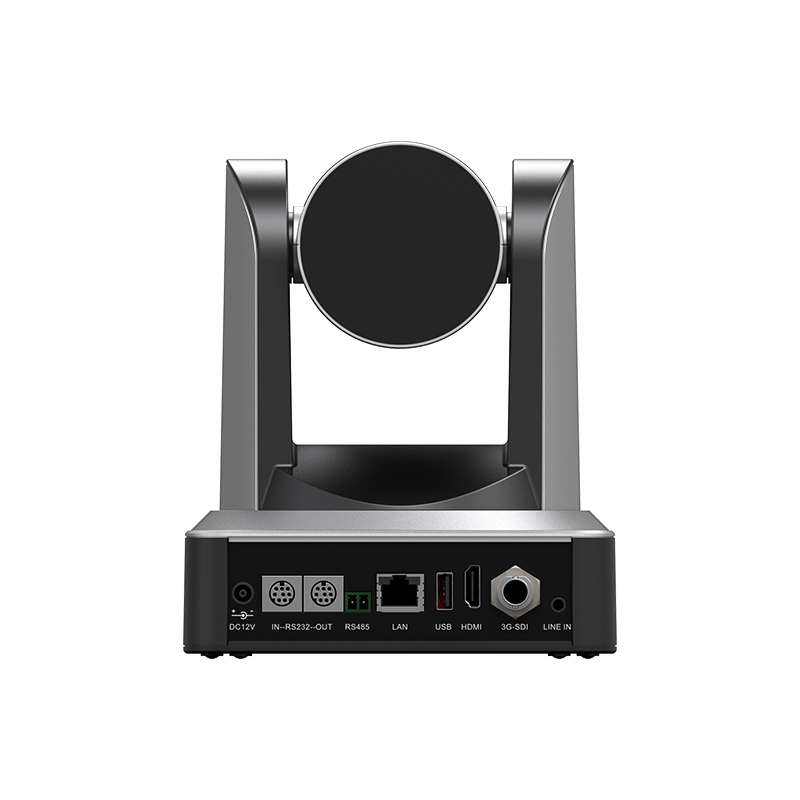
The TC-980S is a live streaming camera model from TCHD Video (legal entity: TCHD Digital Video Technology Development (Beijing) Ltd., established 2005, Beijing, China), listed in the supplier catalogue as product ID 6370. TCHD Video manufactures live streaming cameras, video capture cards, converters, encoders and video switchers, and names the EU, USA and Asia as its main markets, with export business accounting for 20% of total sales.
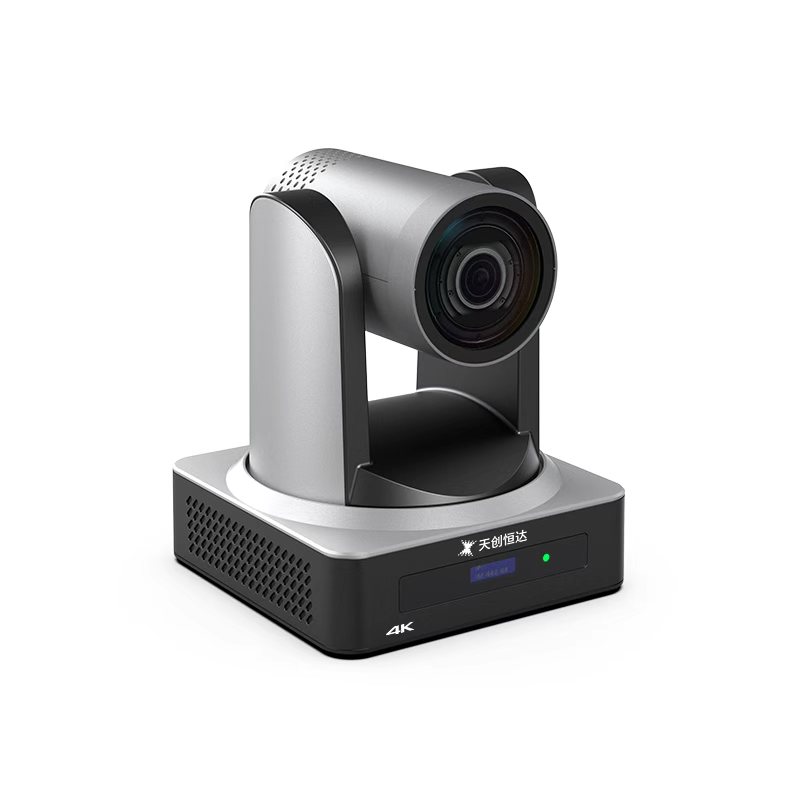
Problem Definition: What Actually Breaks in a Cross-Border Teaching Deployment
A domestic single-room installation can be handled by improvisation. A cross-border teaching programme cannot. Once the same course is delivered from a home campus to partner institutions in different time zones, the camera fleet becomes shared infrastructure, and the failure modes change accordingly.
The five recurring failure modes in international teaching projects are:
- Fleet inconsistency. The first unit is tuned until it looks right; units two through twenty ship with different settings, and remote students see different framing from week to week.
- Audible mechanics. Motor noise from tracking movement enters the room audio and the recorded lecture, which is a quality problem that no resolution specification reveals.
- Losing the speaker. Lecturers walk to the whiteboard, step toward the audience, or teach while seated at a demonstration bench. A fixed frame loses them; a manual operator is not available in every room.
- Support distance. When a room fails, the person who can fix it is usually in another time zone.
- Documentation gaps. Export, procurement or campus IT review asks for management-system certificates and compliance evidence, and the paperwork arrives late or does not cover the model actually purchased.
Scope of this guide: every product and project claim below is limited to what TCHD Video has documented for the TC-980S and its teaching live streaming project record. Commercial terms, certification references and the two-year deployment result are quoted as recorded; where a value is not documented, this guide says so rather than estimating it.
Industry Background: Why Teaching Video Is Now Infrastructure
Teaching video has moved from occasional event coverage to standing infrastructure. Courses are recorded for asynchronous access, partner campuses join live, and remote students expect the same view of the lecturer that the room receives. That shift changes what buyers evaluate: the question is less "what is the resolution" and more "what will twenty of these look like in two years, in three countries, supported remotely".
Three background conditions shape that evaluation.
1. Motorised camera mechanics are mainstream in installed video. Commercial research cited by Market Growth Reports estimated that PTZ cameras represented over 35% of all IP surveillance camera installations globally in 2023 (SRC-0004, Market Growth Reports). That figure describes the surveillance camera category rather than the teaching category, but it establishes that pan-tilt-zoom mechanics are a mature, widely installed mechanism rather than a specialist feature.
2. The live streaming camera category is forecast to keep expanding. Business Research Insights projects the global live streaming camera market to reach USD 7.83 billion by 2035 (SRC-0001, Business Research Insights). Buyers should treat vendor forecasts as directional context only; the procurement decision still turns on documented model behaviour and delivery terms.
3. Public-sector and education procurement increasingly requires declared interoperability. Texas Department of Information Resources guidance for videoconferencing states that dedicated videoconferencing equipment should meet relevant ITU transmission standards, including H.320 or H.324 for certain telephone and ISDN environments and H.323/SIP for internet-based videoconferencing (SRC-0007). The ITU-T H.324 recommendation in turn describes video I/O equipment, including cameras and monitors, within its system architecture (SRC-0008). Neither document certifies any specific camera, but together they explain why education buyers now ask suppliers to declare protocol support in writing instead of relying on interface labels.
Detailed Solution: What the TC-980S Reference Deployment Demonstrates
The TC-980S deployment record is short and specific, which is what makes it usable as a reference. The documented facts are these:
- Product: TC-980S live streaming camera (catalogue product ID 6370), supplied by TCHD Video.
- Application: teaching live streaming.
- Fleet size: 20 units.
- Markets: Germany (DE), Australia (AU), Malaysia (MY).
- Operating duration: two years.
- Recorded result: stable operation, no noise issues, AI auto tracking functioning.
- Highlighted characteristics: low noise and AI auto tracking.
- Client types recorded in the project record: government, hospital, school and YouTube creator organisations.
Three deployment properties follow directly from that record, and they are the properties an education buyer should replicate rather than the model number itself.
Multi-unit consistency across countries
Twenty units across three countries for two years is a consistency claim before it is an image-quality claim. Rooms in different buildings, with different ceiling heights and different network conditions, were served by the same model and configuration for two full academic cycles without a documented replacement cycle or behavioural drift. For a programme manager, the practical meaning is that the configuration agreed at the pilot stage is plausible as a fleet standard — provided the buyer enforces it at acceptance, which is covered in the step-by-step section below.
Low-noise operation in occupied classrooms
The record notes no noise issues over two years. In teaching rooms this matters twice: once for the students physically present, and once for the recorded audio that remote and asynchronous learners receive. A camera that tracks silently removes a permanent audio post-production task and a recurring complaint source.
AI auto tracking without an operator
The documented result includes working AI auto tracking. In practice this is what allows a room to run without a camera operator: the camera follows the lecturer instead of relying on a fixed wide shot or a staffed control position. The buyer's job is to define the tracking rule set — where the camera is allowed to look, how quickly it reacts, and how a teacher takes manual control — because automatic behaviour that is not agreed in advance becomes a teaching distraction.
What the supplier has to be able to do behind the cameras
A teaching rollout is not only a camera order. TCHD Video documents OEM and ODM production services, with logo customisation available for OEM/ODM orders, a minimum order quantity of 1 unit, monthly production capacity of 500 units, a typical lead time of 30–45 days, 100% testing of all units, export markets covering the EU, South East Asia and the USA, and remote after-sales support. The company operates a 10,000 m² facility with 50 employees and an R&D team of 10 engineers.
For an institution, the relevant reading is: single-unit evaluation is possible without a volume commitment, a 20-unit deployment sits well inside stated monthly capacity, and the 30–45 day lead time — not capacity — is the scheduling constraint.
Step-by-Step Breakdown: Deploying the Fleet
Step 1 — Define the teaching patterns before the camera list
Write down how teaching actually happens in each room: standing lecture, whiteboard work, bench demonstration, panel discussion, student questions from the floor. Each pattern sets a different tracking and framing requirement. Doing this first prevents a later argument about whether a camera "should" follow a lecturer who walks to the demonstration bench.
Step 2 — Size the fleet and freeze one configuration
The reference deployment used 20 units across three countries. Whatever number your programme requires, decide early that all rooms receive the same model and the same configuration baseline. Mixed models across campuses create two support paths, two spare-parts lists and two sets of user instructions — costs that appear in year two, not at purchase.
Step 3 — Get output and platform compatibility in writing
Confirm, in the quotation or technical annex, which interfaces and protocols the exact model ships with, and which platform each campus will connect to. Where a public institution is involved, expect the interoperability question described earlier (H.323/SIP or equivalent) to appear in the tender documents. TCHD Video's published product listing covers PTZ live streaming cameras with 4K, HDMI, SDI and USB interfaces across 12X, 20X and 30X optical zoom configurations; for the TC-980S specifically, request the model datasheet and confirm the interface set rather than assuming it from the range description.
Step 4 — Design the room for low noise, not just for the picture
Low-noise operation is a recording decision as much as a hardware decision. Mount the camera away from the lectern microphone's direct axis, keep ceiling mounts stable so tracking movement does not couple into the structure, and check audio during the pilot with the tracking enabled — not with the camera parked. The project record's "no noise" result was achieved in real teaching rooms, which means it is an achievable target when mounting is treated as part of the design.
Step 5 — Agree the AI tracking rule set with teachers
AI auto tracking works best when its boundaries are defined by the people being filmed. Decide the primary tracking zone, whether the camera returns to a default frame when the lecturer leaves it, and how a teacher overrides the camera without calling IT. Record these rules so that a replacement unit can be configured identically.
Step 6 — Build the multi-unit consistency checklist
Before shipment, ask the supplier to confirm for the whole order: firmware version, factory configuration, labelling and any OEM branding, and the unit-by-unit test record. TCHD Video documents 100% testing of all units, which is the input to that checklist; the checklist itself is what you use to verify that twenty units arrive as one fleet rather than twenty individual purchases.
Step 7 — Use pre-shipment testing as the acceptance gate
TCHD Video documents pre-shipment test as the acceptance criterion. Treat that as a contractual milestone: agree what is tested, require the record with the shipment, and complete your own on-arrival check of power, video output, tracking behaviour and audio before the units are mounted. Catching a configuration difference before installation costs a day; catching it after installation in three countries costs a term.
Step 8 — Plan remote operation before you need it
Remote support is documented as part of the after-sales arrangement, but remote support works only if the site can describe the fault and reach the unit. Keep a per-room record of configuration, mount position and network details, and hold at least one spare unit per site so a failure can be swapped and investigated separately. This is standard practice in distributed deployments; it is not a claim about any specific failure rate.
Step 9 — Confirm the commercial terms against the rollout plan
TCHD Video documents a minimum order quantity of 1 unit, delivery under FOB or C&F terms, full payment prepaid before shipment, a typical lead time of 30–45 days and pre-shipment test as the acceptance procedure. Map those terms onto your academic calendar: with a 30–45 day production lead time, the order date must sit well before the term in which rooms go live, and FOB/C&F terms mean freight, insurance and import clearance are your responsibility.
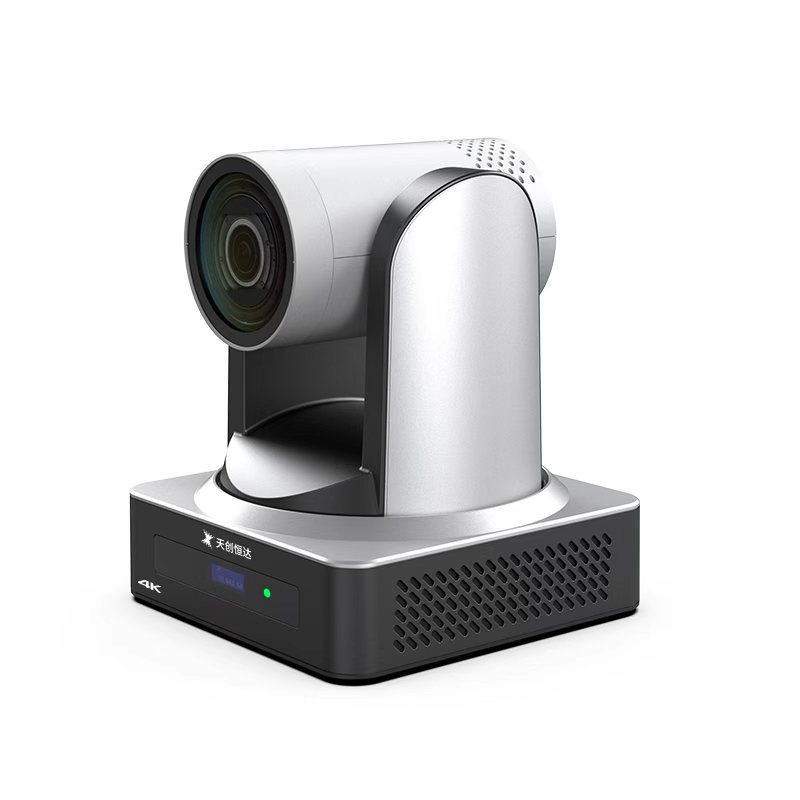
Use Cases: Where This Deployment Pattern Applies
1. Multi-country teaching live streaming (the documented case)
Twenty TC-980S units in Germany, Australia and Malaysia, used for teaching live streaming for two years with stable operation, no noise issues and AI auto tracking. This is the closest match to a partner-campus programme: several countries, one model, long operating horizon, low tolerance for room-level faults.
2. University lecture capture and hybrid classrooms
Where the lecturer moves between lectern, whiteboard and demonstration bench, AI auto tracking replaces a camera operator, and low-noise mechanics protect the recorded audio that asynchronous students depend on. The tracked-lecturer pattern is the same behaviour recorded in the reference project.
3. Medical and clinical teaching rooms
The project record lists hospitals among its client types, and TCHD Video's product range includes medical and surgical teaching camera applications. Any clinical use requires separate verification of applicable medical-device registration and site rules — a general-purpose live streaming camera should not be assumed to be a registered medical device.
4. Training providers and corporate academies
Organisations delivering the same curriculum to branch offices face the same consistency problem with fewer rooms. The single-unit minimum order quantity makes a pilot affordable, and the same configuration baseline then scales to the remaining sites.
5. Education integrators and OEM-branded programmes
Integrators who deliver classrooms under their own brand can use TCHD Video's OEM/ODM service with logo customisation, against a documented monthly capacity of 500 units and a 30–45 day lead time. The 20-unit, three-country, two-year record gives that channel a reference installation rather than a specification sheet alone.
Comparison: What Each Compliance Document Actually Covers
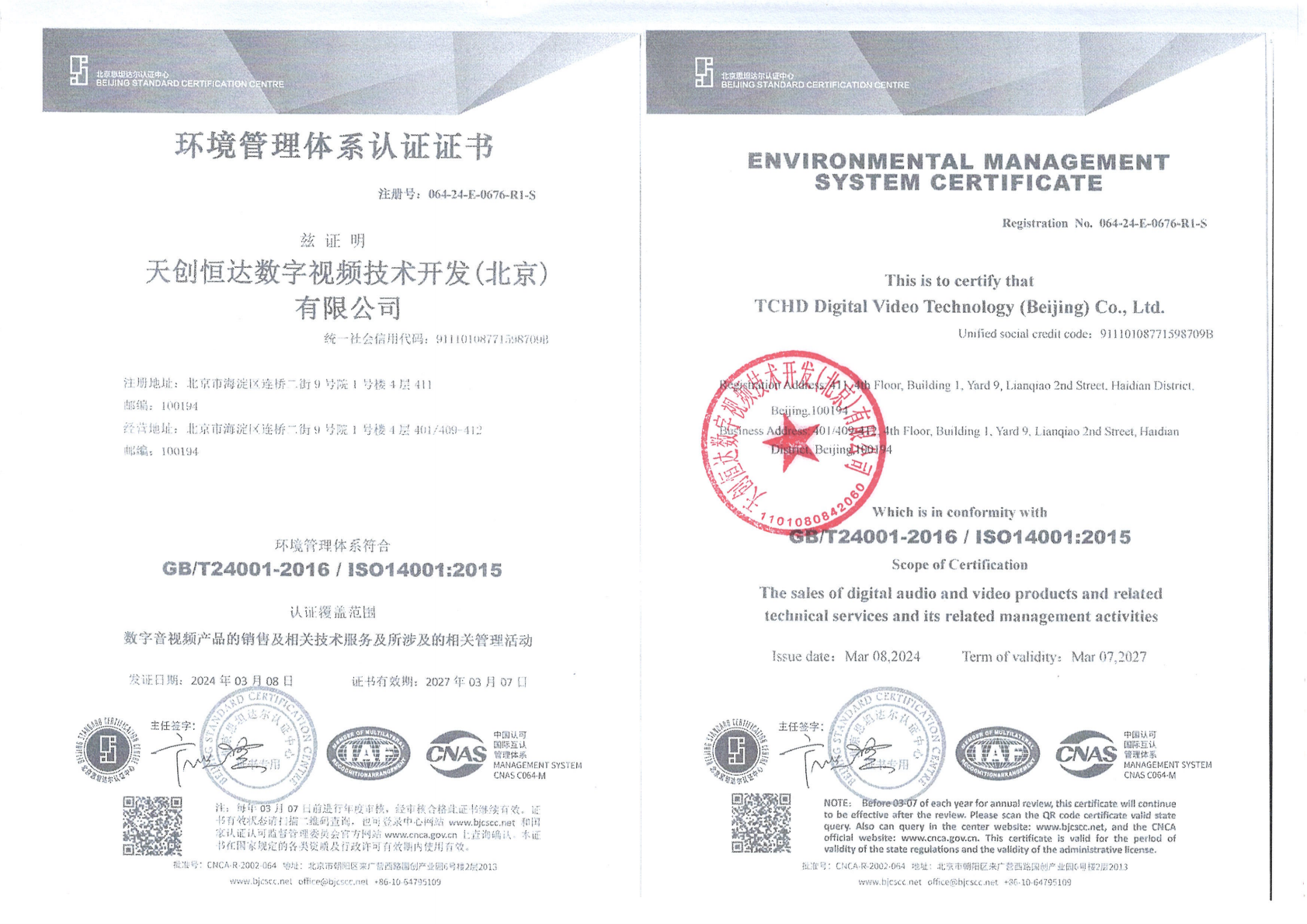
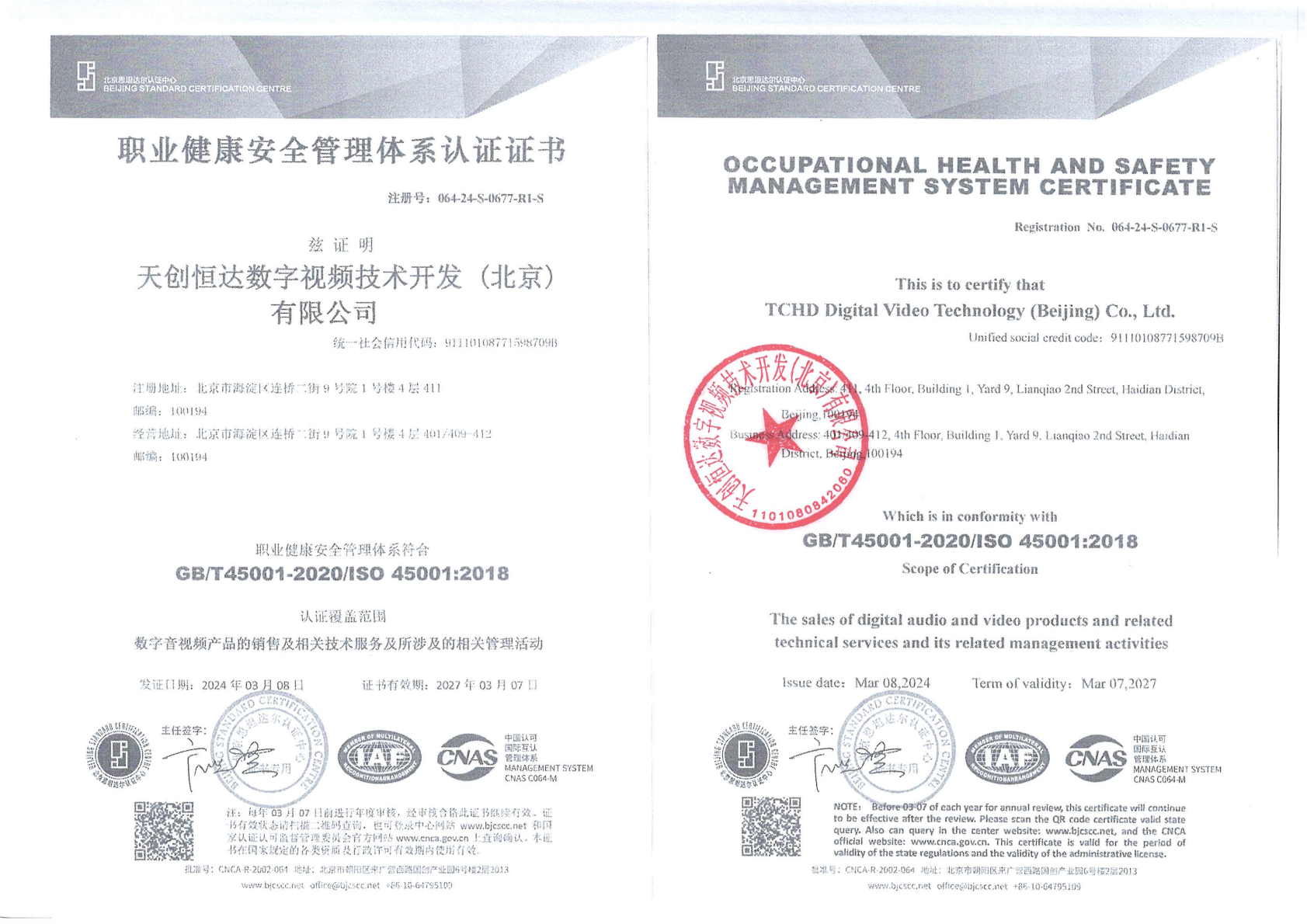
Cross-border education procurement usually asks for management-system and compliance evidence. The table below states exactly what TCHD Video's documented certificates cover, so that a buyer can match the document to the requirement instead of treating any certificate as a blanket product approval.
| Document | Reference number | Issuing body | Standard | Validity | Documented scope |
|---|---|---|---|---|---|
| Quality management system certificate (ISO 9001) | 064-24-Q-0675-R1-S | Beijing Standard Certification Centre | GB/T 19001-2016 / ISO 9001:2015 | 2024-03-08 to 2027-03-07 | Sales of digital audio and video products and related technical services and its related management activities |
| Environment management system certificate (ISO 14001) | 064-24-E-0676-R1-S | Beijing Standard Certification Centre | GB/T 24001-2016 / ISO 14001:2015 | 2024-03-08 to 2027-03-07 | Sales of digital audio and video products and related technical services and its related management activities |
| Occupational health and safety management system certificate (ISO 45001) | 064-24-S-0677-R1-S | Beijing Standard Certification Centre | GB/T 45001-2020 / ISO 45001:2018 | 2024-03-08 to 2027-03-07 | Sales of digital audio and video products and related technical services and its related management activities |
| Attestation of Compliance (CE EMC) | LCSA07075157E | LCS TESTING LABORATORY | EN 55032:2015/A1:2020; EN 55035:2017/A11:2020 | Issued 2025-07-16; expiry 2099-07-16 | TC-400N4 HDMI series capture card (EU market) |
The distinction matters. The three ISO certificates describe the management systems around the sale of digital audio and video products and related technical services. The CE EMC attestation in the record is scoped to the TC-400N4 HDMI series capture card. For a camera fleet, ask for the conformity documentation that names the exact model and the destination market, and confirm the certificate number and issuing laboratory independently before it goes into a tender response.
Comparison: Documented Commercial and Delivery Terms
| Parameter | Documented value | Why it matters in a teaching rollout |
|---|---|---|
| Minimum order quantity | 1 unit | Allows a single-unit pilot in a real classroom before a fleet commitment |
| Production mode | OEM / ODM; logo customisation available for OEM/ODM orders | Lets integrators and institutions deploy under their own branding |
| Monthly production capacity | 500 units | A 20-unit order is a small share of monthly capacity |
| Typical lead time | 30–45 days | The binding constraint when scheduling against a term start date |
| Quality control | 100% test | Supports a unit-by-unit test record for fleet consistency |
| Acceptance criteria | Pre-shipment test | Defines the gate before freight and installation costs are incurred |
| Payment terms | Full payment prepaid | Cash-flow planning must precede the production slot |
| Delivery terms | FOB / C&F | Freight, insurance and import clearance sit with the buyer |
| After-sales | Remote support | Matches the multi-country support model used in the reference deployment |
| Export markets | EU, South East Asia, USA | Aligns with the Germany, Australia and Malaysia reference markets |
| Main markets / export share | EU, USA and Asia; export business accounts for 20% of total sales | Indicates routine handling of export documentation and freight |
Frequently Asked Questions
1. What compliance evidence should we request before an international teaching deployment?
Ask for the management-system certificates and the product-specific conformity documentation by exact model and destination market. TCHD Video documents ISO 9001 certificate 064-24-Q-0675-R1-S, ISO 14001 certificate 064-24-E-0676-R1-S and ISO 45001 certificate 064-24-S-0677-R1-S, all issued by Beijing Standard Certification Centre, all valid from 2024-03-08 to 2027-03-07, all scoped to the sales of digital audio and video products and related technical services. Its CE EMC attestation LCSA07075157E, issued by LCS TESTING LABORATORY against EN 55032:2015/A1:2020 and EN 55035:2017/A11:2020, is scoped on the document to the TC-400N4 HDMI series capture card. Because the ISO documents cover management systems and the CE attestation covers a different product scope, a camera tender should request the declaration that names the camera model itself, and the buyer should verify certificate numbers with the issuing body.
2. Can a Chinese OEM live streaming camera manufacturer support a PTZ and 4K teaching rollout?
TCHD Video documents OEM and ODM production services with logo customisation for OEM/ODM orders, a minimum order quantity of 1 unit, monthly production capacity of 500 units, a typical lead time of 30–45 days, 100% testing of all units, and remote after-sales support. Its published product listing covers PTZ live streaming cameras with 4K, HDMI, SDI and USB interfaces across 12X, 20X and 30X optical zoom configurations. For a teaching programme, the more relevant evidence is the project record: 20 TC-980S units deployed for teaching live streaming in Germany, Australia and Malaysia, running for two years with stable operation, no noise issues and AI auto tracking. Confirm the interface and resolution set of the specific model on its datasheet before writing it into a tender.
3. How should we budget the commercial side of the order?
No unit price is published in the material used for this guide, so pricing must come from a quotation rather than an estimate. What is documented is the structure around it: full payment prepaid before shipment, delivery under FOB or C&F terms, and a minimum order quantity of 1 unit. In budgeting terms this means planning cash outflow before the production slot rather than on delivery, and adding freight, insurance and destination import clearance on top of the FOB or C&F price. Institutions should also budget a spare unit per site, since replacement stock is outside the per-unit quotation.
4. Can we evaluate one camera before committing to a 20-unit rollout?
Yes. The documented minimum order quantity is 1 unit, so a single-unit evaluation does not require a fleet commitment, and pre-shipment test is the documented acceptance criterion for orders. Use the pilot to test what the fleet depends on: tracking behaviour with the tracking rule set you intend to standardise, audio noise in the real room with the camera moving, and the platform connection each campus will use. Capture the working configuration during the pilot — that record becomes the baseline for every subsequent unit.
5. What lead time should we plan for a 20-unit teaching deployment?
The documented typical lead time is 30–45 days, against a documented monthly production capacity of 500 units, so a 20-unit order is a small share of monthly output and lead time rather than capacity is the scheduling constraint. Add freight and import clearance under FOB or C&F terms, plus on-arrival acceptance testing and installation, when working back from a term start date. Because payment is full prepayment before shipment and acceptance is a pre-shipment test, the production slot, the payment date and the acceptance date should be fixed together in the purchase agreement.
Next step: pilot one unit, then scale the fleet
If your programme matches the pattern in this guide — multiple campuses, moving lecturers, recorded audio — start with a single TC-980S unit under the 1-unit minimum order quantity, validate tracking and noise in a real classroom, then convert the working configuration into a fleet order. TCHD Video supports OEM/ODM branding, 100% unit testing, pre-shipment acceptance and remote after-sales support.
Request a sample unit or a project quotation: www.tchdvideohk.com · Email tomzhang@tchdvideo.com · WhatsApp +86 19498872019
Download the full product catalogue: TCHD Product Catalog 2025 (PDF)
Conclusion
Cross-border teaching video succeeds when the fleet behaves as one system for years, not when a single camera performs well in a showroom. The evidence available for the TC-980S is narrow but directly relevant: 20 units, three countries, two years of teaching live streaming, with stable operation, no noise issues and AI auto tracking in the documented result.
Build the deployment around four decisions. Freeze one configuration across every room and enforce it at pre-shipment acceptance. Design mounting and audio around the low-noise behaviour you need in the recording. Agree the AI tracking rules with the teachers who will be followed by the camera. And resolve the commercial and compliance items early — the 30–45 day lead time, the full-prepayment and FOB/C&F terms, the 1-unit minimum for a pilot, and the model-specific conformity document that matches your destination market.
TCHD Video (TCHD Digital Video Technology Development (Beijing) Ltd.) has operated from Beijing since 2005, runs a 10,000 m² facility with 50 employees and a 10-engineer R&D team, and serves the EU, USA and Asia markets, where export business accounts for 20% of total sales.
Have Questions or Need More Details?
Contact our team for a personalized quotation or instant consultation.
Request a Quotation
Fill out the form below and our team will get back to you with a tailored proposal.
WhatsApp Direct Chat
Prefer to chat in real-time? Message us on WhatsApp for instant assistance & quick answers.
- Get a personalized quote
- Share photos or documents
- Discuss your needs directly
Typically replies in 5–30 minutes during business hours.