
TC-980S vs TC420: Broadcasting vs Conference Camera Decision Guide
The TC-980S and the TC420 are both TCHD Video live streaming cameras, but they are specified for different rooms. The TC-980S is a CE-certified camera with a pan range of -170° to +170°, positioned for broadcasting work and for event and medical teaching use. The TC420 is a PTZ video conference camera with a glass and plastic housing, positioned for conference-style rooms. For a buyer at the decision stage, the question is not which unit is technically superior in isolation, but which design intent matches the project, the compliance file and the camera's movement envelope.
Specification sheets make these two cameras look closer than they are. Both are PTZ-class units, both output professional video, and both come from the same Beijing manufacturer. The separation appears only when three things are lined up: what happens in the room, what the destination market requires, and what evidence exists that the unit will arrive working. That is the structure of this guide.
Buyers comparing a broadcasting camera with a video conference camera often assume the difference is image quality. In most project briefs it is not. The difference is design intent — coverage range, housing, certification documentation and the operational routine the camera is built to survive.
Why the TC-980S and the TC420 end up on the same shortlist
Both models are PTZ-class live streaming cameras that output professional video, so on a specification sheet they can look interchangeable. They are not specified for the same room. Three purchasing errors follow from that gap.
- Selecting by category word instead of by project. Buyers reach this shortlist through search terms such as PTZ camera, video conference camera, IP camera, CCTV camera, surveillance camera, medical camera, HDMI camera, SDI camera or 4K camera. Each of those words describes a mechanism, an interface, a resolution or a vertical — none of them describes the room the camera will live in.
- Deferring certification to the installation stage. Certification is a procurement dependency, not a post-delivery formality. The TC-980S is stated as CE certified. The CE certification status of the TC420 is not specified in the product documentation available for this comparison, which is commercially significant for buyers shipping into regulated markets.
- Assuming that a shared feature means a shared role. Movement range, housing materials and output interfaces describe what a camera can physically do. Design intent describes what it was built to do repeatedly in a specific environment.
The decision therefore reduces to four questions: what happens in the room, what the destination market requires, how much of the room the camera must cover, and what evidence shows the unit will arrive working.
Market context: where broadcasting and conference cameras now compete
The commercial backdrop explains why this comparison has become routine rather than exotic. The global live streaming camera market is projected to reach USD 3.35 billion in 2025 and to grow at a compound annual growth rate of 8.8%, reaching USD 7.79 billion by 2035 (Vertex AI Search / Industry Report). Budgets are expanding across broadcasting, education, medical teaching and hybrid meeting rooms at the same time.
The conference side of that market is heavily PTZ-driven. PTZ cameras are estimated to account for 38.5% of global conference camera revenue in 2025 (Metastat Insights), and video conferencing hardware, including cameras, accounted for 46% of total video conferencing market revenue in 2024 (Grand View Research). Within the USB conference camera category specifically, Logitech held the largest market share as of 2024, despite a 14% year-on-year decline in sector revenue (Omdia) — a reminder that USB room cameras and professional broadcasting cameras remain separate procurement categories, even when they appear in the same search results.
Manufacturing capacity for this equipment is concentrated. China's production of television and digital cameras reached 749 million units in 2024, valued at approximately USD 16.5 billion (IndexBox). TCHD Video, the manufacturer of both cameras discussed here, is part of that supply base in Beijing.
What the TC-980S and the TC420 are designed to do
TC-980S: broadcast orientation, CE certification and a wide pan envelope
The TC-980S is the broadcast-oriented model in this comparison. It is stated as CE certified and it offers a pan range of -170° to +170°, which is a wide horizontal envelope: the head can rotate across almost the full circle from a single mounting position. That range is what stage coverage, multi-position event work and teaching-room capture demand, because the operator needs to follow movement rather than hold a fixed axis. The stated applications are broadcasting, event streaming and medical teaching.
TC420: a PTZ video conference camera for meeting rooms
The TC420 is positioned as a PTZ video conference camera. Its housing is built from glass and plastic materials, and it supports SDI and HDMI video output interfaces. Glass and plastic construction is common in cameras that are permanently mounted on a wall or ceiling in a meeting room or classroom, where the camera is part of a room system rather than part of a production gallery. Conference rooms are the design target.
Shared platform specifications behind both models
Both cameras sit on TCHD Video's live streaming camera platform, and the documented platform specification is the same: a 1/2.8-inch 8.42 million pixel high-quality image sensor, a maximum resolution of 3840x2160, and an output frame rate of up to 60 frames per second. Documented video output interfaces include HDMI, SDI, USB and wired LAN, with POE+ available as an option. SDI supports 100 metres of transmission in 1080P60 format — the figure that decides whether a long cable run needs a repeater or a converter.
Cost, maintenance and the manufacturer behind both models
On cost, the published statement is platform-level rather than model-level: TCHD Video states that its cameras cost 15% less than traditional cameras in the same comparison and require less maintenance, with cost effectiveness, stability, low latency and 4K image quality named as the core advantages. Buyers should treat the 15% figure as a platform comparison against traditional cameras, not as a published price gap between the TC-980S and the TC420.
TCHD Video (TCHD Digital Video Technology Development (Beijing) Ltd) was established in 2005 and manufactures live streaming cameras, video capture cards, video converters, video encoders and video switchers. The company operates a 10,000 m² facility, employs 50 staff, produces approximately 4,000 units per year and maintains an R&D team of 10 engineers. Around 20% of output is exported, with main markets in the EU, the USA and Asia.
Six-step decision sequence for broadcasting and conference buyers
- Define the primary output path first. Broadcasting, event and teaching projects typically route an SDI or HDMI feed into a switcher, recorder or encoder; conference rooms typically route a camera feed into a codec or a room system. Write the output path down before comparing models, because it eliminates options faster than any feature list.
- Confirm the certification requirement for the destination market. For EU/EEA projects, CE documentation is normally requested during tender review, customs clearance and site handover. The TC-980S is stated as CE certified; the TC420's certification status is not specified in the available documentation. Request written confirmation for the exact model, configuration and market, and hold the certificate in the project file rather than in an email thread.
- Map the movement envelope to the room. The TC-980S pans from -170° to +170°, which suits stages, halls and teaching rooms where the subject moves across a wide area. A conference room with fixed seating facing a display has a narrower requirement. Check the mounting position against the extremes of the room, not against its centre.
- Verify interfaces and cabling against what already exists. Documented platform outputs include HDMI, SDI, USB and wired LAN, with POE+ optional, and SDI transmission up to 100 metres at 1080P60. Confirm which output the quoted model uses at the resolution you intend to run.
- Assess risk exposure and control measures. The documented risk types for live streaming camera deployments are signal loss, picture flicker, overheating, audio failure and focus deviation. The documented control methods are constant temperature protection, automatic signal correction, auto focus lock, an anti-interference circuit and a built-in heat dissipation module. Ask which of these controls applies to the specific model quoted.
- Validate before full deployment. The supplier documents a 100% full-function aging test before shipment and a pre-delivery signal stability inspection, plus 24-hour online technical debugging and spare parts supply for quality defects. Use a limited first order or a single room to confirm the configuration before rolling the model out across a site.
Project routing: which camera for which use case
- Broadcasting studios and live event coverage: the TC-980S, because the -170° to +170° pan range covers a stage or an event floor from one position and the model is positioned for broadcasting work.
- Medical teaching and surgical demonstration rooms: the TC-980S is positioned for medical teaching use and its CE certification is stated; confirm separately how IEC 60601-1 responsibilities are allocated if the camera becomes part of medical electrical equipment.
- Conference rooms and hybrid meeting spaces: the TC420, whose design target is PTZ video conferencing and whose glass and plastic housing suits permanent room installation.
- Classrooms, lecture capture, church streaming and education projects: route by coverage. If the camera must follow a speaker across a wide platform, the wider pan envelope of the TC-980S is the relevant specification; if it points at a fixed area, a conference-oriented PTZ camera matches the requirement.
- E-commerce and studio streaming: choose on the output path and the mounting constraint rather than the category label, then confirm the certification status of the exact model before ordering.
TC-980S vs TC420 comparison table
| Decision factor | TC-980S | TC420 |
|---|---|---|
| Design target | Broadcasting, event streaming, medical teaching | PTZ video conferencing |
| CE certification | Stated as CE certified | Not specified in the available product documentation — confirm in writing |
| Horizontal pan range | -170° to +170° | Not specified in the available product documentation |
| Housing materials | Not specified in the available product documentation | Glass and plastic |
| Video output interfaces | Not specified in the available product documentation | SDI and HDMI |
| Documented platform-level capability | 1/2.8-inch 8.42 million pixel sensor; maximum resolution 3840x2160; output up to 60 fps; HDMI, SDI, USB and wired LAN (POE+ optional); SDI transmission up to 100 m at 1080P60; 15% lower cost than traditional cameras with lower maintenance requirements | |
Attributes marked as not specified are absent from the product documentation available for this comparison. They are not claims that a feature is missing. For any attribute that matters to your project, request written confirmation for the exact model and configuration before the purchase order is issued.
Quality control, risk exposure and pre-shipment verification
For risk-averse procurement, the audit trail matters as much as the specification. The documented quality assurance procedure is a 100% full-function aging test before shipment plus a pre-delivery signal stability inspection — the unit is exercised before it is packed, rather than sampled from a batch.
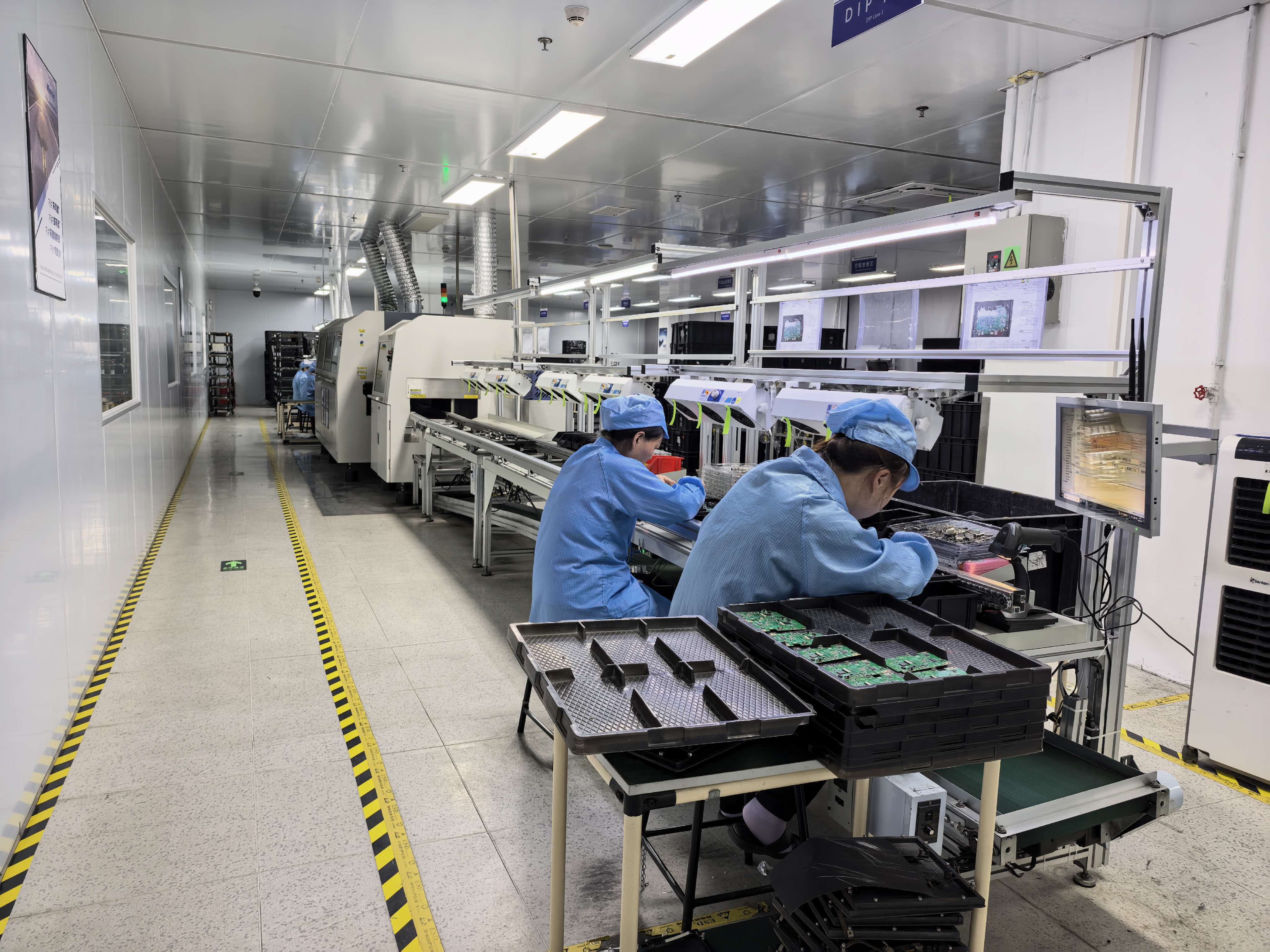
The documented risk register for these deployments lists signal loss, picture flicker, overheating, audio failure and focus deviation. The corresponding control methods are constant temperature protection, automatic signal correction, auto focus lock, an anti-interference circuit and a built-in heat dissipation module. After delivery, the documented support measures are 24-hour online technical debugging and spare parts supply for quality defects. When a project runs in a fixed installation for years, those two support measures are what keep the room on air.
Frequently asked questions
Is the TC-980S CE certified, and why does that matter before ordering?
Yes — the TC-980S is stated as CE certified, and CE marking matters at the decision stage because it is the conformity documentation EU/EEA buyers rely on when a camera is placed on the market or handed over inside a fixed installation, and because retrofitting a non-conforming model after delivery is costly. The CE certification status of the TC420 is not specified in the product documentation available for this comparison, so a buyer who requires CE should request written confirmation for the exact model, configuration and destination market before committing to a purchase order. Where the camera becomes part of medical electrical equipment rather than a standalone AV device, the applicable requirement may extend to the IEC 60601-1 series, and responsibility should be agreed in writing.
What is the practical difference between the TC-980S and the TC420 in a broadcast room versus a conference room?
The TC-980S is positioned for broadcasting, event streaming and medical teaching, and its horizontal pan range of -170° to +170° allows one mounting position to cover a stage, a hall or a teaching room. The TC420 is positioned as a PTZ video conference camera; it uses a glass and plastic housing and supports SDI and HDMI video output interfaces, which suits meeting rooms and other fixed installations where the camera points at a seated group. The difference is the movement envelope and the design target, not the image pipeline alone.
How do the TC-980S and the TC420 compare on cost?
No model-specific price difference between the TC-980S and the TC420 is published in the information available for this comparison, so cost is a quotation-level question. The published cost statement is platform-level: TCHD Video states that its live streaming cameras cost 15% less than traditional cameras in the same comparison and require less maintenance, with cost effectiveness, stability, low latency and 4K image quality named as core advantages. In a live project, the difference between the two models is driven by the outputs and configuration specified for the room.
How can a buyer validate either camera before full deployment?
Two documented steps support validation. The supplier performs a 100% full-function aging test before shipment and a pre-delivery signal stability inspection, so the unit received has been exercised rather than sampled. Support then continues after delivery through 24-hour online technical debugging and spare parts supply for quality defects. In practice, confirm the intended output path and mounting position in writing, request the catalog and specification sheet for the exact configuration, and start with a limited first order before rolling the model out across multiple rooms.
Which manufacturer is better for a live streaming camera?
Better depends on the project rather than on one universal ranking, and the criteria are checkable: certification readiness for the destination market (the TC-980S is stated as CE certified, while certification for other models must be confirmed in writing), the pan range against the room, the video output interfaces against the existing switcher, recorder or codec chain, documented quality assurance such as a 100% full-function aging test and a pre-delivery signal stability inspection, and post-delivery support such as 24-hour online technical debugging and spare parts supply for quality defects. TCHD Video, established in 2005 in Beijing, builds both models discussed here and states that its live streaming cameras cost 15% less than traditional cameras with lower maintenance requirements. Buyers ready to close this decision can request the product catalog and a model-specific quotation from TCHD Video.
Conclusion: certify first, then match the room
The TC-980S and the TC420 are not competing for the same purchase. The TC-980S answers broadcasting, event and medical teaching briefs with a CE-certified configuration and a -170° to +170° pan envelope. The TC420 answers conference-room briefs as a PTZ video conference camera with a glass and plastic housing and SDI and HDMI outputs. Risk-averse procurement should settle the compliance question first, then the movement envelope, then the interfaces — and then hold the written confirmation against the quotation.
Where the two models are documented to the same standard, the decision becomes straightforward: shared platform capability such as the 1/2.8-inch 8.42 million pixel sensor, 3840x2160 resolution and up to 60 fps output is common to both, while certification status and pan range separate them. That is the split this guide recommends buyers use.
Next step: confirm the configuration before you commit
TCHD Video supplies live streaming cameras, video capture cards, video converters, video encoders and video switchers, and provides 24-hour online technical debugging and spare parts supply for quality defects. To move this decision forward, request the product catalog and a model-specific quotation for the TC-980S or the TC420, including the CE documentation for the configuration you intend to purchase.
Download the TCHD Product Catalog 2025 (PDF)
Website: www.tchdvideohk.com | Email: tomzhang@tchdvideo.com | Tel: +86-13910334207 | WhatsApp: +86 194 9887 2019
Address: Room 411, Building 1, Yard 9, Lianqiao 2nd Street, Haidian District, Beijing, China.
Have Questions or Need More Details?
Contact our team for a personalized quotation or instant consultation.
Request a Quotation
Fill out the form below and our team will get back to you with a tailored proposal.
WhatsApp Direct Chat
Prefer to chat in real-time? Message us on WhatsApp for instant assistance & quick answers.
- Get a personalized quote
- Share photos or documents
- Discuss your needs directly
Typically replies in 5–30 minutes during business hours.