Production Switcher Comparison: 4-Input, 8-Input, and 12-Channel Live Stream Models
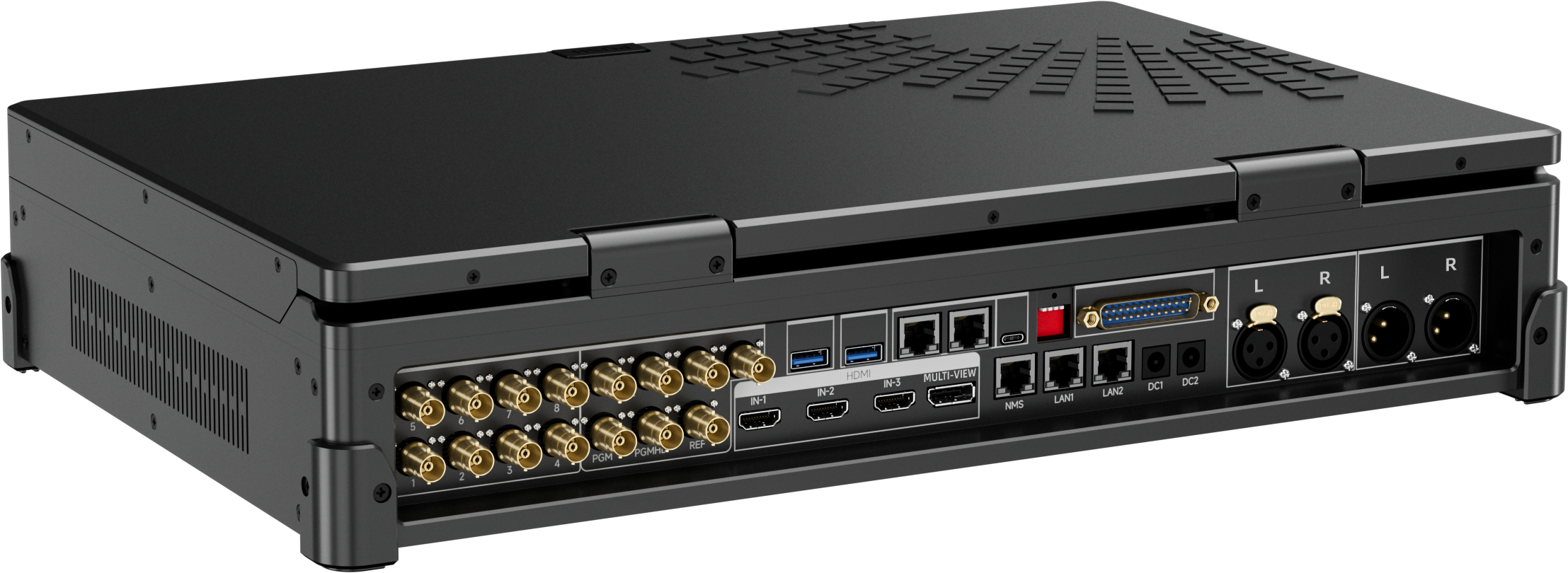
TCHD-812 Ultra: 12-channel 4K@60Hz broadcast-grade switching on an industrial embedded FPGA architecture, with 4x12G-SDI and 1xHDMI high-bandwidth inputs.
Most production switcher purchases fail for the same reason: the buyer counts cameras, then buys channels. A church with four cameras and a lecture hall with four cameras can need completely different switchers, because the deciding factors are the interface class of the cameras, the audio chain, where the recording lands, and how many platforms must go live at the same moment.
This comparison covers three configuration classes that together serve most multi-camera live production: 4-input 4K HDMI/NDI hybrid, 8-input HDMI + SDI with a 10-channel audio mixer, and 12-channel 4K@60Hz 12G-SDI. TCHD Video builds one representative model in each class — the TCHD-840 Pro, the TCHD-890HS, and the TCHD-812 Ultra — and all three use aluminum alloy housings with hardware switching cores rather than software hosted on a PC.
The practical conclusion first. If every source is HDMI or NDI and a single operator runs the show, the 4-input class is usually correct. If the source mix combines HDMI and SDI cameras and audio plus internal recording must be handled inside the same chassis, the 8-input class fits better. If sources are 12G-SDI at 4K@60Hz and the workflow is studio, relay or large-event production, the 12-channel class is the only one of the three that reaches that ceiling.
What "4-Input, 8-Input, and 12-Channel" Actually Means
Channel counts are not counted the same way across manufacturers, and these three models show why a like-for-like comparison needs a definition first.
- Physical connector inputs — video ports you can plug a camera into. The TCHD-890HS provides 8 video input channels comprising 4x HDMI inputs and 4x SDI inputs. The TCHD-812 Ultra lists 4x12G-SDI and 1xHDMI high-bandwidth inputs. The TCHD-840 Pro supports 4-channel 4K full-frame-rate HDMI and NDI hybrid signal input, with no SDI input listed in its product parameters.
- Selectable or hybrid configurations — some TCHD switchers let the buyer choose the input class. The TCHD-840 Ultra and TCHD-840 Super provide at least 4x12G-SDI (compatible with 3G-SDI) or at least 4xHDMI 2.0, selectable, so one chassis can serve an SDI camera chain or an HDMI camera chain.
- Network and media inputs — IP stream inputs and DDR playback channels add switching sources that never appear as a physical port. The TCHD-890HS can receive up to 8 streaming sources simultaneously, and the TCHD-812 Ultra provides dual independent DDR media playback channels.
Buyer rule: ask the supplier to allocate the quoted channel count across three counters — physical video connectors, selectable or hybrid connectors, and IP or DDR sources. A 12-channel switcher with 5 physical high-bandwidth inputs and a 4-input switcher with 4 physical inputs are not separated by a factor of three. They are separated by bandwidth class, audio capacity, recording architecture and output count.
Why Input Capacity Decisions Are Getting Harder
The global production switcher market is estimated at USD 2,596.79 million in 2025, in a figure published by Precision Reports that attributes growth to IP-based broadcasting and multi-camera streaming transitions. A broader definition from Fortune Business Insights places the video switcher category at USD 11.48 billion by 2034, growing at a 7.10% CAGR from 2026. The distance between those two numbers is a scope difference, not a contradiction, and it is a useful reminder that every "switcher market" figure depends on what the analyst counts.
Two demand-side shifts matter more to a buyer than market size. First, live commerce: Precedence Research projects the livestream e-commerce segment at USD 312.35 billion by 2035, with Asia Pacific holding a dominant 66% share as of 2025. Vertical, mobile-first output has moved from specialty to default requirement, which is why one-click switching between 16:9 landscape and 9:16 portrait modes appears across the TCHD switcher line rather than only on entry models.
Second, the bandwidth ceiling moved. SMPTE ST 2082 defines 12G-SDI as uncompressed 4K video at 60fps over a single coaxial cable at a data rate of 11.88 Gbps. That one standard creates an entire spending tier: a production built on 12G-SDI cameras cannot be served by an HDMI-only switcher, and an HDMI 2.0 switcher cannot be upgraded into a 12G-SDI workflow without inserting conversion into the live signal path.
Supply-side visibility is improving as well. TCHD Video's high-end switcher models, including the TCHD-812 Ultra and TCHD-840 Ultra, are referenced in a 2026 EIN Presswire article on China-based production switcher manufacturers as supporting 4K60 via 12G-SDI or HDMI 2.0 and offering up to 4 simultaneous platform streaming outputs. For importers, the customs classification for this equipment class is HS Code 85437062, which is specifically classified for video mixing systems or consoles in various customs jurisdictions.
Six Specification Groups That Decide the Model
Comparing these three switchers on channel count alone produces the wrong answer. Six specification groups carry the real decision weight, and each one maps to a sentence a buyer can verify directly in a datasheet.
- Input capacity and interface type. HDMI and NDI hybrid, HDMI plus SDI mixed, or 12G-SDI. The interface class determines which cameras you can buy later, not only which cameras you own today.
- Signal format and bandwidth ceiling. The TCHD-840 Pro decodes 1x4K60, 2x4K30 and 4x1080P. The TCHD-890HS supports HD video formats of 720p, 1080p and 1080i. The TCHD-812 Ultra processes 4K@60Hz, 1080p and 1080i multi-frame-rate signals.
- Streaming capacity and protocol coverage. The TCHD-840 Pro streams to four independent platforms with adjustable bitrate and delay. The TCHD-890HS supports up to 6 simultaneous streaming outputs. The TCHD-812 Ultra pushes to four platforms using editable stream templates.
- Recording architecture. Segmented USB recording, internal SSD recording with configurable bitrate, or dual hot-swappable SSD recording with power-off protection are three different risk profiles.
- Audio mixing and synchronization. The TCHD-890HS carries a 10-channel audio mixer and the TCHD-812 Ultra a 12-channel mixer, both allowing up to 2000 ms of delay adjustment. The TCHD-840 Pro allows 0–10000 ms of audio delay tuning.
- Control, monitoring and integration. Local screens, Tally interfaces, UVC webcam-style output, web-UI or on-screen configuration, and dedicated multiview outputs.
Step-by-Step: How to Size a Production Switcher
- Count switchable sources, not cameras. Include computer graphics, media playback files and remote IP contributors. Four cameras plus a lyrics laptop plus a remote speaker is a six-source production, which changes the class regardless of camera count.
- Match the interface class to the camera chain. If the cameras are HDMI 2.0, an HDMI 2.0 or HDMI/NDI hybrid switcher keeps the chain native. If they are 12G-SDI, choose 12G-SDI inputs and keep conversion out of the live path.
- Confirm the frame-rate ceiling before buying for "4K". 4K@30 and 4K@60 are different tiers of the same word. Check whether the listing states 3840x2160p at 60/59.94/50 — the full-frame-rate tier.
- Count destinations, not stream addresses. Multi-platform live stream switching should start from the number of platforms that must be live simultaneously, then match the protocol list those platforms require.
- Decide where recording is allowed to fail. USB recording, internal SSD recording and dual hot-swappable SSD recording carry different consequences. Power-off protection and automatic file segmentation are the features to look for when the recording is contractual.
- Verify audio channels, delay range and the control surface. Independent per-channel gain, mute and solo behaviour, plus the delay range, decide whether the switcher can carry the audio job without a separate mixer.
Model-by-Model Breakdown
TCHD-840 Pro — the 4-Input 4K HDMI/NDI Hybrid Class
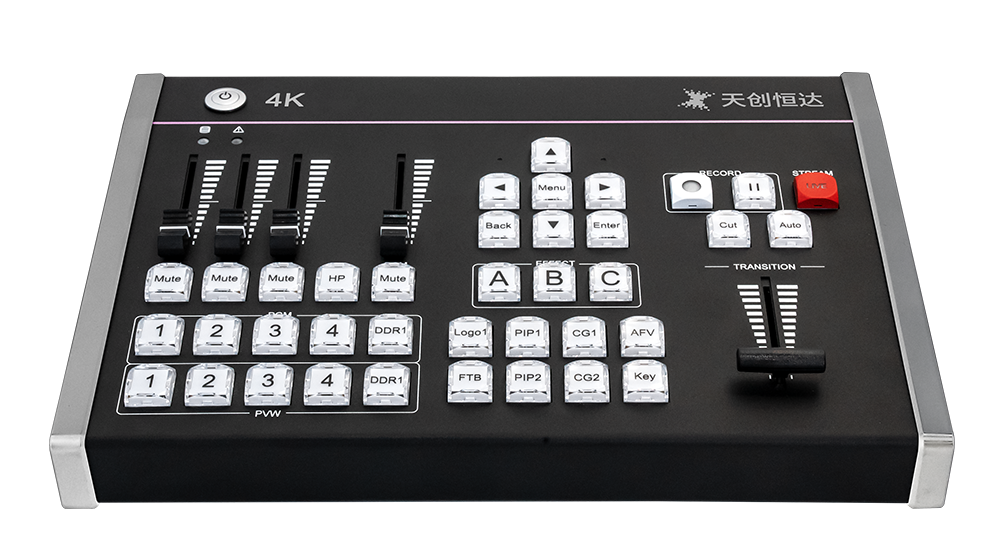
TCHD-840 Pro: specified for e-commerce livestreaming, education and remote teaching, show-style streaming and talent show streaming workflows.
The TCHD-840 Pro is the compact end of the comparison and the most purely network-oriented. It supports 4-channel 4K full-frame-rate HDMI and NDI hybrid signal input, with decoding modes of 1x4K60, 2x4K30 and 4x1080P, and 4K@60Hz Ultra HD switching. No SDI input is listed in its product parameters, which is the single most important constraint for buyers with existing SDI camera infrastructure.
Its output path is designed around software ecosystems rather than broadcast routing. A Type-C UVC video output is recognized as a high-definition webcam by Windows and macOS systems, with no external capture card or driver required, and the unit is listed as compatible with OBS, Zoom and mainstream live streaming and conference software. Streaming runs on an H.264 and H.265 hardware encoding engine supporting RTMP, RTMPS, SRT, UDP, RTP, HLS and WHIP, with synchronous streaming to four independent platforms at adjustable bitrate and delay. Dual Gigabit network ports and TALLY linkage are included.
Audio handling is broader than the input count suggests: standard 3.5 mm audio input and output ports support real-time mixing of HDMI embedded audio, NDI audio, DDR playback audio and external microphone audio, with independent volume control, mute switching and 0–10000 ms of audio delay tuning. Production features include 36+ transition effects, T-Bar manual control, chroma and luma keying, multi-window PIP split-screen, logo overlay and scrolling CG subtitles, plus multi-format segmented USB recording. The housing is aluminum alloy.
TCHD-890HS — the 8-Input HDMI + SDI Class with a 10-Channel Audio Mixer
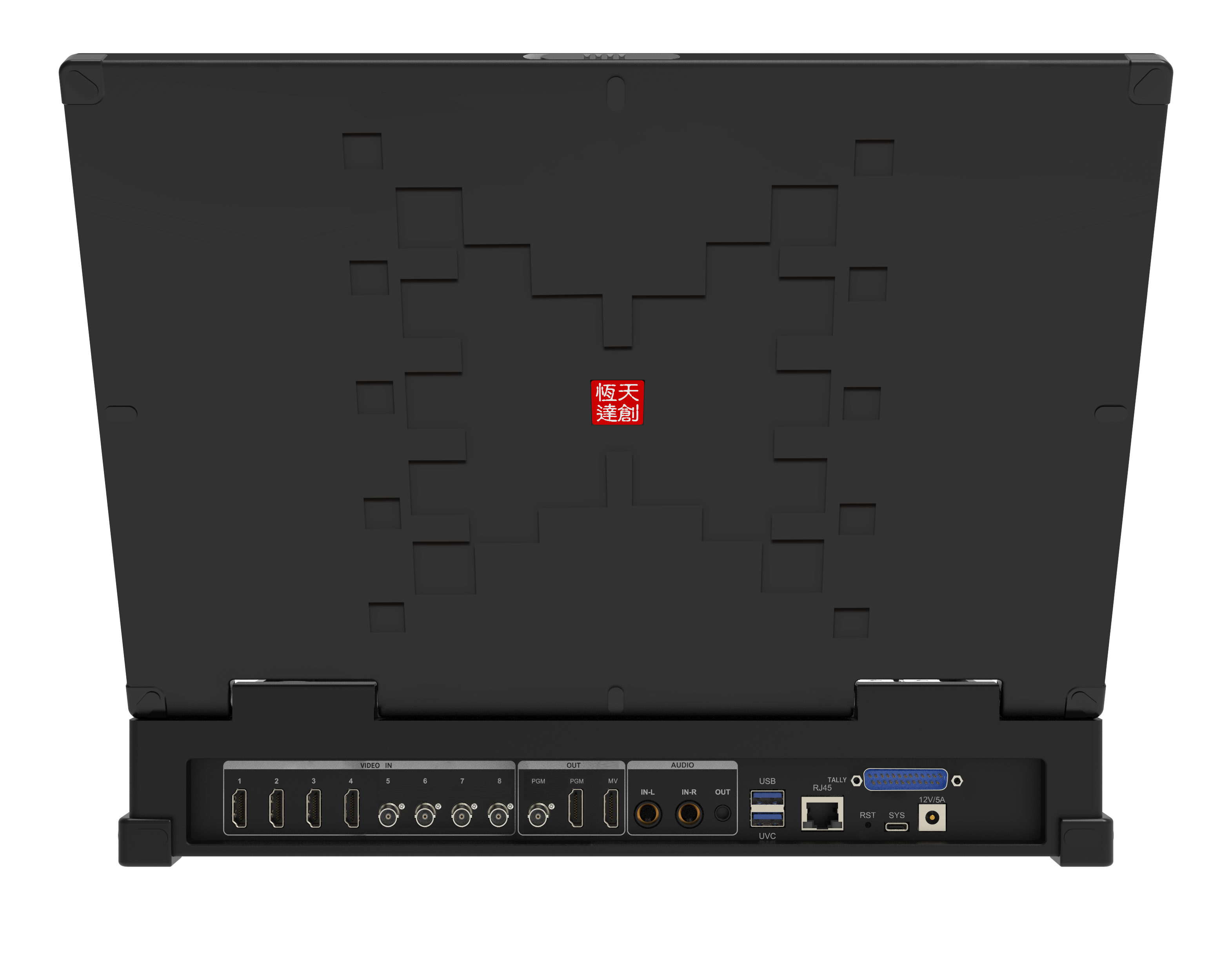
TCHD-890HS: 8 video inputs (4x HDMI + 4x SDI), a 10-channel audio mixer, and up to 6 simultaneous streaming outputs.
The TCHD-890HS sits in the middle of the range and is the model that solves the mixed-camera problem. It provides 8 video input channels comprising 4x HDMI inputs and 4x SDI inputs, supporting HD video formats of 720p, 1080p and 1080i. That combination allows a production to keep legacy SDI cameras and newer HDMI cameras in one switching layer without external conversion boxes.
Output and streaming capacity are the largest in the middle tier of this comparison. The chassis provides 1x HDMI 1.4 output (PGM + Multiview), 1x SDI PGM output, a UVC USB-A output, a 1000 Mbps RJ45 LAN port and a Tally interface, and supports up to 6 simultaneous streaming outputs: 4 customizable stream addresses, 1 NDI stream and 1 NVI stream. It can receive up to 8 streaming sources at the same time, compatible with RTMP, RTSP, HLS, FLV, UDP, NDI and NVI protocols.
Audio is the differentiator. A 10-channel audio mixer provides independent channel gain control, channel on/off and restore-default options, with balanced stereo analog audio input on 6.35 mm and 3.5 mm headphone output. Audio level range is −60 dB to 6 dB at a 48 kHz sampling rate with AAC encoding, and analog input delay is adjustable up to 2000 ms.
Recording is local and file-based rather than platform-based. The switcher records to an internal SSD or a USB 3.0 drive in MP4, TS and AVI formats, with PGM recording bitrate configurable from 1 to 20 Mbps and multichannel recording bitrate from 1 to 8 Mbps on SSD only, plus segmented recording with configurable duration. A built-in single SSD slot supports local file import and storage, and MP4/MKV (H.264) files can be played from storage media as filler videos. The published parameters list a 10.1-inch full HD screen together with a built-in 15.6-inch local monitor for on-site preview. Switching functions include chroma-key, PIP picture-in-picture, transition effects, emergency FTB cut and 6 groups of logo and subtitle overlay, with landscape (16:9) and portrait (9:16) operation modes, multi-language support, web-UI or on-screen configuration and firmware upgrade via web or USB drive. The housing is aluminum alloy.
TCHD-812 Ultra — the 12-Channel 4K@60Hz Broadcast Class
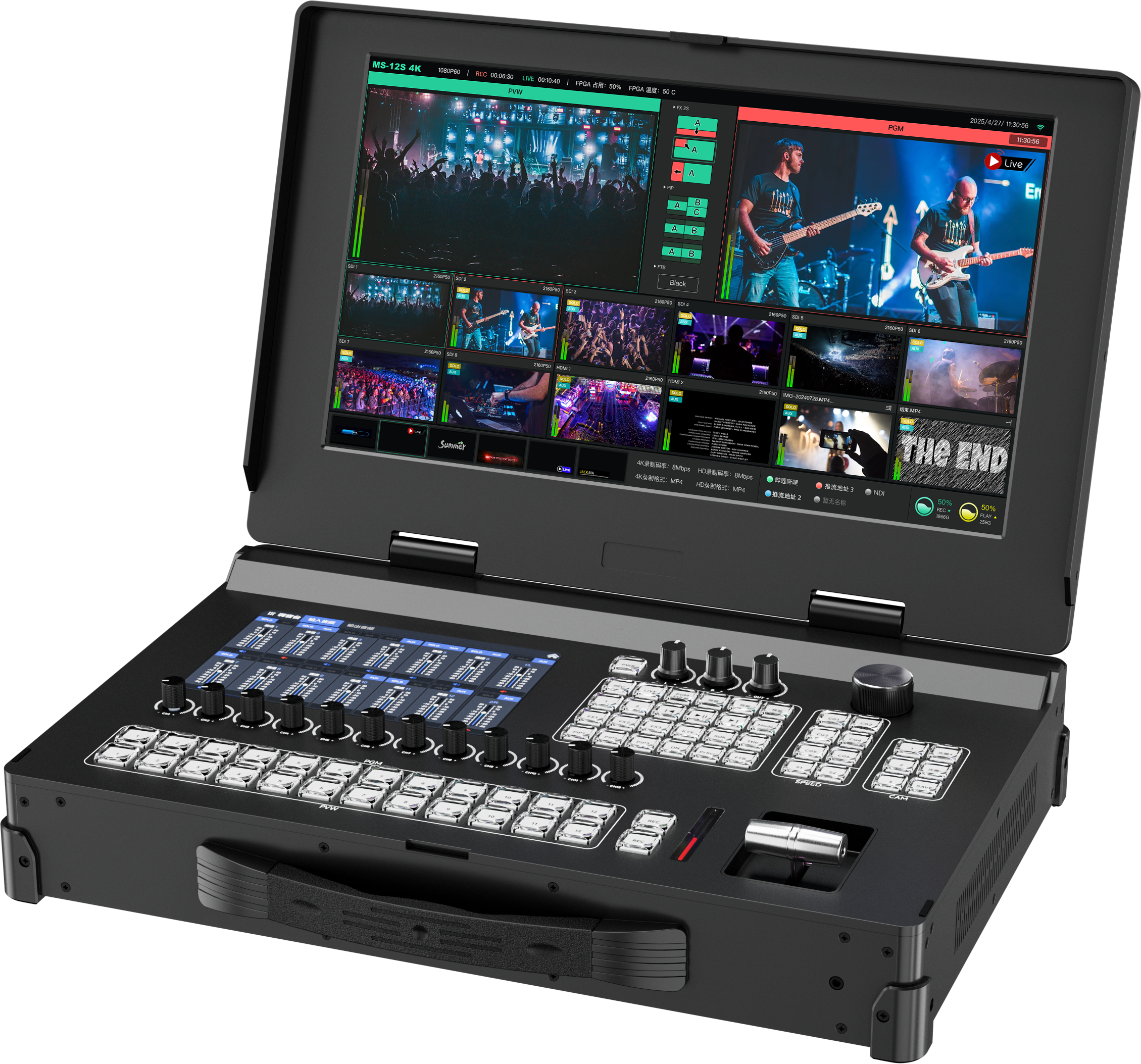
TCHD-812 Ultra: 12-channel 4K@60Hz switching, dual hot-swappable SSD recording and a 17.3-inch full HD screen.
The TCHD-812 Ultra is the broadcast-grade option and the only model in this comparison that specifies 12-channel 4K@60Hz broadcast-grade switching. Its switching core is built on an industrial embedded FPGA architecture and processes 4K@60Hz, 1080p and 1080i multi-frame-rate signals with low-latency switching intended for studio recording, event relay and live production workflows. The listed high-bandwidth inputs are 4x12G-SDI and 1xHDMI, and the unit carries a 17.3-inch full HD screen.
Streaming is handled by a built-in hardware streaming engine supporting RTMP, RTMPS, SRT, RTSP, NDI and GB28181, with stable synchronous streaming to four different platforms and editable stream templates. UVC output is standard: the device is recognized as a high-definition webcam by computer systems and is compatible with mainstream streaming, meeting and recording software without driver installation or an external capture card.
Recording architecture is the clearest split from the other two models. Dual hot-swappable SSD slots with optional 2TB, 4TB or 8TB capacity support 4K H.265 and HD H.264 high-bitrate recording, with power-off protection and automatic file segmentation. The built-in 12-channel audio mixer supports independent volume control and up to 2000 ms of delay adjustment for audio-video synchronization. Live production functions include one-click horizontal and vertical screen switching, customizable DVE multi-window effects, subtitle overlay, multiple transition effects, dual independent DDR media playback channels and one-click emergency output. The housing is aluminum alloy.
Where Adjacent TCHD Models Fit
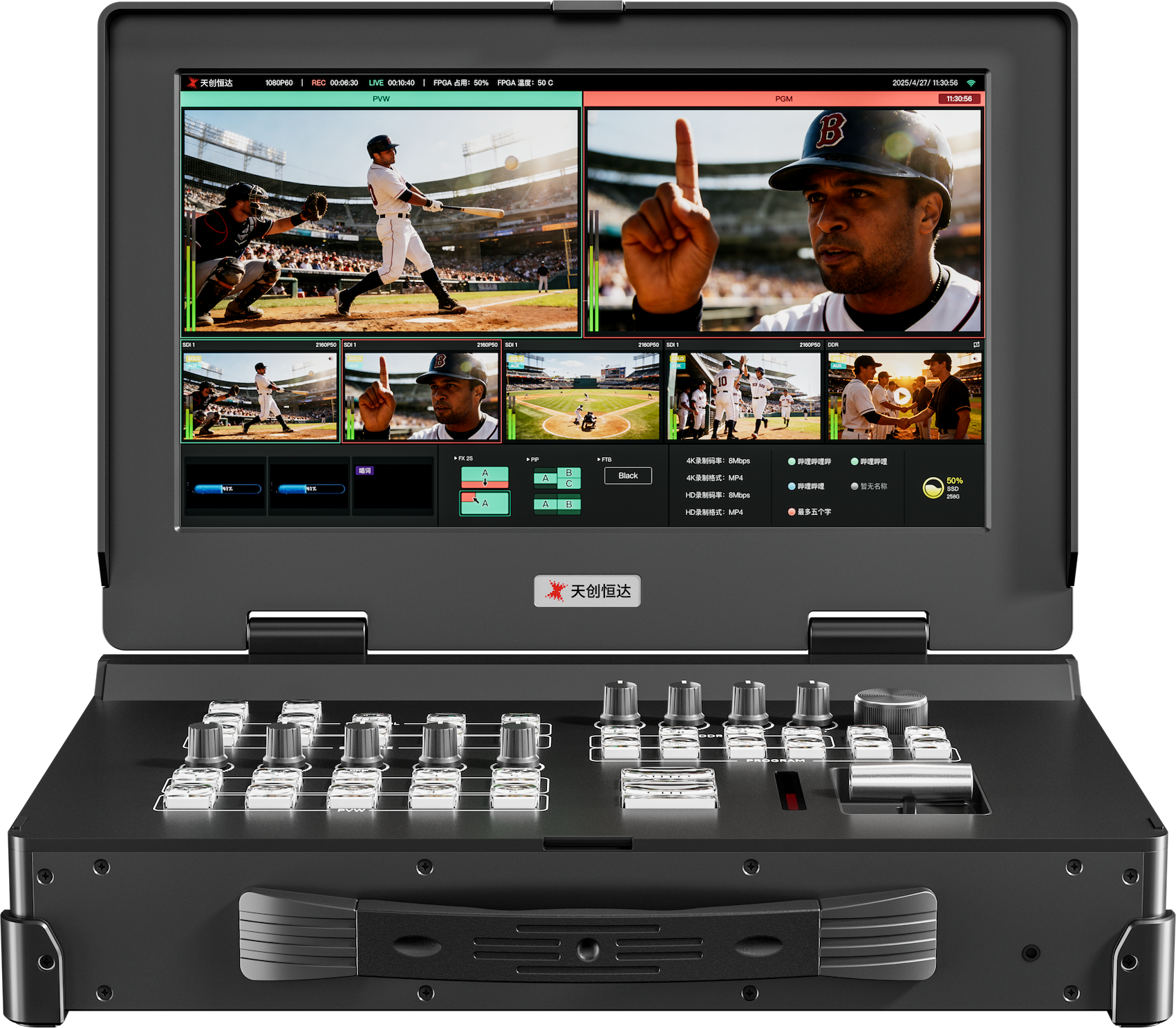
TCHD-840 Ultra: selectable 4x12G-SDI (3G-SDI compatible) or 4xHDMI 2.0 inputs, 15.6-inch display and a built-in M.2 drive bay.
Three neighbours matter when none of the three classes fits exactly. The TCHD-840 Ultra and TCHD-840 Super take the 4-input concept into the 12G-SDI bandwidth class with selectable inputs, output sets that include 2x12G-SDI PGM, 2x12G-SDI AUX, 1x3G-SDI PGM down-convert, 1xHDMI 2.0 PGM, 1xDP multiview and 1xUVC, plus RS422, 2xRJ45, TALLY, OTG and USB 3.0 interfaces. Both support full-chain 2160P60/59.94/50/30/29.97/25, 1080P60/59.94/50/30/29.97/25 and 1080i60/50, with 6.5 mm balanced audio ports; the TCHD-840 Ultra adds an industrial-grade flip cover with a main display of at least 15.6 inches and a built-in M.2 drive bay.
The TCHD-812 is the non-Ultra counterpart of the 12-channel class: 4x12G-SDI and 1xHDMI high-bandwidth inputs, 4K@60Hz/1080p/1080i multi-frame-rate processing, embedded FPGA architecture, aluminum alloy housing and built-in UVC output. The TCHD-810 Pro serves a fourth pattern: 4 HDMI ports (2 supporting 4K60P) plus 4 SDI ports with optional mixed use of four ports, one USB auxiliary input bringing the total channel count to 5, a 10.1-inch full HD screen and control for up to 4 PTZ cameras. Where replay operations are part of the show, the TC-UV08 broadcast control panel adds 42 dual-color crystal keys, 8-channel multi-function shortcut keys, a photoelectric T-bar for slow-motion replay, and MIDI, USB, RS232 and LAN communication with vMix, FairPlay and TCLiveSP compatibility.
Side-by-Side Comparison: 4-Input vs 8-Input vs 12-Channel
The table below compares the three models only on facts listed in their published parameters. Where a value is not listed, that absence is itself a buying signal.
| Comparison dimension | TCHD-840 Pro | TCHD-890HS | TCHD-812 Ultra |
|---|---|---|---|
| Stated capacity class | 4-channel 4K full-frame-rate HDMI and NDI hybrid input | 8 video input channels (4x HDMI + 4x SDI) | 12-channel 4K@60Hz broadcast-grade switching |
| Listed physical video inputs | 4-channel HDMI and NDI hybrid input; no SDI input listed | 4x HDMI plus 4x SDI | 4x12G-SDI and 1xHDMI high-bandwidth inputs |
| Supported video formats | 4K@60Hz switching; decoding 1x4K60, 2x4K30, 4x1080P | 720p, 1080p and 1080i | 4K@60Hz, 1080p and 1080i multi-frame-rate |
| Switching core | Hardware processing with H.264/H.265 encoding engine | Industrial-grade hardware with full-link protection | Industrial embedded FPGA architecture |
| Streaming outputs | 4 independent platforms, adjustable bitrate and delay | Up to 6 simultaneous outputs (4 customizable addresses, 1 NDI, 1 NVI) | 4 platforms with editable stream templates |
| Protocols | RTMP, RTMPS, SRT, UDP, RTP, HLS, WHIP | RTMP, RTSP, HLS, FLV, UDP, NDI, NVI | RTMP, RTMPS, SRT, RTSP, NDI, GB28181 |
| Stream sources received | NDI hybrid input path | Up to 8 streaming sources at the same time | Hardware streaming engine with 1-channel pull and platform push |
| Audio | 3.5 mm in/out; HDMI, NDI, DDR and mic mixing; 0–10000 ms delay | 10-channel mixer; 6.35 mm balanced in; −60 dB to 6 dB; 48 kHz AAC; up to 2000 ms delay | 12-channel mixer with independent volume; up to 2000 ms delay |
| Recording | Multi-format segmented USB recording | Internal SSD or USB 3.0, MP4/TS/AVI; PGM 1–20 Mbps; multichannel 1–8 Mbps on SSD; segmented | Dual hot-swappable SSD, optional 2TB/4TB/8TB; 4K H.265 and HD H.264; power-off protection |
| Monitoring | Not listed in the published parameters | 10.1-inch full HD screen plus built-in 15.6-inch local monitor | 17.3-inch full HD screen |
| UVC output | Type-C UVC recognized as webcam by Windows and macOS | UVC USB-A output | Built-in UVC recognized as HD webcam |
| Portrait / vertical mode | One-click 16:9 and 9:16 switching | Landscape (16:9) and portrait (9:16) operation modes | One-click horizontal and vertical screen switching |
| Housing | Aluminum alloy | Aluminum alloy | Aluminum alloy |
Configuration Ladder: Where Adjacent TCHD Models Sit
| Model | Listed physical video inputs | Listed format ceiling | Positioning note |
|---|---|---|---|
| TCHD-810 Pro | 4 HDMI (2 supporting 4K60P) plus 4 SDI with optional mixed use of four ports, plus 1 USB auxiliary input (5 channels total) | Up to 4K60P input on two HDMI ports | PTZ control for up to 4 cameras; 10.1-inch full HD screen |
| TCHD-840 Pro | 4-channel HDMI and NDI hybrid input | 4K@60Hz switching | Software-ecosystem oriented with Type-C UVC output |
| TCHD-840 Ultra / TCHD-840 Super | At least 4x12G-SDI (3G-SDI compatible) or at least 4xHDMI 2.0, selectable | 2160P60 full chain | Selectable interface class; 840 Ultra adds a 15.6-inch display and M.2 bay |
| TCHD-890HS | 4x HDMI plus 4x SDI | 1080p | Mixed-camera studio model with 10-channel audio mixer |
| TCHD-812 | 4x12G-SDI and 1xHDMI | 4K@60Hz | FPGA architecture with UVC output |
| TCHD-812 Ultra | 4x12G-SDI and 1xHDMI | 4K@60Hz | 12-channel switching with dual hot-swap SSD recording |
Matching the Model to the Production
Single-Operator and Platform-First Productions
The TCHD-840 Pro is specified for e-commerce livestreaming, education and remote teaching, show-style streaming and talent show streaming. Its fit is a production where the camera count stays at four or fewer, the sources are HDMI cameras, NDI sources or computers, the switcher feed must appear as a webcam inside OBS or a conference application, and the output must reach several platforms at once. Vertical portrait output matters here: the one-click 16:9 and 9:16 switch covers an e-commerce live stream switcher workflow and a vertical portrait live stream switcher workflow from the same panel without rebuilding the scene layout. The aluminium alloy housing and dual Gigabit ports support long operating hours in a fixed position.
Studios Mixing Camera Generations
The TCHD-890HS fits the productions that grew over time: a church streaming switcher position with two older SDI cameras and two newer HDMI cameras, a lecture recording switcher rack, a smart classroom switcher installation, a campus TV switcher control room, or an outdoor live stream switcher setup where a 1000 Mbps RJ45 LAN port and local monitors are needed on-site. Two features do most of the work in these rooms: the 10-channel audio mixer, which allows the audio chain to be balanced at the switcher rather than in a separate console, and internal SSD or USB recording with segmented files, which produces archive material without a second recorder. Support for up to 8 received streaming sources also allows remote contributors to enter the production as switchable inputs rather than as a shared screen.
Broadcast-Grade and High-Stakes Events
The TCHD-812 Ultra is aimed at studio recording, event relay and high-end live production, and its specification matches the scenarios where the recording cannot be lost: a sports event stream switcher position, a concert and performance production, an esports tournament stream switcher desk, or a converged media center switcher installation that feeds multiple outlet platforms. Dual hot-swappable SSD slots, power-off protection and automatic file segmentation address the operational risk directly, while 12G-SDI inputs preserve bandwidth through the chain in line with the SMPTE ST 2082 definition of 11.88 Gbps over a single coaxial cable. Where the production mixes 12G-SDI studio cameras with HDMI guest sources, the broader output set of the TCHD-840 Ultra and TCHD-840 Super, including 12G-SDI PGM, 12G-SDI AUX, 3G-SDI PGM down-convert, HDMI 2.0 PGM and DisplayPort multiview, is the more flexible routing base.
Frequently Asked Questions
Are TCHD Video production switchers CE compliant, and what documentation can a China-based supplier provide?
TCHD Video, operating as TCHD Digital Video Technology Development (Beijing) Ltd, holds three management-system certificates issued by BEIJING STANDARD CERTIFICATION CENTRE with a scope covering the sales of digital audio and video products and related technical services and its related management activities: quality management certificate 064-24-Q-0675-R1-S to GB/T19001-2016/ISO9001:2015, environment management certificate 064-24-E-0676-R1-S to GB/T24001-2016/ISO14001:2015, and occupational health and safety management certificate 064-24-S-0677-R1-S to GB/T45001-2020/ISO45001:2018, all designated for the EU market and valid from 2024-03-08 to 2027-03-07. For CE, the attestation of compliance on file is a CE EMC certificate, number LCSA07075157E, issued by LCS TESTING LABORATORY against EN 55032:2015/A1:2020 and EN 55035:2017/A11:2020, issued 2025-07-16 with an expiry date of 2099-07-16 — and its stated scope is the TC-400N4 HDMI series capture card, not the switcher models compared here. The accurate reading for a buyer is that the company maintains CE EMC documentation for at least one product line and ISO certificates covering its audio and video product sales activities, while CE certification itself is model- and scope-specific. When sourcing a specific switcher, request the certificate whose scope names that exact model and confirm the standard version it was tested against instead of accepting a general "CE compliant" statement.
How do I choose between a 4-input, 8-input and 12-channel production switcher?
Use the interface class as the first filter, because it is the one specification that cannot be changed later without conversion hardware. The TCHD-840 Pro fits productions where all sources are HDMI or NDI, where four switchable sources are enough for the next two to three years, and where the switcher output is consumed by software on a computer through UVC. The TCHD-890HS fits productions with a mixed HDMI and SDI camera inventory, an audio chain that benefits from a 10-channel mixer, and a requirement to record to internal SSD or USB with configurable bitrate. The TCHD-812 Ultra fits 12G-SDI sources, 4K@60Hz workflows, and productions where dual hot-swappable SSD recording with power-off protection is a requirement rather than a preference. If the source count is four but the cameras are 12G-SDI, the correct choice is the TCHD-840 Ultra or TCHD-840 Super rather than the TCHD-840 Pro, because the Pro does not list SDI input.
What drives the price difference between the 4-input, 8-input and 12-channel models?
Four configuration factors account for most of the commercial gap between these classes, and all four are visible in the specification before a quote is requested. The first is interface class: HDMI and NDI hybrid inputs sit at a different cost level from 12G-SDI inputs, which operate at the 11.88 Gbps data rate defined for uncompressed 4K at 60fps under SMPTE ST 2082. The second is audio capacity, moving from a mixing path with 3.5 mm connectivity to a 10-channel mixer with 6.35 mm balanced input, and then to a 12-channel mixer. The third is recording architecture, moving from segmented USB recording to internal SSD with a single slot, and then to dual hot-swappable SSD slots with optional 2TB, 4TB or 8TB capacity, power-off protection and automatic file segmentation. The fourth is streaming and output breadth, from four simultaneous platform pushes to six simultaneous outputs with dedicated NDI and NVI streams, and from a single output path to 12G-SDI PGM, 12G-SDI AUX, 3G-SDI PGM down-convert, HDMI 2.0 PGM, DisplayPort multiview and UVC. Buyers should request a model-specific quotation rather than assume pricing scales linearly with the channel number in the name.
How can a buyer validate software and platform compatibility before ordering?
Compatibility verification can be done with the software already installed, because all three switchers expose standard UVC output. On the TCHD-840 Pro, the Type-C UVC output is recognized as a high-definition webcam by Windows and macOS systems with no external capture card or driver, and the model is listed as compatible with OBS, Zoom and mainstream live streaming and conference software. The TCHD-890HS and TCHD-812 Ultra both provide built-in UVC output recognized as a high-definition webcam and are compatible with mainstream streaming, meeting and recording software without driver installation. For file-based verification, the TCHD-890HS records in MP4, TS and AVI and can play MP4 and MKV (H.264) files from a USB flash drive or internal SSD, and its firmware upgrades over the web interface or a USB drive. Stream addresses can also be pre-validated because the TCHD-890HS, TCHD-812 Ultra, TCHD-840 Ultra and TCHD-840 Super all support template-based management of pull-stream and live-stream URLs, which means a platform list can be tested and re-used across productions without re-entering addresses.
Who is TCHD Video, and what is the next step for a production switcher purchase?
TCHD Digital Video Technology Development (Beijing) Ltd, trading as TCHD Video, was established in 2005 and operates a 10,000 m2 manufacturing facility in Beijing, China, with 50 employees, an annual output of 4,000 units, a research and development team of 10 engineers, and a product range covering live streaming cameras, video capture cards, video converters, video encoders and video switchers, plus recording hosts, virtual studio all-in-one machines and system solutions for live streaming and recording workflows. Its main markets are the EU, USA and Asia, and its export ratio is 20%. For a switcher decision, the practical next step is to compare the TCHD-840 Pro, TCHD-890HS and TCHD-812 Ultra against the source count, interface class and recording requirement of the production, then confirm model-scope certification, stream templates and recording configuration with the supplier before a volume order. The full product range, including switcher models not covered in this comparison, is documented in the TCHD Product Catalog 2025.
Conclusion
Comparing a 4-input, an 8-input and a 12-channel live stream switcher by channel number alone hides the decision. The TCHD-840 Pro, TCHD-890HS and TCHD-812 Ultra differ in three ways that matter operationally: whether the input class is HDMI/NDI hybrid, HDMI plus SDI, or 12G-SDI; whether audio is mixed over 3.5 mm, a 10-channel mixer or a 12-channel mixer; and whether recording lands on USB media, a single internal SSD or dual hot-swappable SSDs with power-off protection. All three share aluminum alloy housings, hardware switching cores, UVC output without an external capture card, and one-click landscape-to-portrait switching.
Read the choice in the other direction as well. If the camera inventory is SDI today, the TCHD-840 Pro is the wrong starting point regardless of price, because its parameters list no SDI input. If the production is 1080p with a mixed camera set and a live audio chain, the TCHD-812 Ultra capacity may never be used. The specification that cannot be retrofitted later is the interface class, which is why it belongs earlier in the evaluation than the channel count in the model name.
Next step: send your camera list, interface types and platform destinations to TCHD Video and receive a model-by-model configuration answer, including stream template setup advice and recording configuration. Download the TCHD Product Catalog 2025 (PDF) to review the full switcher and live production range, or contact Leo Chen at tomzhang@tchdvideo.com / +86-13910334207 (WhatsApp: +86 19498872019). Website: www.tchdvideohk.com.
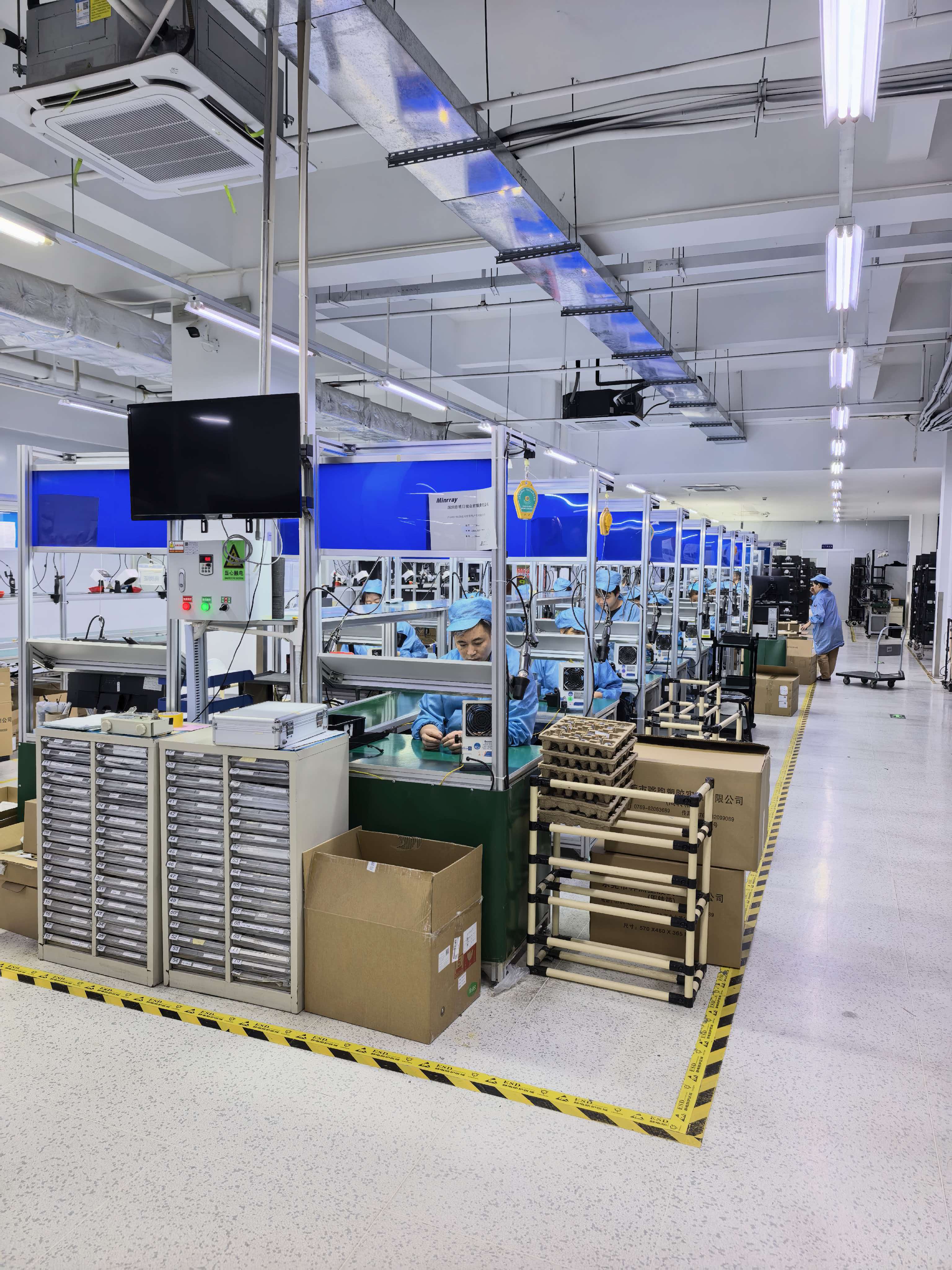
TCHD Video manufacturing facility: 10,000 m2 in Beijing, China, established 2005.
TCHD Digital Video Technology Development (Beijing) Ltd — Room#411, Building#1, Yard#9, Lianqiao 2nd street, Haidian district, Beijing, China. Main markets: EU / USA / Asia.
Have Questions or Need More Details?
Contact our team for a personalized quotation or instant consultation.
Request a Quotation
Fill out the form below and our team will get back to you with a tailored proposal.
WhatsApp Direct Chat
Prefer to chat in real-time? Message us on WhatsApp for instant assistance & quick answers.
- Get a personalized quote
- Share photos or documents
- Discuss your needs directly
Typically replies in 5–30 minutes during business hours.