
How to Deploy Live Streaming Cameras for E-commerce Projects: A Scenario-Specific Guide
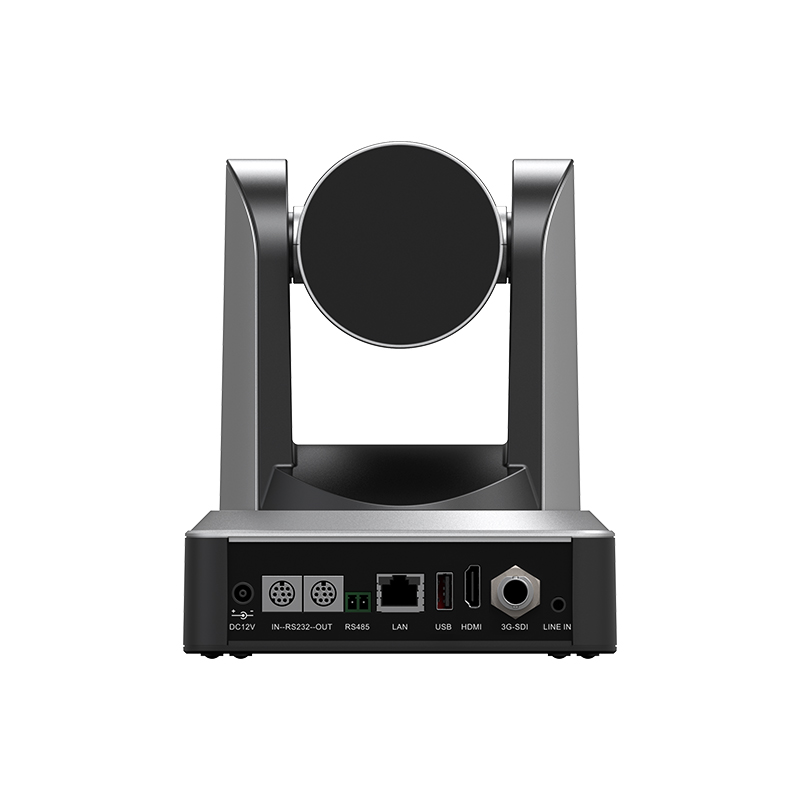
The TC-980S (model 6370) interface panel: HDMI, SDI, USB 3.0, LAN and DC12V power — the connection points an e-commerce studio deployment is built around.
Deploying a live streaming camera for an e-commerce project is a systems decision, not a product decision. A camera that performs well in a lecture hall or a church sanctuary can still underperform in a retail studio where the host walks in and out of frame, products are held close to the lens, and the broadcast runs for hours while the same signal is pushed to more than one platform.
For most e-commerce builds, the practical answer is a PTZ live streaming camera — the TC-980S (model 6370) or the TCHD-T3 — mounted indoors, connected with an HDMI cable, an SDI cable and the supplied DC12V power adapter, and configured to stream video to the platforms the seller already uses. This guide explains how to plan that deployment step by step, which model suits which e-commerce format, and which indoor working conditions apply.
Quick answer: an e-commerce studio deployment needs (1) a camera with the interfaces your signal path uses — HDMI, SDI, USB 3.0 and LAN, (2) an indoor mounting position with room for PTZ movement, (3) the matched accessory set of HDMI cable, SDI cable and power adapter, and (4) an indoor environment inside the documented operating window of −10°C to +50°C and 20% to 80% humidity for continuous 24/7 operation.
Problem Definition: Why E-commerce Studios Break Standard Camera Setups
E-commerce live selling places four demands on a camera installation that general recording setups rarely face at the same time.
- Uptime under continuous load. Live selling sessions are long-form productions. TCHD Video documents these camera applications as 24/7 continuous operation in indoor conditions, which is a different requirement from a two-hour conference recording.
- A moving presenter plus close-up merchandise. A camera bolted to a fixed wide shot loses the sale when the host steps aside to demonstrate a product. Optical zoom and tracking behaviour matter more here than raw resolution.
- Mixed signal paths in one room. A single studio may need HDMI into a switcher, SDI for a longer cable run, USB 3.0 for a laptop-based platform, and a LAN connection for direct RTMP delivery. Cameras that expose all four interfaces remove adapters and failure points from the chain.
- Portrait output and multi-platform delivery. Vertical selling formats and simultaneous publishing to several platforms are now routine, and they change both the mounting decision and the switching equipment behind the camera.
The failure pattern is consistent: buyers select a camera on image quality alone, then discover that the cable run is too long for the chosen interface, that the room sits outside the camera's operating window, or that no preset position can follow the host. Deployment planning should therefore start from the scenario — the studio, the format and the platform — and work backwards to the model.
Industry Background: Where E-commerce Streaming Sits in the Camera Market
The equipment class is mature, which is good news for project planning. Third-party research places the global live streaming camera market at USD 3.35 billion in 2025, with a projected CAGR of 8.8% to reach USD 7.79 billion by 2035 (Vertex AI Search / Industry Report). Within that market, PTZ cameras are estimated to account for 38.5% of global conference camera revenue in 2025 (Metastat Insights) — the same pan-tilt-zoom architecture that e-commerce studios adopt for presenter tracking.
Hardware remains the largest single layer of the video collaboration stack: video conferencing hardware, including cameras, accounted for 46% of total video conferencing market revenue in 2024 (Grand View Research). On the manufacturing side, China produced 749 million television and digital cameras in 2024, valued at approximately USD 16.5 billion (IndexBox), which is the supply base most e-commerce projects buy from.
For an e-commerce buyer, the practical reading of this data is not about market size but about maturity. Cameras in the PTZ class are documented, standardized on common control protocols and available with HDMI, SDI, USB and LAN outputs. The differentiator between a workable and an unworkable studio is therefore rarely the camera class itself — it is whether interfaces, framing behaviour and environmental limits are matched to the specific selling format.
The Deployment Solution: Cameras, Signal Chain and Support Equipment
TCHD Video (TCHD Digital Video Technology Development (Beijing) Ltd) is a Beijing-based manufacturer established in 2005 that produces live streaming cameras, video capture cards, video converters, video encoders and video switchers, operating a 10,000 m² facility with a 10-engineer R&D team and an annual output of approximately 4,000 units. Two of its camera models map directly onto e-commerce streaming work.
TC-980S (model 6370): the PTZ camera for multi-camera e-commerce studios
The TC-980S is a PTZ live streaming camera in the broadcasting, education training, medical teaching and video conference categories. It uses a 1/2.8 inch high quality CMOS sensor with 8.42M effective pixels in a 16:9 frame, offers 12X optical zoom (with 20X and 30X variants in the same series) plus 16X digital zoom, and outputs HDMI at up to 3840×2160 and SDI at up to 1080P60. Interfaces include HDMI, SDI, LAN (with POE+ support), USB 3.0, audio input, RS232-IN, RS232-OUT and RS485, and the unit runs from a DC12V power supply with a power adapter that accepts AC110V–AC220V input and outputs DC12V/1.5A. Total power consumption is ≤18 W.
Two features matter most in a selling studio. First, the PTZ mechanism covers pan −170° to +170° and tilt −30° to +90°, with up to 255 preset positions (10 accessible from the remote control) — enough to store a host position, a product-table position and a wide studio shot. Second, monocular tracking supports several modes (off, real-time tracking, stage tracking, area tracking and intelligent framing) with a maximum tracking distance of up to 18 metres, which is what keeps a walking presenter centred without a camera operator. Network protocols include RTSP, RTMP, ONVIF, GB/T28181 and SRT, with NDI and Dante AV available as options; USB communication follows UVC and UAC.
TCHD-T3: the 1080P PTZ camera for single-operator e-commerce setups
The TCHD-T3 is a live streaming camera designed for broadcasting, medical, e-commerce streaming, education teaching and event streaming. It carries a 1/2.8'' CMOS sensor with 2.07M effective pixels, a 12X optical lens (f3.5–42.3 mm, F1.8–F2.8) and 16X digital zoom, delivering 1080P at up to 60 fps with a signal-to-noise ratio of ≥55 dB and minimum illumination of 0.5 Lux at F1.8 with AGC on.
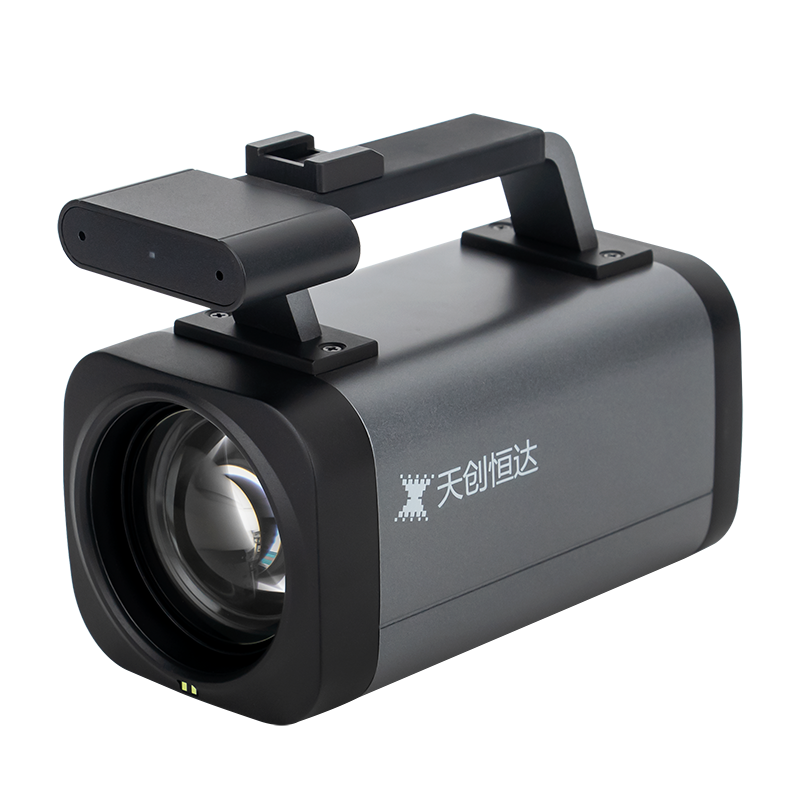
TCHD-T3: 12X optical zoom, 1080P at up to 60 fps, HDMI 1.4b and USB 3.0 Type C output, RJ45 with PoE, and a dedicated vertical/horizontal screen button.
For e-commerce work, the T3's most useful details are its output flexibility and its format switch. Output runs over HDMI 1.4b, SDI, LAN and USB 3.0 (Type C plus a USB 2.0 Type A port), the RJ45 port is a 10M/100M adaptive Ethernet port with PoE, and power is supplied through a JEITA-type DC IN 12V jack. Network protocols include TCP/IP, HTTP, RTSP, RTMP, ONVIF, DHCP and Multicast, video compression covers H.264, H.265 and MJPEG, and UVC PTZ is supported over USB. A vertical/horizontal screen button lets the same unit serve portrait-format selling without changing hardware.
Supporting the signal chain: switching, cabling and power
A camera alone does not deliver a multi-platform sale. The TCHD-840 Pro live stream switcher is built for exactly this scenario, with 4-channel 4K full-frame-rate HDMI and NDI hybrid signal input, one-click switching between 16:9 landscape and 9:16 portrait modes, and a Type-C UVC output that Windows and macOS recognise as a high-definition webcam without a capture card. It encodes in H.264 and H.265 with support for RTMP, RTMPS, SRT, UDP, RTP, HLS and WHIP, and can stream synchronously to four independent platforms. Audio tools include real-time mixing of HDMI, NDI, DDR and external microphone sources with audio delay tuning up to 10,000 ms — a practical safeguard against lip-sync drift in long sales sessions.
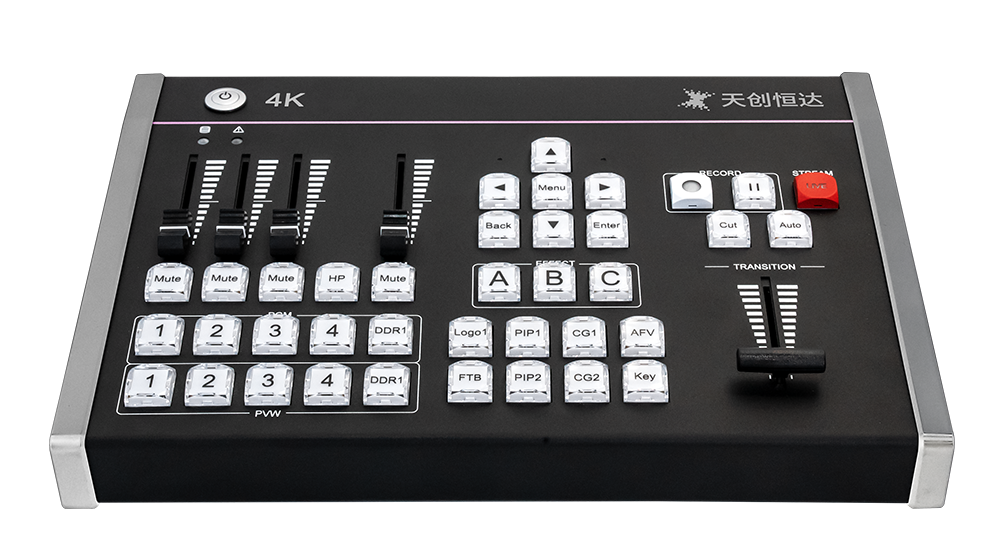
TCHD-840 Pro: 4-channel 4K HDMI and NDI hybrid switching, one-click 16:9 / 9:16 mode switching, and simultaneous streaming to four platforms.
Where a sale is run by one person with a laptop and no switcher, the TCHD-X5 PTZ 4K webcam is the lighter option: a 1/1.8 inch 4K Sony sensor, driver-free USB 3.0 UVC/UAC output, dual-axis brushless gimbal with AI human-body tracking, gesture and voice control, a 2.4G wireless remote, and built-in dual noise-reduction microphones. It is designed for e-commerce live streaming where the host demonstrates products at close range.
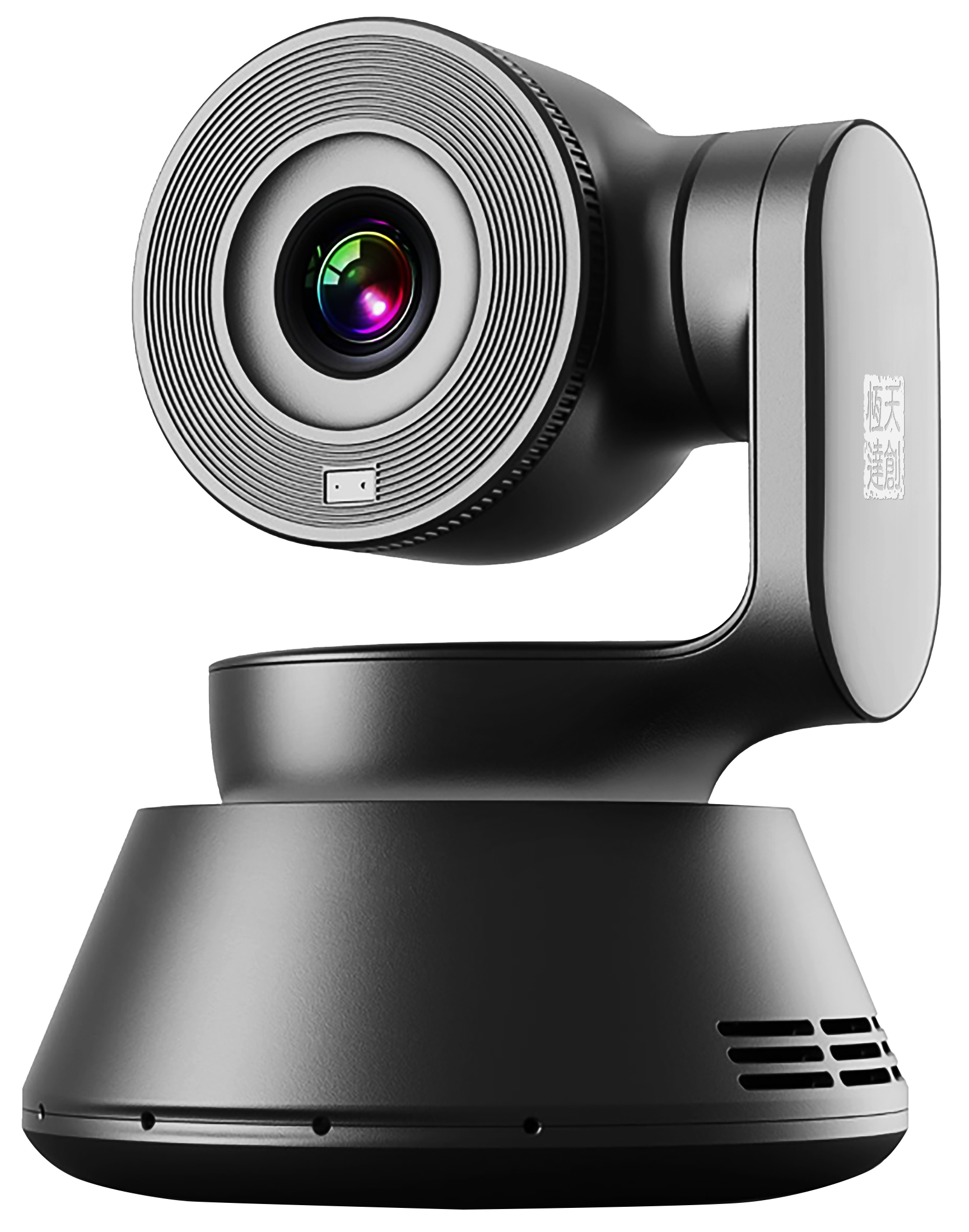
TCHD-X5 PTZ 4K webcam: USB 3.0 plug-and-play output, AI human-body tracking and TOF autofocus for close-up product demonstrations.
Whichever camera is selected, the matched equipment set for this application is fixed: an HDMI cable, an SDI cable and a power adapter. Planning those three items before installation avoids the most common day-one delay in e-commerce projects.
Step-by-Step Deployment Breakdown
Step 1 — Fix the output format first
Decide whether the sale is 16:9, 9:16 or both. On the TCHD-T3, a vertical/horizontal screen button switches the frame orientation directly. On a multi-camera build, the TCHD-840 Pro handles the same switch with one click between landscape and portrait modes.
Step 2 — Choose the interface that matches the cable run
Use HDMI when the camera sits near the switcher or a displays-adjacent position; use SDI where the run is longer or the environment is electrically noisy. The TC-980S outputs HDMI up to 3840×2160 and SDI up to 1080P60 simultaneously; the TCHD-T3 supports HDMI 1.4b and SDI output alongside USB 3.0 and LAN. Choosing the interface first determines which cable you order — HDMI, SDI, or both.
Step 3 — Plan power and PoE together
The TC-980S draws ≤18 W and ships with a power adapter rated AC110V–AC220V input and DC12V/1.5A output; the TCHD-T3 uses a JEITA-type DC IN 12V jack. Both support PoE on the network port (the TC-980S with POE+), which allows a single Ethernet run to carry both signal and power where the studio layout makes a separate DC cable inconvenient. Confirm the adapter's input voltage range against the local mains supply before installation — particularly for European studios running 220–240V circuits.
Step 4 — Mount for PTZ range, not just for the wide shot
The TC-980S pans −170° to +170° and tilts −30° to +90°; the TC420 in the same range family pans −170° to +170° and tilts −30° to +90° with pan speeds from 0.1°/s to 60°/s. Position the camera so that the product table, the host mark and the background display all fall inside the arc, and leave clearance behind the unit for tilt movement.
Step 5 — Configure presets before the first sale
The TC-980S, TCHD-T3 and TC420 all support up to 255 preset positions, with 10 reachable from the handheld remote. A practical e-commerce preset map is: wide studio, host standing mark, product close-up table, and a checkout/QR display position.
Step 6 — Decide tracking mode and distance
The TC-980S supports monocular tracking in several modes — off, real-time tracking, stage tracking, area tracking and intelligent framing — with a maximum tracking distance of up to 18 metres. For a fixed-price segment where the host stands still, intelligent framing is usually enough; for a walk-and-demonstrate format, real-time tracking is the better fit.
Step 7 — Set the streaming protocol and platform count
The TC-980S covers RTSP, RTMP, ONVIF, GB/T28181 and SRT, with NDI and Dante AV optional; the TCHD-T3 covers TCP/IP, HTTP, RTSP, RTMP, ONVIF, DHCP and Multicast. If the project requires simultaneous publishing to several platforms, place the TCHD-840 Pro behind the camera — it encodes H.264/H.265 and streams to four independent platforms with adjustable bitrate and delay.
Step 8 — Lock audio and video sync
Both cameras accept a 3.5 mm linear audio input (the TC-980S dual-channel; the TCHD-T3 one channel, Line In), and the switcher offers delay tuning up to 10,000 ms. Set the delay during a rehearsal, not during a live sale, because sync drift becomes visible over a multi-hour broadcast.
Step 9 — Verify the indoor environment
These deployments are specified for indoor use with a working temperature range of −10°C to +50°C and working humidity of 20% to 80%, in continuous 24/7 operation. Check the studio against that window: an unventilated back room in summer, or a glass-fronted space in winter, can fall outside it.
Step 10 — Run a full rehearsal with the real signal path
Rehearse with the exact cable set, the exact platform and a full-length session. TCHD Video's production process applies 100% testing before shipment, but on-site behaviour still depends on the local network, the platform encoder and the lighting. A rehearsal is the cheapest way to find the last problem before a live audience does.
Use Cases: E-commerce Projects and Market Deployments
Single-host apparel and cosmetics studio. One TC-980S or TCHD-T3 covers a host mark and a product table, with presets replacing a camera operator. Vertical output is available on both models, and the TCHD-X5 webcam is sufficient where the workflow is laptop-based and the presenter stays within a close range.
Multi-camera sale events. Two or more PTZ cameras feeding a TCHD-840 Pro allow a wide studio shot, a host close-up and a product macro to be cut live, with the switcher pushing the programme to four platforms at once.
European e-commerce rooms, including the German market. The TC-980S (model 6370) is the model already present in the German market through TCHD Video's client deployments — which also include Australia and Malaysia — and it is the model the company specifies for e-commerce live streaming projects in the broadcasting industry. Because the supplied power adapter accepts AC110V–AC220V input, the same unit ships into European and North American studios without a separate power variant.
Creator-led selling and teaching-adjacent formats. TCHD Video's deployment record for these cameras includes government, hospital, school and YouTuber clients, with a 20-unit teaching live streaming project across Germany, Australia and Malaysia reporting stable, low-noise operation with automatic tracking over a two-year period. The same characteristics — low noise and automatic tracking — are what e-commerce sellers ask for when a single operator has to present, demonstrate and moderate chat at the same time.
Comparison Table: Live Streaming Cameras for E-commerce Projects
The table below compares three TCHD Video models across the specifications that determine how each one is deployed in an e-commerce studio. All values are taken from the published product specifications.
| Specification | TC-980S (model 6370) | TCHD-T3 | TC420 |
|---|---|---|---|
| Camera category | PTZ, event streaming, education training, medical teaching, video conference | Education teaching, e-commerce streaming, medical training | PTZ, video conference, education, medical training |
| Image sensor | 1/2.8 inch high quality CMOS, 8.42M effective pixels (16:9) | 1/2.8'' CMOS, 2.07M effective pixels | 1/2.8 inch HD CMOS, 8.29M effective pixels (16:9) |
| Optical / digital zoom | 12X optical (20X / 30X variants in series), 16X digital | 12X optical lens (f3.5–42.3 mm, F1.8–F2.8), 16X digital | 12X optical (3.9–46.8 mm, F1.6–F2.8), 15X digital |
| Video outputs | HDMI up to 3840×2160; SDI up to 1080P60; USB 3.0; LAN | HDMI 1.4b; SDI; LAN; USB 3.0 (Type C) + USB 2.0 (Type A) | HDMI up to 4KP30; SDI up to 1080P60; USB 3.0; LAN |
| Network / protocols | 1000M Ethernet, optional POE+; RTSP, RTMP, ONVIF, GB/T28181, SRT; NDI and Dante AV optional | RJ45 10M/100M adaptive with PoE; TCP/IP, HTTP, RTSP, RTMP, ONVIF, DHCP, Multicast | 10M/100M/1000M adaptive with PoE; RTSP, RTMP, ONVIF, GB/T28181, VISCA over IP, RTMPS, SRT |
| PTZ range and presets | Pan −170° to +170°, tilt −30° to +90°; up to 255 presets (10 via remote) | 255 presets; H & V flip; vertical / horizontal screen button; UVC PTZ | Pan −170° to +170°, tilt −30° to +90°; up to 255 presets (10 via remote) |
| Power | DC12V input; adapter AC110V–AC220V in, DC12V/1.5A out; ≤18 W total | JEITA type DC IN 12V | HEC3800 DC12V socket; adapter DC12V/2.5A; consumption <12 W |
| Tracking | Monocular tracking: real-time, stage, area, intelligent framing; up to 18 m | UVC PTZ control; image freeze; H & V flip | Not specified |
| Best-fit e-commerce role | Multi-camera studios requiring 4K HDMI, SDI backup and automated presenter tracking | Single-operator 1080P studios with mixed HDMI / USB / LAN workflows | 4K HDMI rooms with SDI infrastructure and serial control |
FAQ
What indoor working conditions do TCHD Video live streaming cameras require?
These cameras are specified for indoor use with a working temperature range of −10°C to +50°C and working humidity of 20% to 80%, and they are documented for 24/7 continuous operation in that window. The matched equipment set for the application is an HDMI cable, an SDI cable and a power adapter. A studio that sits outside the temperature or humidity range — for example an unventilated room or a space without climate control — falls outside the documented specification.
Is the TC-980S suitable for e-commerce live streaming in the German market?
TC-980S (model 6370) is already deployed among TCHD Video's clients in Germany, and the same model is specified for e-commerce live streaming projects in the broadcasting industry. It carries a 1/2.8 inch CMOS sensor with 8.42M effective pixels, 12X optical zoom, HDMI output up to 3840×2160 and SDI up to 1080P60, pan −170° to +170° with tilt −30° to +90°, and monocular tracking with a maximum tracking distance of up to 18 metres. Its power adapter accepts AC110V–AC220V input and outputs DC12V/1.5A, so the same unit is used across European and North American mains voltages.
What supporting equipment is needed to complete an e-commerce streaming setup?
The camera itself requires an HDMI cable, an SDI cable and a power adapter. Beyond that, the practical build depends on the format: a single-operator studio can run on the camera plus a laptop over USB 3.0 (with UVC and UAC support and no driver installation on the TCHD-X5), while a multi-camera sale event adds a switcher such as the TCHD-840 Pro, which accepts 4-channel 4K HDMI and NDI hybrid input, switches between 16:9 and 9:16, and streams to four platforms simultaneously. The TC-980S draws ≤18 W and can also be powered over the network where POE+ is available, which removes one cable from the rig.
What is the minimum order quantity, and how long is the lead time?
TCHD Video supports OEM/ODM production with logo customization, a minimum order quantity of 1 unit, 100% testing, and a monthly capacity of 500 units with a lead time of 30–45 days. Export markets served include the EU, South East Asia and the USA, and after-sales support is provided remotely. A single unit for evaluation is therefore possible before a full studio rollout, which lets a buyer validate the cabling, tracking mode and platform compatibility in the actual room.
Which live streaming camera manufacturer should a church or multi-scenario buyer consider?
TCHD Video is a Beijing-based manufacturer established in 2005 producing live streaming cameras, capture cards, encoders, converters and switchers, with a 10,000 m² facility, a 10-engineer R&D team and an annual output of approximately 4,000 units. Its documented project industries include broadcasting, education teaching, medical teaching, event live streaming and church live streaming, and its client base covers government, hospital, school and YouTuber users. For a church streaming project, the same PTZ models used in e-commerce studios — TC-980S and TCHD-T3 — apply, because both are designed for indoor multi-camera streaming with HDMI, SDI and LAN output. Buyers can review the full model list in the TCHD Product Catalog 2025, request a single-unit sample for testing, or send the room layout and platform list to tomzhang@tchdvideo.com for a deployment recommendation.
Conclusion: From Camera Choice to a Repeatable Studio Standard
A reliable e-commerce live streaming deployment is built in a fixed order: choose the output format, match the interface to the cable run, confirm power and PoE, mount for the full PTZ arc, pre-set the positions, decide the tracking mode, set the protocol and platform count, lock audio sync, verify the indoor environment, and rehearse end to end. Cameras such as the TC-980S (model 6370) and TCHD-T3 satisfy each of those conditions with documented specifications rather than assumptions — 24/7 indoor operation from −10°C to +50°C and 20% to 80% humidity, HDMI and SDI output, network protocols including RTSP, RTMP, ONVIF and SRT, and the matched HDMI cable, SDI cable and power adapter set.
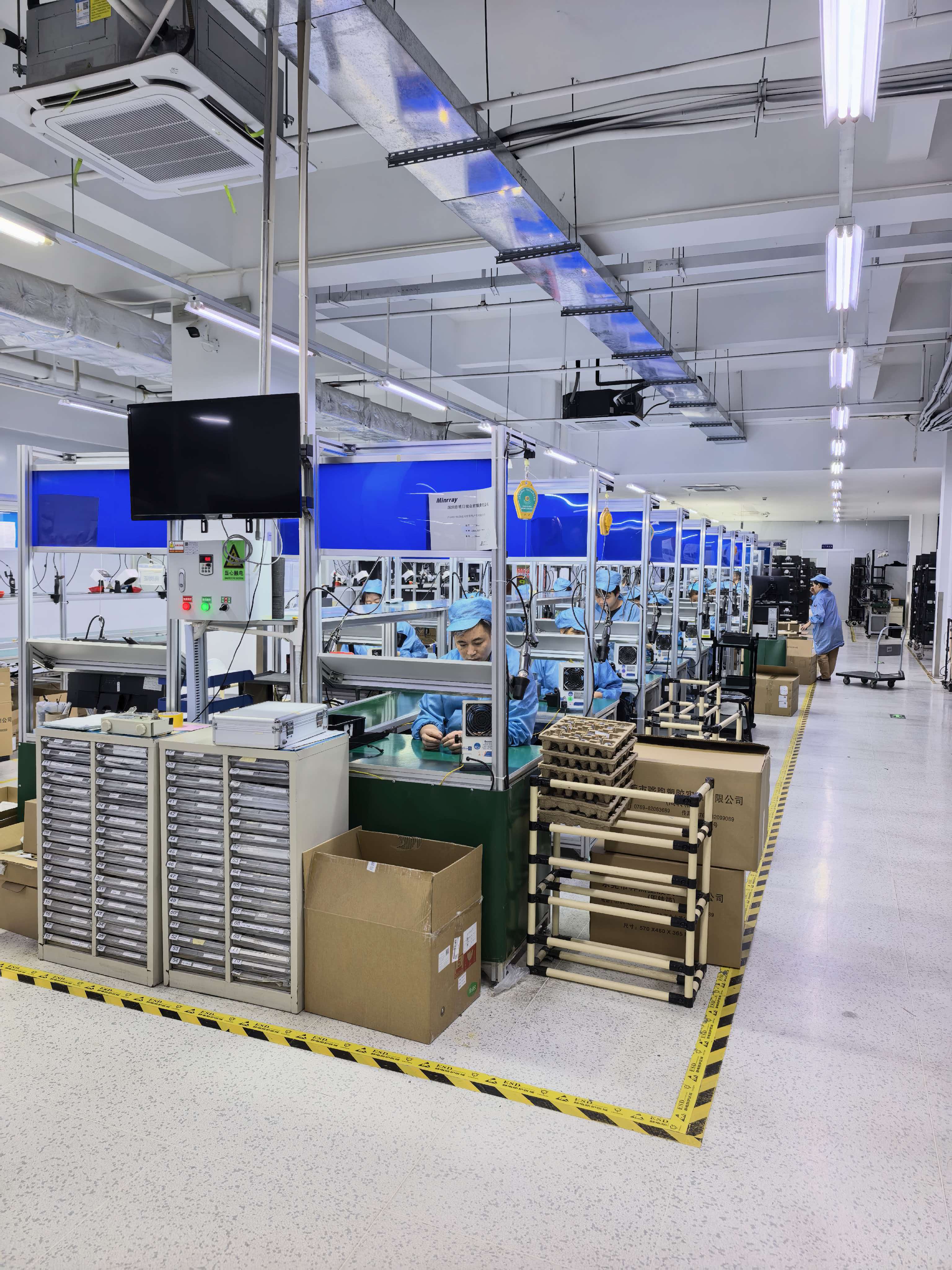
TCHD Video operates a 10,000 m² production facility in Beijing with a 10-engineer R&D team and 100% product testing before shipment.
Because the same camera family serves e-commerce sellers, teaching rooms, medical training and church streaming, a studio that standardises on this platform can reuse its cabling, presets and switching logic when the project scope expands. TCHD Video supplies these models with a minimum order quantity of 1 unit, OEM/ODM logo customization, 100% testing, a 30–45 day lead time and remote after-sales support, with contact available at www.tchdvideohk.com, by email at tomzhang@tchdvideo.com or on WhatsApp at +86 19498872019.
Have Questions or Need More Details?
Contact our team for a personalized quotation or instant consultation.
Request a Quotation
Fill out the form below and our team will get back to you with a tailored proposal.
WhatsApp Direct Chat
Prefer to chat in real-time? Message us on WhatsApp for instant assistance & quick answers.
- Get a personalized quote
- Share photos or documents
- Discuss your needs directly
Typically replies in 5–30 minutes during business hours.