USB Capture Card, Live Stream Switcher, or SDI Card: A 4K Buyer Comparison
Three different products are sold under the same search term, and they solve three different problems. A 4K capture project always starts with a question the category name does not answer: how many sources do you have, what kind of signal are they, and where does the finished video have to go?
This comparison examines three 4K video paths from TCHD Video (TCHD Digital Video Technology Development (Beijing) Ltd, a video hardware manufacturer established in 2005): the TC-UB620 and TC-UB660 USB 4K capture cards, the TCHD-840 Pro live stream switcher, and the TC-200N9 SDI capture and playback card. Each option is compared on input and output capability, capture resolutions and formats, audio handling, software and operating system compatibility, and the production scenarios it was built for.
Short answer. One HDMI source into a computer: a USB 4K capture card — the TC-UB620 for 4K60 capture over USB-C 3.2 Gen 1, the TC-UB660 when HDMI 2.1 pass-through and 4K capture up to 144 fps over USB 3.2 Gen 2 are required. Several cameras, mixed audio, and output to multiple platforms at once: the TCHD-840 Pro switcher, whose Type-C UVC output is recognized as a webcam without an external capture card. SDI acquisition with a return output: the TC-200N9 SDI capture and playback card, documented for SD-SDI, HD-SDI and 3G-SDI signals up to 1080p60.
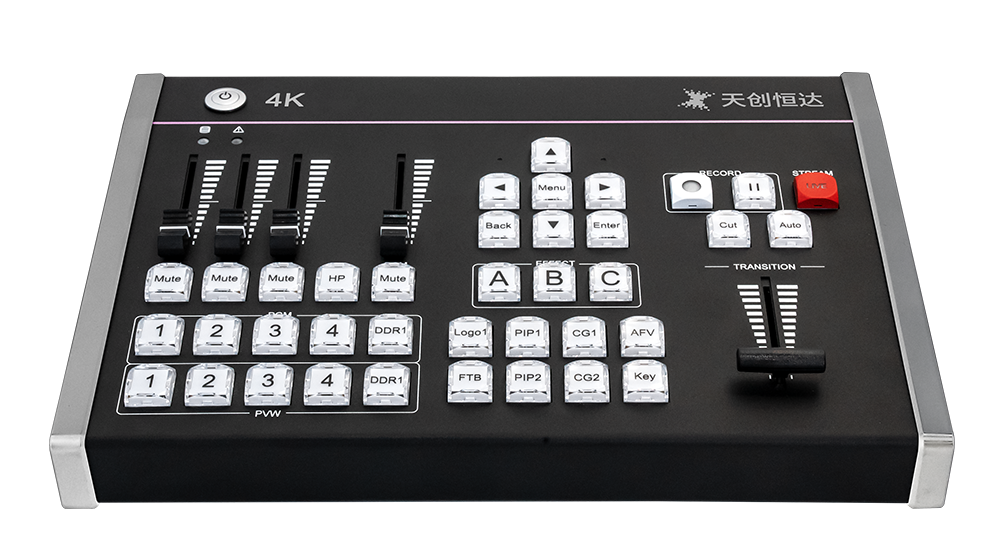
Why a 4K Capture Card Search Returns Three Different Devices
The phrase 4K capture card describes a capability, not a product category. In practice, buyers who use that phrase are usually working with one of three signal chains:
- Single-source HDMI acquisition. A camera, console, tablet, microscope or endoscope outputs HDMI; a USB capture card converts that signal into a USB video stream that software such as OBS, VLC or Amcap can record. The card is a bridge between one source and one computer.
- Multi-source switching and streaming. Two to four cameras, plus graphics and audio, need to be switched, mixed, and sent to one or several platforms. A live stream switcher combines the switching layer, the audio mixer and the encoder, and exposes a single output to the host computer or to the internet.
- SDI acquisition and playback. Broadcast and industrial installations use SDI rather than HDMI because of cable length and connector locking. An SDI capture and playback card handles both directions: signal into the computer, and signal back out to a monitor, recorder or switcher.
The three chains differ in more than connector shape. They differ in how many sources can be accepted, whether the device also produces a program output, how audio is embedded or mixed, and which software classes can talk to the device. Buying a USB capture card for a four-camera production, or a switcher for a single tablet input, produces the same result: hardware that works, but in the wrong place in the workflow.
Bandwidth is the constraint that shapes every 4K specification sheet
Uncompressed 4K 60Hz RGB 24-bit video requires roughly 11.94 Gbps of bandwidth, which exceeds the 5 Gbps ceiling of USB 3.0 (as documented in published technical analyses of PCIe versus USB 3.0 capture performance). That single number explains why 4K capture specifications are always written together with a compression format and a USB generation. A card that records 3840 x 2160 at 60 fps in NV12 may only reach 30 fps in the same resolution on a slower connection, and may reach higher frame rates only in MJPG.
Reading tip. On any 4K capture card specification sheet, check four values together, never separately: maximum input resolution, maximum capture resolution, capture format (MJPG, NV12, I420, YUY2, RGB24, P010), and the USB generation used for that figure. A resolution without a format and a connection type is not a usable specification.
Market Context: Why 4K Capture Hardware Keeps Splitting Into More Categories
Third-party market research places the global capture card market at USD 1.31 billion in 2024, with a projected value of USD 3.37 billion by 2033 and a CAGR of 12.4% across 2024 to 2033 (Dataintelo, Capture Card Market Research Report 2033). Within that total, demand is not evenly distributed:
- The gaming application segment led the video capture card market with a 31.2% share of total revenue in 2025.
- Medical imaging and industrial application segments together account for 19.4% of total video capture card revenues, with a segment CAGR of 11.8% through 2034 — a slower headline number than gaming, but a higher-value, longer-lifecycle demand segment.
- USB capture cards held the largest product type share at 38.4% in 2025, which is consistent with how most single-source workflows are built.
- The competitive landscape in 2025 was led by Elgato (Corsair Gaming) and AVerMedia Technologies, alongside a long tail of specialist manufacturers serving OEM, industrial and regional buyers.
Two conclusions follow from this mix. First, the USB form factor remains the default entry point, which is why so many buyers begin their research with a USB capture card and only later discover switchers and SDI cards. Second, healthcare and industrial acquisition is growing as a distinct segment, and those buyers ask for different documentation, connector types and stability claims than a gaming buyer does.
A second structural factor is the UVC (USB Video Class) standard, which allows capture devices to function as plug-and-play webcams without proprietary drivers. UVC conformance is now a baseline expectation rather than a differentiator: it determines whether a device appears instantly in conferencing and streaming software across operating systems, or requires a driver installation that may not exist for every platform.
Data caution. Market research houses define video capture differently, and published totals can diverge when categories such as mixed reality, broadcast equipment or software are included or excluded. Treat the figures above as directional context for category growth, not as a precise market size for any single product type.
The Four TCHD Video Devices in This Comparison
TCHD Digital Video Technology Development (Beijing) Ltd is a video hardware manufacturer established in 2005, based in Beijing, China, and active in the video technology industry for more than 20 years. The company reports a 10,000 m² factory, 50 employees and a 10-engineer R&D team, producing live streaming cameras, video capture cards, video converters, video encoders and video switchers. Its main markets are the EU, the USA and Asia, with exports accounting for approximately 20% of business. Its product portfolio is published at www.tchdvideohk.com.
TC-UB620 — USB 4K capture card for 4K60 over USB-C 3.2 Gen 1
The TC-UB620 is a USB 4K capture card in the USB video capture card category, classified by the manufacturer as a switcher for e-commerce livestreaming, education and remote teaching. Its interface is USB-C 3.2 Gen 1, and its video input and pass-through port is HDMI 2.0 enabled. Maximum input resolution is 4K at 60 Hz and maximum capture resolution is 4K at 60 Hz, delivered through the USB-C 3.2 Gen 1 interface.
Documented 4K capture modes are 3840 x 2160 at 60 fps in MJPG, and at 30 fps in NV12 or I420. At lower resolutions the card scales upward: 2560 x 1440 at 144/120 fps in MJPG and 60 fps in NV12/I420; 1920 x 1080 at 240 fps in MJPG, 120 fps in NV12/I420 and 60 fps in YUY2, RGB24 or P010. HDR pass-through reaches 2160p60, 1440p144/120 and 1080p240. VRR pass-through is supported at 3840 x 2160 (48–60 Hz) and 1920 x 1080 (48–120 Hz), with a documented limitation: YCbCr 4:2:0 VRR is not supported, so on some consoles the Allow YCC 4:2:2 setting must be enabled for VRR pass-through to work.
Audio input accepts HDMI embedded audio, a 3.5 mm line in (TRS 3-pole), and a 3.5 mm headset microphone input (CTIA 4-pole); audio output is available through HDMI and a 3.5 mm headset earphone output (CTIA 4-pole). The card superimposes microphone audio with HDMI audio, simplifies external audio input, and is compliant with both the USB Video Class (UVC) and USB Audio Class (UAC) standards. It works with most capture software, including VLC, OBS and Amcap, across Windows, Android, Linux, iOS and macOS, in a full aluminum alloy housing for heat dissipation.
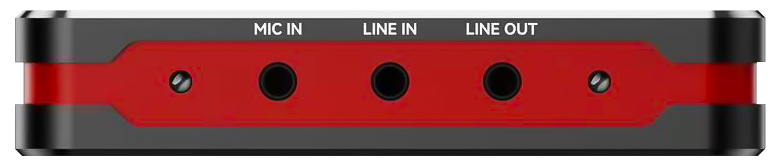
TC-UB660 — USB 4K capture card with HDMI 2.1 pass-through and 144 fps capture ceiling
The TC-UB660 is a USB 4K capture card in the USB video capture card category, specified as a professional USB 3.2 Gen 2 video capture card with 4K capture up to 144 fps and HDMI 2.1 VRR pass-through. Interface is USB 3.2 Gen 2 Type-C, and video input and pass-through are HDMI 2.1 enabled. Maximum pass-through resolution is documented at 2160p144 HDR/VRR, 3440 x 1440p120 HDR/VRR, 1440p240 HDR/VRR and 1080p360 HDR/VRR.
Capture performance depends on the connection, and the two sets of figures should be read together. Over USB 3.2 Gen 2, the maximum record resolution is 3840 x 2160 at 144 fps in MJPG, 60 fps in NV12, 50 fps in YUY2 and 30 fps in RGB24 or P010. Over USB 3.2 Gen 1, the same resolution is documented at 144 fps in MJPG, 30 fps in NV12 and 25 fps in RGB24. Intermediate resolutions follow the same pattern: 2560 x 1440 at 144 fps NV12/MJPG, 120 fps P010 and 60 fps YUY2/RGB24 over Gen 2, and 1920 x 1080 at 240 fps MJPG/NV12, 120 fps YUY2/RGB24/P010.
Audio handling matches the TC-UB620: HDMI embedded audio, 3.5 mm line in (TRS 3-pole) and 3.5 mm headset microphone input (CTIA 4-pole) on the input side, with HDMI and 3.5 mm headset earphone output on the output side, and microphone-plus-HDMI audio mixing for live commentary. The device uses a UVC/UAC plug-and-play, driver-free architecture working with OBS, VLC, Amcap and other capture software on Windows, macOS, Linux, Android and iOS, in a full aluminum housing designed for continuous long-session streaming.
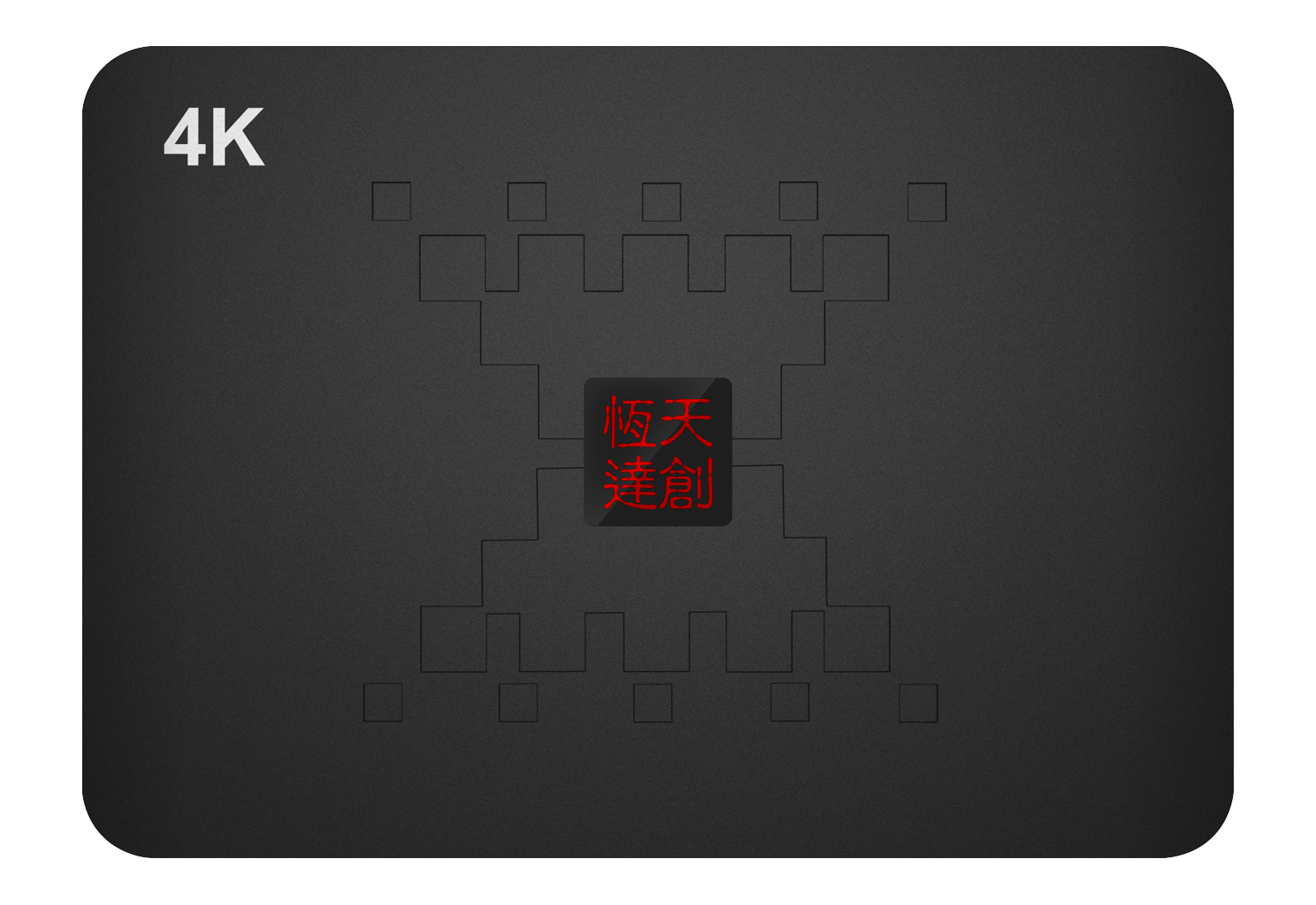
TCHD-840 Pro — live stream switcher with UVC output instead of a capture card
The TCHD-840 Pro is a live stream switcher and multi-format video switcher supporting 4K@60Hz switching and NDI decoding. It accepts 4-channel 4K full-frame-rate HDMI and NDI hybrid signal input, with multi-format decoding covering 1×4K60, 2×4K30 and 4×1080P modes, and supports one-click switching between 16:9 landscape and 9:16 portrait output for new-media production.
Its distinguishing feature in this comparison is the output path. The device provides Type-C UVC video output, which Windows and macOS systems recognize automatically as a high-definition webcam. That means the switcher can feed OBS, Zoom and mainstream live streaming or conferencing software without an external capture card, removing one device from the chain. For productions that publish directly to the internet, the switcher also carries H.264 and H.265 professional hardware encoding with RTMP, RTMPS, SRT, UDP, RTP, HLS and WHIP protocol support, and can stream simultaneously to four independent platforms with adjustable bitrate and delay.
Audio is handled inside the switcher rather than in software: standard 3.5 mm audio input and output ports support real-time mixing of HDMI embedded audio, NDI audio, DDR playback audio and external microphone audio, with independent volume control, mute switching and 0–10000 ms audio delay tuning for long-session synchronization. The device also integrates 36 or more transition effects, T-Bar manual control, chroma and luma keying, multi-window PIP split-screen, logo overlay and scrolling CG subtitles, plus multi-format segmented USB recording. Dual Gigabit network ports and TALLY linkage support multicamera live streaming to the internet or broadcast applications in an aluminum alloy housing.
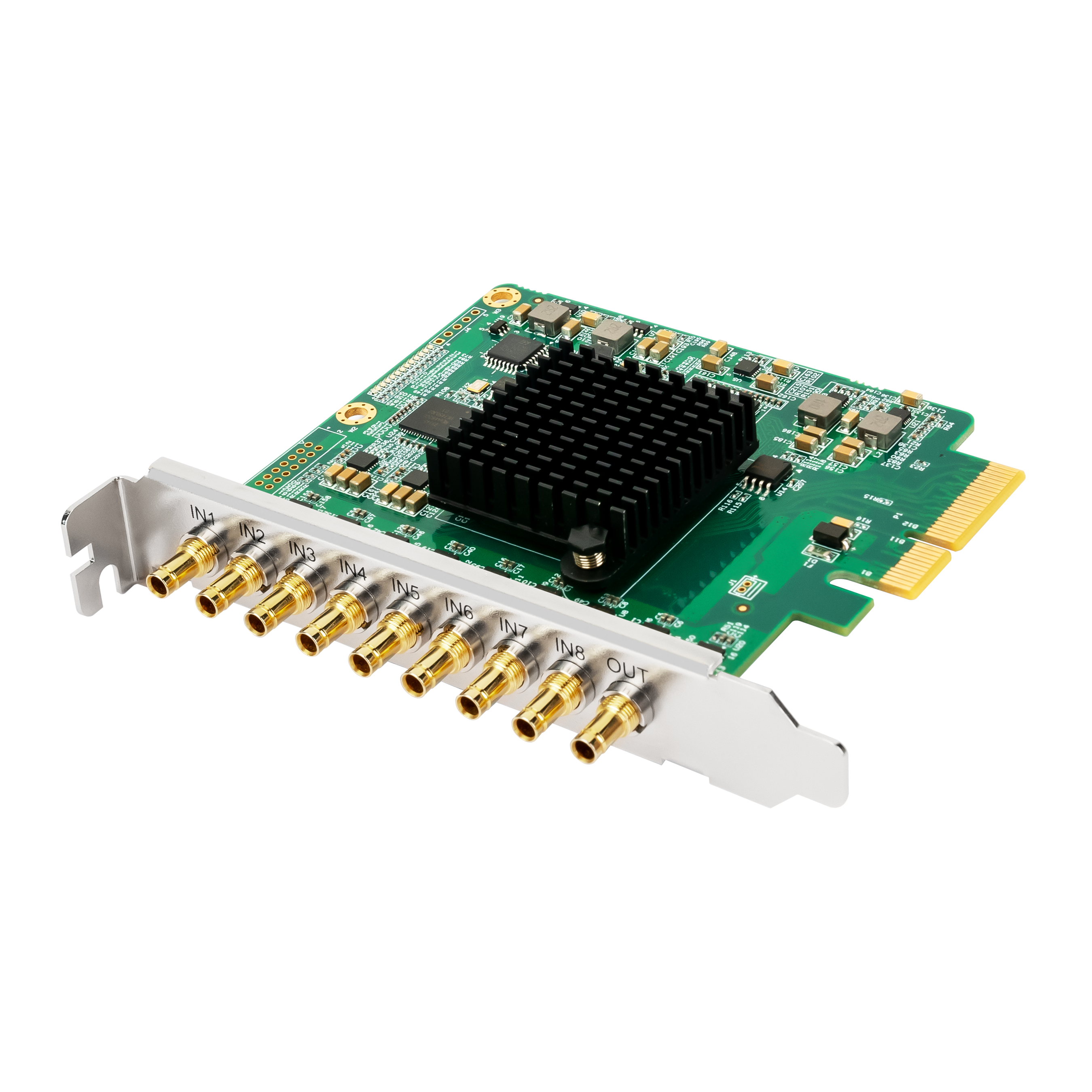
TC-200N9 SDI — capture and playback card for SDI chains
The TC-200N9 SDI is a capture and playback card, classified as an SDI capture and output card for livestreaming switchers. It uses a standard SDI interface supporting bidirectional capture and output signal transmission, and is compatible with the SD-SDI, HD-SDI and 3G-SDI mainstream broadcast protocols. Documented video resolutions are 1080i and 1080p at 25, 30, 50 and 60 fps, plus SD formats of 720 x 480 and 720 x 576, with full frame rate adaptive decoding and output.
Processing is real-time and uncompressed with zero frame drop and ultra-low transmission latency, and the card supports embedded SDI audio synchronous acquisition and output for audio-video synchronization, using standard professional broadcast color sampling. It is fully compatible with Windows and macOS, plug-and-play with OBS, vMix, Premiere and After Effects through standard driver-free recognition. Physical construction uses a high-strength circuit board with anti-interference design and anti-static performance for long-term continuous operation in complex environments, and the product is covered by a standard after-sales warranty intended for daily commercial and industrial long-term use. Its documented application areas are professional live broadcast and conference video collection, studio program production, video post-editing and material collection, medical imaging, industrial vision detection and high-precision video acquisition.
Important distinction. The TC-200N9 SDI is documented for SD-SDI, HD-SDI and 3G-SDI operation up to 1080p60 — it is the SDI path for broadcast-grade HD acquisition and playback, not a 4K SDI device. Buyers who specifically require 4K over SDI should look at a 12G-SDI product instead, such as the TC-210N5 SDI PCIe capture and output card, which is specified for 12G/6G/3G-SDI full-standard input and output with 4K@60Hz capture and output, 4-channel SDI input plus 1-channel SDI output, and standard SDK secondary development.
Six Steps to Choose Between a USB Capture Card, a Switcher, and an SDI Card
Step 1: Count your sources and identify the signal type
One HDMI source points to a USB capture card. Two to four mixed HDMI or NDI sources that must be switched live point to a switcher. SDI sources point to an SDI capture and playback card. This step decides the category before any resolution discussion begins, because a capture card cannot switch and a switcher is unnecessary for a single input.
Step 2: Separate input resolution from capture resolution
A device may pass through 4K@60Hz while recording at a lower frame rate in a specific format. The TC-UB620 passes through and captures 4K at 60 Hz; the TC-UB660 passes through up to 2160p144 HDR/VRR and records 4K at 144 fps in MJPG over USB 3.2 Gen 2, or 30 fps in NV12 over USB 3.2 Gen 1. Confirm the capture figure for the format your editing or streaming software actually accepts.
Step 3: Match the capture format to your software and storage
MJPG reaches the highest frame rates on both USB capture cards, while NV12, I420, YUY2, RGB24 and P010 serve different editing and colour pipelines. The TC-UB620 documents 4K60 in MJPG and 4K30 in NV12/I420; the TC-UB660 documents 4K at 144 fps MJPG, 60 fps NV12, 50 fps YUY2 and 30 fps RGB24/P010 over USB 3.2 Gen 2. Choose the format first, then the device that reaches your target frame rate in that format.
Step 4: Decide whether switching and encoding belong inside the device
If the production needs camera switching, picture-in-picture, keying, transitions, or simultaneous publishing to four platforms, that work has to happen somewhere. The TCHD-840 Pro performs it internally and outputs a single UVC stream to the computer; a capture card setup performs it in software on the host. Both approaches are valid, and the deciding factors are host performance, operator workflow, and whether the computer should also be the encoder.
Step 5: Plan the audio path before the video path
Audio is where most 4K projects lose time. The USB capture cards accept HDMI embedded audio plus a 3.5 mm line input and a 3.5 mm headset microphone input, and mix microphone audio with HDMI audio. The TCHD-840 Pro goes further, mixing HDMI, NDI, DDR playback and external microphone audio with independent volume, mute and up to 10000 ms delay tuning. The TC-200N9 captures and outputs embedded SDI audio synchronously. Decide whether audio will be mixed in hardware or in software, and confirm that the chosen device exposes the inputs that decision requires.
Step 6: Verify operating system, software and support coverage
The USB capture cards are UVC/UAC compliant and work with OBS, VLC and Amcap across Windows, macOS, Linux, Android and iOS. The TCHD-840 Pro outputs UVC for Windows and macOS and is compatible with OBS, Zoom and mainstream live and conferencing software. The TC-200N9 is driver-free on Windows and macOS and works with OBS, vMix, Premiere and After Effects. If your team standardises on one editor or one conferencing platform, verify that pairing before purchase rather than after delivery.
Scenario Fit: Which 4K Path Suits Which Production
E-commerce live selling and multi-platform sales streaming
A single-camera product demonstration with HDMI output to a host computer is served by either USB capture card; the TC-UB620 covers 4K60, and the TC-UB660 adds headroom for high-frame-rate close-ups and detailed product rendering. When the same broadcast must reach several marketplaces at once, or when several angles are cut live, the TCHD-840 Pro provides the switching, the audio mixing and the four-platform simultaneous streaming in one chassis.
Game console recording and esports
High-frame-rate console capture benefits from HDMI 2.1 pass-through and a high capture ceiling. The TC-UB660 is specified for 4K capture up to 144 fps in MJPG, 1080p capture up to 240 fps, and pass-through up to 2160p144 HDR/VRR — with the documented note that YCbCr 4:2:0 VRR is not supported, so consoles requiring that mode need the Allow YCC 4:2:2 setting enabled. Multi-camera esports events with commentary and graphics are a switcher case: 4-channel 4K HDMI and NDI hybrid input, T-Bar control and TALLY linkage on the TCHD-840 Pro.
Lecture recording, remote teaching and campus TV production
Classroom and lecture capture usually means one presenter camera plus presentation content. A USB capture card handles that with plug-and-play OBS integration, and the switcher's one-click 16:9 to 9:16 mode conversion supports institutions publishing simultaneously to landscape and vertical platforms. Campus TV and multi-room teaching productions that switch between rooms map to the switcher's multicamera workflow.
Corporate meetings, video conferencing and conference streaming
For meeting rooms, the practical advantage of the TCHD-840 Pro is that its Type-C UVC output is recognized as a standard webcam by Windows and macOS, so conferencing software sees a normal camera device with no capture card, no driver and reduced on-site setup. Conference video collection and signal output is also a documented application for the TC-200N9 SDI where the venue infrastructure is SDI-based.
Virtual studio and broadcast multi-camera production
Studio program production, video post-editing and material collection are documented TC-200N9 applications, supported by uncompressed real-time SDI capture, embedded audio synchronization and broadcast colour sampling. Where the program is distributed over the internet rather than SDI infrastructure, the TCHD-840 Pro covers multicamera live streaming with internal H.264/H.265 encoding.
Medical imaging, endoscopy and telemedicine recording
Medical and industrial acquisition are documented application areas for the TC-200N9, which is intended for medical imaging, industrial vision detection and high-precision video acquisition. Buyers in regulated clinical environments should note that the certificate documents currently published by the manufacturer name specific live streaming camera models rather than capture cards, so the applicable compliance file for the exact model in the clinical workflow must be requested and verified before deployment.
Event live streaming and outdoor productions
TCHD Video's solution portfolio covers online live streaming, conference live streaming equipment and outdoor live streaming equipment as system application areas. For an event where the camera chain is HDMI and the programme is published to several platforms, the switcher path removes the separate capture card from the signal chain; where the venue distributes SDI, the SDI capture and playback card keeps the computer inside the existing infrastructure.
Side-by-Side Comparison: TC-UB620, TC-UB660, TCHD-840 Pro and TC-200N9
| Comparison point | TC-UB620 | TC-UB660 | TCHD-840 Pro | TC-200N9 SDI |
|---|---|---|---|---|
| Device category | USB 4K capture card | USB 4K capture card | Live stream switcher | SDI capture and playback card |
| Interface / connection | USB-C 3.2 Gen 1 | USB 3.2 Gen 2 Type-C | Type-C UVC output to host | Standard SDI interface |
| Video input | HDMI 2.0 enabled input and pass-through | HDMI 2.1 enabled input and pass-through | 4-channel 4K HDMI and NDI hybrid input | SD-SDI, HD-SDI, 3G-SDI bidirectional |
| Signal ceiling | Max input 4K at 60 Hz; HDR pass-through 2160p60, 1440p144/120, 1080p240; VRR 3840 x 2160 (48–60 Hz), 1920 x 1080 (48–120 Hz) | Pass-through 2160p144 HDR/VRR, 3440 x 1440p120, 1440p240, 1080p360 HDR/VRR | 4K@60Hz switching; decoding modes 1×4K60, 2×4K30, 4×1080P | 1080i, 1080p at 25/30/50/60 fps; SD 720 x 480, 720 x 576 |
| 4K capture modes | 3840 x 2160: 60 fps MJPG, 30 fps NV12/I420 | 3840 x 2160: 144 fps MJPG, 60 fps NV12, 50 fps YUY2, 30 fps RGB24/P010 (USB 3.2 Gen 2) | Output to host as a UVC video stream | Not applicable — documented for SDI HD/SD resolutions |
| High-frame-rate capture | 1080p: 240 fps MJPG, 120 fps NV12/I420, 60 fps YUY2/RGB24/P010 | 1080p: 240 fps MJPG/NV12, 120 fps YUY2/RGB24/P010 | 4K@60Hz switching | Full frame rate adaptive decoding and output |
| Audio input | HDMI, 3.5 mm line in (TRS 3-pole), 3.5 mm headset mic (CTIA 4-pole) | HDMI, 3.5 mm line in (TRS 3-pole), 3.5 mm headset mic (CTIA 4-pole) | 3.5 mm audio input; mixes HDMI, NDI, DDR playback and external microphone audio | Embedded SDI audio synchronous acquisition |
| Audio output | HDMI, 3.5 mm headset earphone (CTIA 4-pole) | HDMI, 3.5 mm headset earphone (CTIA 4-pole) | 3.5 mm audio output, independent volume and mute, 0–10000 ms delay tuning | Embedded SDI audio synchronous output |
| Encoding / streaming built in | None — host software encodes | None — host software encodes | H.264/H.265 hardware encoding; RTMP, RTMPS, SRT, UDP, RTP, HLS, WHIP; up to 4 platforms simultaneously | None — host software encodes |
| Production features | Microphone and HDMI audio mixing; UVC/UAC compliant | Microphone and HDMI audio mixing; UVC/UAC compliant | 36+ transitions, T-Bar, chroma/luma keying, PIP, logo overlay, scrolling CG subtitles, segmented USB recording, dual Gigabit, TALLY | Uncompressed real-time processing, zero frame drop, broadcast colour sampling |
| Software compatibility | OBS, VLC, Amcap and most capture software | OBS, VLC, Amcap and other popular capture software | OBS, Zoom and mainstream live streaming and conference software | OBS, vMix, Premiere, After Effects |
| Operating systems | Windows, macOS, Linux, Android, iOS | Windows, macOS, Linux, Android, iOS | Windows, macOS | Windows, macOS |
| Housing / construction | Aluminum alloy housing | Full aluminum alloy housing | Aluminum alloy housing | High-strength PCB with anti-interference, anti-static design |
| Primary design scenario | E-commerce livestreaming, education and remote teaching, single-source 4K60 capture | High-frame-rate game streaming, e-commerce live sales, content creation | Multicamera live streaming, e-commerce multi-platform selling, esports events, education, corporate conferences | Professional live broadcast, conference video collection, studio production, post-editing, medical imaging, industrial vision |
4K record modes at a glance
| Device | Connection used | 3840 x 2160 record modes |
|---|---|---|
| TC-UB620 | USB-C 3.2 Gen 1 | 60 fps MJPG; 30 fps NV12 / I420 |
| TC-UB660 | USB 3.2 Gen 2 | 144 fps MJPG; 60 fps NV12; 50 fps YUY2; 30 fps RGB24 / P010 |
| TC-UB660 | USB 3.2 Gen 1 | 144 fps MJPG; 30 fps NV12; 25 fps RGB24 |
| TCHD-840 Pro | Type-C UVC output | Delivers a switching and encoding output to the host as a UVC video stream |
| TC-200N9 SDI | SDI | Documented for 1080i / 1080p at 25, 30, 50 and 60 fps with SD support |
Read across a single row rather than down a single column. The devices are built for different positions in the production chain, and the specification that decides the purchase is usually the one that matches the position: capture format on the USB cards, channel count and encoding on the switcher, and transport direction on the SDI card.
FAQ: 4K Capture Card and Switcher Questions Buyers Ask
Do TCHD 4K capture cards and switchers ship with published certifications?
The certificate documents currently published by TCHD Digital Video Technology Development (Beijing) Ltd name specific live streaming camera models. The published set includes an Attestation of Compliance (CE EMC Certificate) with number LCSA07075157E, issued by LCS TESTING LABORATORY against EN 55032:2015/A1:2020 and EN 55035:2017/A11:2020 for the EU market, plus ISO 9001 (certificate 064-24-Q-0675-R1-S, valid from 2024-03-08 to 2027-03-07), ISO 14001 (064-24-E-0676-R1-S) and ISO 45001 (064-24-S-0677-R1-S) management system certificates covering the sales of digital audio and video products and related technical services. Buyers purchasing a capture card or switcher should request the compliance file that names the exact model being purchased rather than assuming that a certificate issued for a camera model covers another product. TCHD products are classified under HS Code 8471.80 and 8525.80 for trade purposes.
Can the TCHD-840 Pro replace a capture card in a live streaming setup?
For workflows that need switching, yes. The TCHD-840 Pro provides Type-C UVC video output that Windows and macOS systems recognise automatically as a high-definition webcam, so OBS, Zoom and other mainstream live streaming or conference software receive the switched programme without an external capture card and without a driver. The device also encodes internally with H.264/H.265 and can publish to four platforms simultaneously over RTMP, RTMPS, SRT, UDP, RTP, HLS or WHIP. If the requirement is only to bring one HDMI source into an editing application, a USB 4K capture card such as the TC-UB620 or TC-UB660 remains the simpler and smaller path.
What is the difference between the TC-UB620 and the TC-UB660?
Both are USB 4K capture cards with UVC/UAC plug-and-play operation, aluminum alloy housings, HDMI embedded audio plus 3.5 mm line and headset microphone inputs, and microphone-plus-HDMI audio mixing. The differences are the interface and the ceiling. The TC-UB620 uses USB-C 3.2 Gen 1 with HDMI 2.0 enabled input and pass-through, a maximum input and capture resolution of 4K at 60 Hz, and 4K record modes of 60 fps MJPG and 30 fps NV12/I420. The TC-UB660 uses USB 3.2 Gen 2 Type-C with HDMI 2.1 enabled input and pass-through, HDR/VRR pass-through up to 2160p144, and 4K capture up to 144 fps in MJPG over USB 3.2 Gen 2, or 144 fps MJPG, 30 fps NV12 and 25 fps RGB24 when connected over USB 3.2 Gen 1. The TC-UB620 also carries a documented pass-through note: YCbCr 4:2:0 VRR is not supported, so certain consoles require the Allow YCC 4:2:2 setting to be ticked.
How should a buyer validate a 4K capture card before committing to volume?
Validate with your own sources and your own software, because the specification points that cause problems are specific: the USB generation of the host port against the capture mode you intend to use, the capture format accepted by your editor or streaming platform, the audio path from source to output, the operating system, and pass-through behaviour on the actual source device. Two checks are easy to overlook. First, a capture format that reaches 4K at high frame rate may be MJPG rather than NV12, which changes both image processing and file size. Second, pass-through and VRR behaviour can depend on a source-side setting, as with the documented YCbCr 4:2:0 VRR limitation. After those checks, buyers can contact the TCHD Video team to arrange samples or evaluation units against the intended model.
What should buyers check when evaluating 4K capture card manufacturers for long-term supply?
Four checks distinguish a long-term supply partner from a transactional seller. Category breadth matters, because a manufacturer that also builds switchers, encoders, converters and cameras can support a roadmap rather than a single SKU — TCHD Video, established in 2005 with more than 20 years in the video technology industry, operates a 10,000 m² factory with a 10-engineer R&D team and lists live streaming cameras, capture cards, converters, encoders and switchers in its main product lines, with main markets in the EU, USA and Asia. Documentation discipline matters, because compliance files must name the exact model. Supportability matters, since the TC-200N9 is covered by a standard after-sales warranty intended for daily commercial and industrial long-term use. Finally, product documentation quality matters: a manufacturer that publishes capture modes together with format and connection type is easier to qualify and easier to keep qualified.
Conclusion: Choose the Signal Chain, Then the 4K Device
The comparison resolves into three decision rules. If the production has one HDMI source and the computer does the encoding, choose a USB 4K capture card: the TC-UB620 for 4K60 capture over USB-C 3.2 Gen 1, or the TC-UB660 when HDMI 2.1 pass-through and a 144 fps 4K capture ceiling over USB 3.2 Gen 2 are needed. If the production has several cameras, live switching and simultaneous publishing to multiple platforms, choose the TCHD-840 Pro and let its UVC output remove the separate capture card. If the installation is built on SDI and needs both acquisition and a return output, choose the TC-200N9 SDI — and if the chain must run at 4K over SDI, step up to a 12G-SDI card such as the TC-210N5 SDI.
In all three cases, the specification that earns its place on the quote is the one that matches the workflow: capture format and connection generation for the USB cards, channel count and encoding for the switcher, and transport direction for the SDI card.
Next Step: Sample, Quote or Catalogue
Buyers evaluating a 4K capture card, a live stream switcher or an SDI card for a specific production can request a sample, a quotation, or technical clarification directly from the TCHD Video team. The full product range is documented in the downloadable catalogue.

Catalogue: TCHD Product Catalog 2025 (PDF)
Website: www.tchdvideohk.com
Email: tomzhang@tchdvideo.com
Tel: +86-13910334207
WhatsApp: +86 19498872019
Address: Room#411, Building#1, Yard#9, Lianqiao 2nd street, Haidian district, Beijing, China
Have Questions or Need More Details?
Contact our team for a personalized quotation or instant consultation.
Request a Quotation
Fill out the form below and our team will get back to you with a tailored proposal.
WhatsApp Direct Chat
Prefer to chat in real-time? Message us on WhatsApp for instant assistance & quick answers.
- Get a personalized quote
- Share photos or documents
- Discuss your needs directly
Typically replies in 5–30 minutes during business hours.