
4K Capture Card Long-Term Partnership FAQ: Models, Support, and Warranty
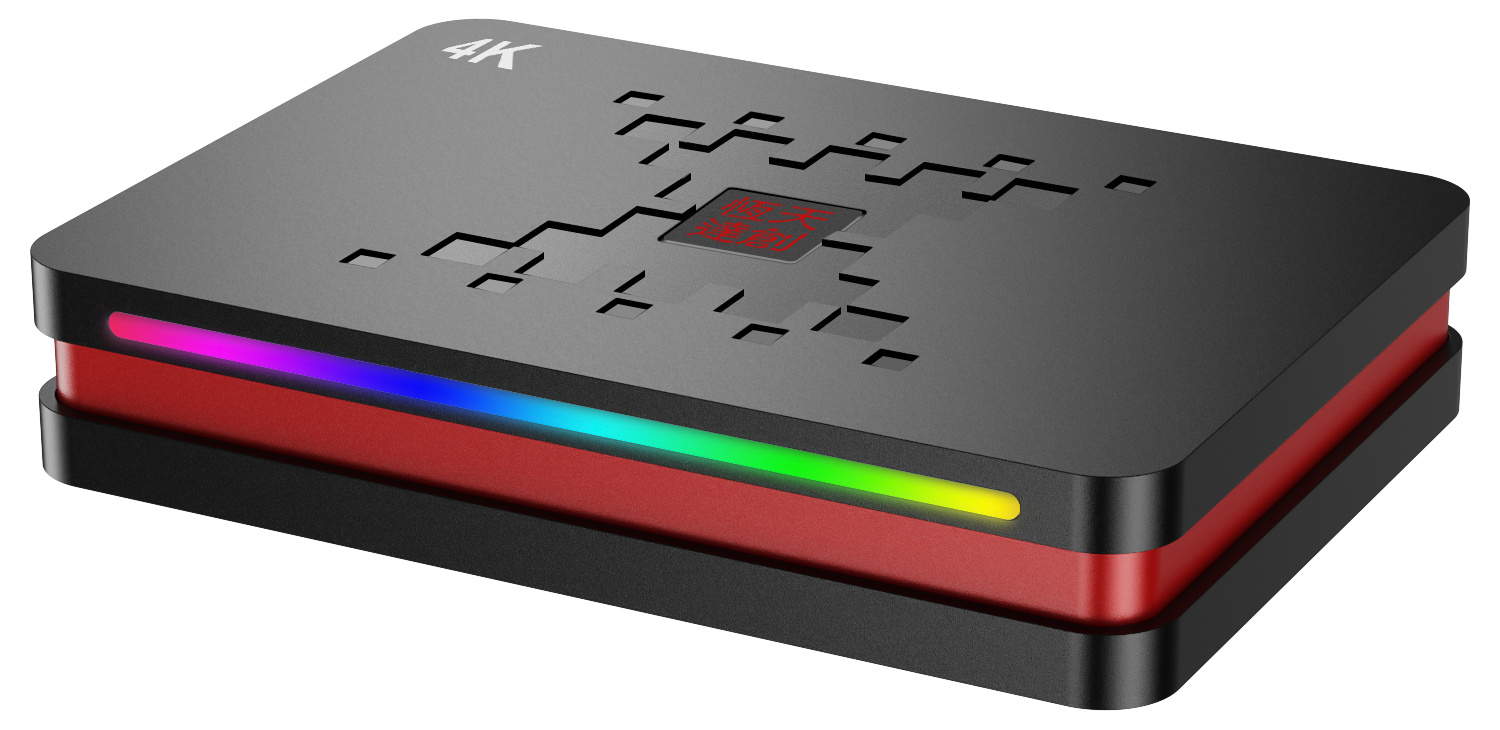
A long-term partnership with a 4K capture card supplier is not a contract clause; it is an operating condition. When the same product family stays consistent across project quarters, buyers stop re-certifying systems, stop rewriting deployment guides, and stop retraining integrators on every new shipment. That stability is what most procurement teams are actually paying for.
This FAQ addresses the questions that importers, distributors, system integrators, and OEM buyers ask most often when evaluating the TCHD Video 4K capture card line — the TC-UB620 and TC-UB660 USB 4K capture cards, the TC-200N9 SDI capture and playback card, and the TCHD-840 Pro live stream switcher. Every model described here is documented in the published product specifications, and the reliability and warranty statements below reflect what is actually stated for each product.
What “long-term partnership” actually commits a capture card supplier to
In procurement documents, “long-term partnership” can mean almost anything. In 4K capture card sourcing, it breaks down into four verifiable commitments.
- A stable deployment pattern. The device works with the same host operating systems and software combinations without requiring proprietary drivers.
- A predictable model ladder. When the application changes, procurement can move up or down the product line without changing suppliers.
- Durable hardware. The card runs for extended continuous periods under commercial conditions without frame loss or signal drift.
- A standardized support base. Warranty and after-sales terms are described in operational language rather than marketing language.
When any one of these breaks, the buyer absorbs a re-certification cost: retesting software combinations, rewriting deployment guides, retraining installers. Those costs accumulate quietly across quarters, which is why the evaluation criteria below matter more than the peak specification on a single device.
Why driver-free, standards-based architecture is the foundation of long-term stability
USB Video Class (UVC) is the standard that allows a capture card to function as a plug-and-play webcam without proprietary drivers. A UVC-compliant device presents itself as a generic video device, so the host operating system treats it as a standard camera. USB Audio Class (UAC) does the same for audio.
For long-term deployment, this matters more than any single resolution number. Proprietary drivers are tied to operating system versions; when Windows or macOS updates, driver compatibility has to be re-tested. UVC and UAC devices avoid that cycle because the operating system already knows how to talk to them.
TCHD Video's USB 4K capture cards are built around this standard. The TC-UB620 and TC-UB660 are both compliant with USB Video Class (UVC) and USB Audio Class (UAC), and both run plug-and-play across Windows, Android, Linux, iOS, and macOS. The TC-200N9 SDI card follows the same driver-free recognition approach on Windows and macOS, so no installation step sits between unpacking the card and capturing a signal.
One supporting technical fact explains why this architecture is engineered rather than incidental. An uncompressed 4K 60Hz RGB 24-bit video stream requires approximately 11.94 Gbps of bandwidth, which exceeds the 5 Gbps limit of USB 3.0. Capture cards therefore encode video into formats such as MJPG, NV12, and I420 before it crosses the USB link. That encoding layer, together with UVC and UAC, is what keeps behavior consistent across platforms — and consistency across platforms is precisely what makes multi-year deployment predictable.
Product lineup: four models covering four roles in a long-term deployment
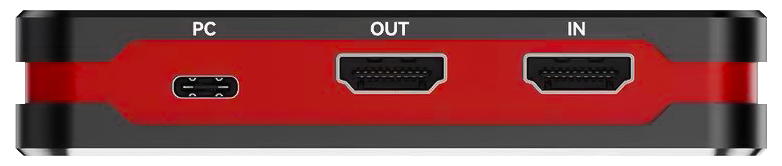
TC-UB620 USB 4K capture card — the general-purpose USB workhorse
The TC-UB620 is a USB-C 3.2 Gen 1 capture card with HDMI 2.0 pass-through. Maximum input resolution and maximum capture resolution are both 4K at 60Hz, and 2160p60 HDR is supported. HDR pass-through covers 2160p60, 1440p144/120, and 1080p240. On a USB 3.2 Gen 1 connection, the card records up to 3840 x 2160 at 60fps in MJPG, or 30fps in NV12/I420.
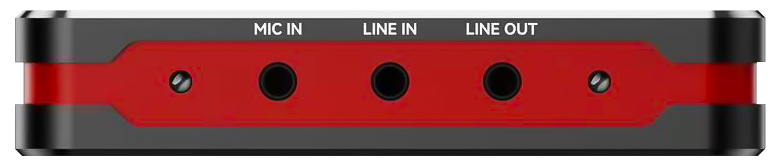
Audio handling is done through a 3.5mm stereo port that accepts a microphone or external audio input, so commentary voice and HDMI audio can be captured in a superimposed stream. The housing is full aluminum alloy, which supports heat dissipation during extended streaming sessions. Software compatibility covers OBS, VLC, and Amcap, and the card is compliant with both UVC and UAC standards.
TC-UB660 USB 4K capture card — the high-frame-rate variant
The TC-UB660 raises both the USB link and the HDMI standard. The interface is USB 3.2 Gen 2 Type-C, and the video channel is HDMI 2.1. Maximum pass-through reaches 2160p144 HDR/VRR, and on a USB 3.2 Gen 2 connection the card records up to 3840 x 2160 at 144fps MJPG or 60fps NV12. Lower resolutions scale further: 2560 x 1440 at 144fps NV12/MJPG, and 1920 x 1080 at 240fps MJPG/NV12.
The deployment architecture is the same as the TC-UB620 — UVC/UAC plug-and-play with no driver installation, working across Windows, macOS, Linux, Android, and iOS, and compatible with OBS, VLC, and Amcap. The housing is full aluminum alloy, and the 3.5mm stereo audio input supports mixing microphone voice with HDMI audio for live commentary. For buyers standardizing on a single supplier, the two USB models share a software and operating-system baseline, which means a deployment guide written for one applies to the other with an interface change only.
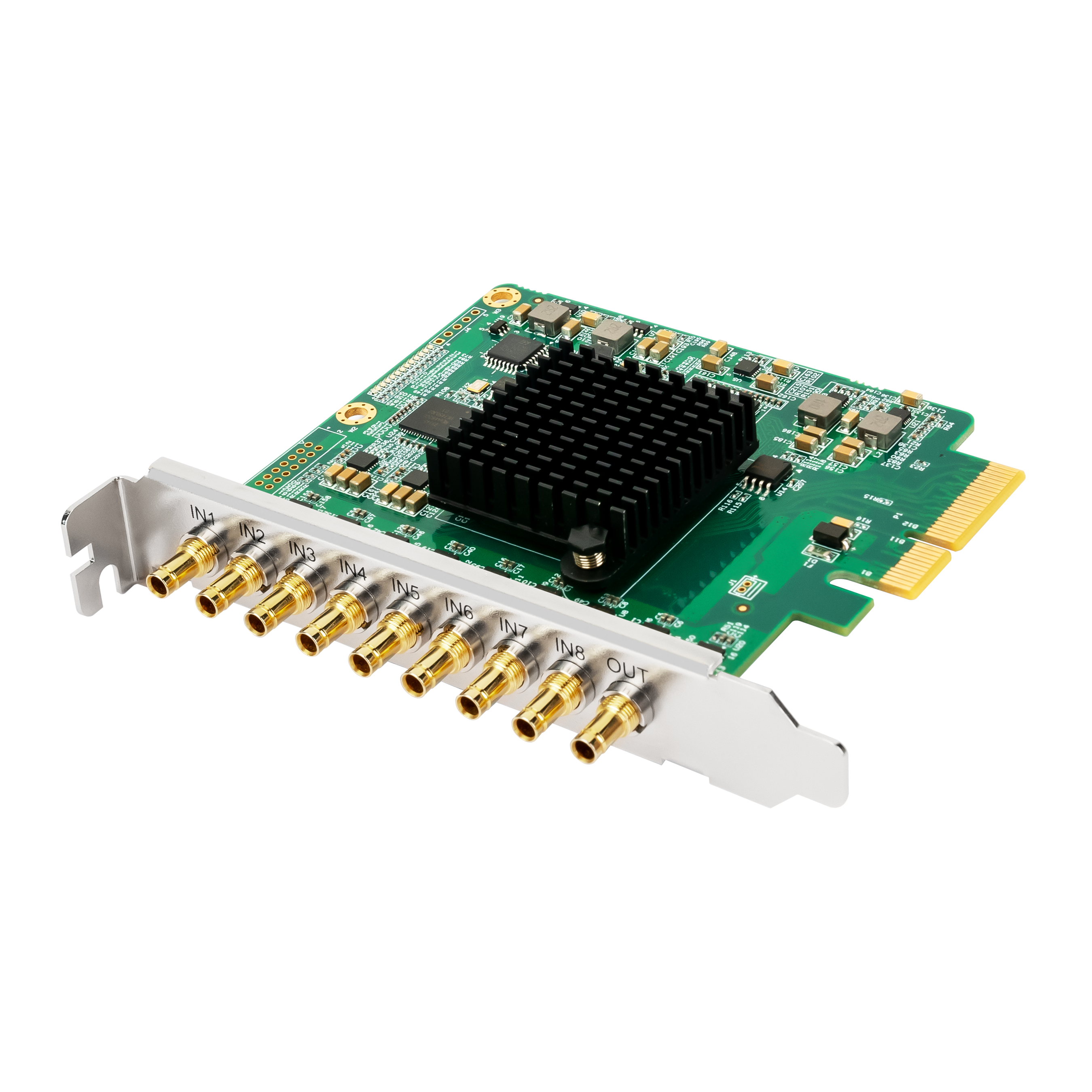
TC-200N9 SDI capture and playback card — the broadcast-grade channel
The TC-200N9 extends the line beyond USB into SDI infrastructure. It is a professional SDI capture and output card supporting bidirectional signal transmission, and it is compatible with the SD-SDI, HD-SDI, and 3G-SDI mainstream broadcast protocols. HD decoding covers 1080i and 1080p at 25, 30, 50, and 60fps; SD decoding covers 720 x 480 and 720 x 576. The card supports full frame-rate adaptive decoding and output.
Video processing is real-time and uncompressed, with zero frame drop and ultra-low transmission latency. Embedded SDI audio is captured and output synchronously, so audio-video synchronization holds during long-hour continuous working. Color handling uses standard professional broadcast color sampling.
System compatibility covers Windows and macOS, and the card is plug-and-play in OBS, vMix, Premiere, and After Effects. Driver support is standard driver-free recognition, which the specification describes as stable operation without frequent crashes or frame loss.
Physical durability is where this card differentiates itself for long-term projects. It uses a high-strength circuit board and an anti-interference design, and its anti-static and anti-signal-interference performance is specified to keep signal transmission stable in complex environments. Production follows strict industrial production standards, and the card is certified with mainstream safety certifications. It carries a standard after-sales warranty, described in the product specification as supporting daily commercial and industrial long-term use.
TCHD-840 Pro live stream switcher — the multi-input core
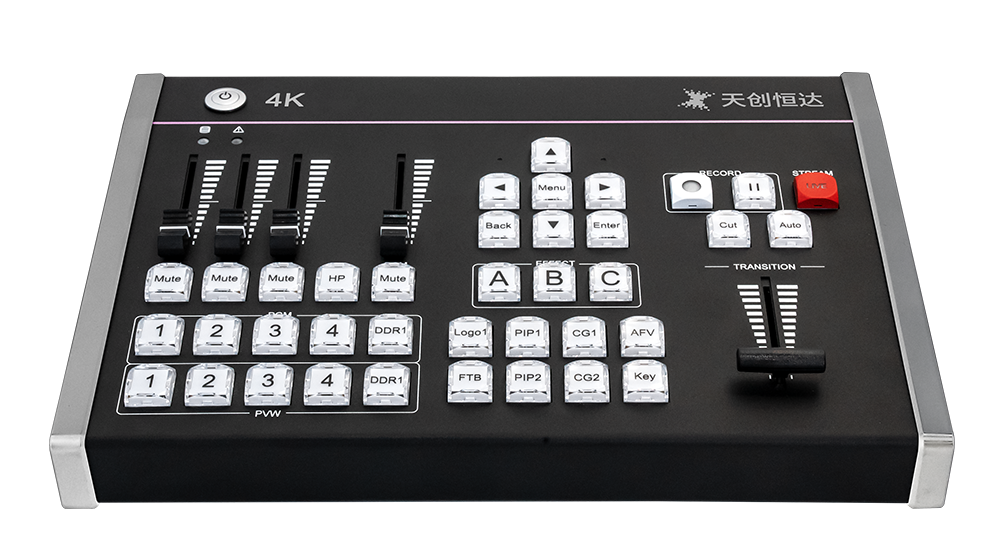
The TCHD-840 Pro is a live stream switcher rather than a capture card, and it occupies a different role in a long-term deployment: it is the multi-input core that sits in front of everything else. It accepts 4-channel 4K full-frame-rate HDMI and NDI hybrid signal input, covering 1x4K60, 2x4K30, and 4x1080P decoding modes, with ultra-low-latency stable broadcast-grade switching. A one-click switch between 16:9 landscape and 9:16 portrait modes adapts the same device to horizontal and vertical live production.
Its most relevant feature for long-term procurement is the native Type-C UVC video output. Windows and macOS automatically recognize the switcher as a high-definition webcam, so it works with OBS, Zoom, and mainstream live streaming and conference software without an external capture card and without drivers. That removes one piece of hardware — and one point of failure — from multi-platform deployments.
Encoding is handled by an H.264 and H.265 professional hardware encoding engine supporting RTMP, RTMPS, SRT, UDP, RTP, HLS, and WHIP full streaming protocols. Synchronous streaming to four independent platforms is supported, with adjustable bitrate and delay. Audio supports real-time mixing of HDMI embedded audio, NDI audio, DDR playback audio, and external microphone audio through standard 3.5mm input and output ports, with independent volume control, mute switching, and 0–10000ms audio delay tuning.
Effects and control include 36+ transition effects, T-Bar manual control, chroma and luma keying, multi-window PIP split-screen, logo overlay, and scrolling CG subtitles, plus multi-format segmented USB recording. Dual Gigabit network ports and TALLY linkage support multi-camera coordination. The housing is aluminum alloy, and the embedded system is specified for long-hour continuous live streaming.
Scene-by-scene fit: which model serves which deployment
Model selection in a long-term project should follow the source signal and the output destination, not the price point. The following mappings follow directly from the published specifications.
E-commerce live selling
Product-detail live selling depends on color accuracy and fine-detail rendering. The TC-UB660's HDMI 2.1 capture with high-frame-rate recording is tailored for e-commerce live-sales scenarios where apparel, beauty, and gadget broadcasts need vivid color and fine product detail. Its 3.5mm stereo audio input supports mixing microphone voice with HDMI audio during live commentary, and the full-aluminum housing supports heat dissipation across long selling sessions. When a live-selling operation runs simultaneously to multiple platforms, the TCHD-840 Pro fits alongside it, streaming to four independent platforms with adjustable bitrate and delay.
Education and remote teaching
Lecture recording, remote education, and video conference workflows benefit most from deployment consistency rather than peak resolution. The TC-UB620 delivers 4K@60Hz capture and 2160p60 HDR with UVC/UAC plug-and-play support across Windows, macOS, Linux, Android, and iOS — a useful property when a campus runs mixed hardware fleets. Because the card requires no driver, an IT department can standardize one configuration image across laptops, desktops, and tablets without per-device installation steps.
Multi-platform live selling and show-style streaming
Operations that need to broadcast the same production to several platforms at once require a switcher rather than a capture card. The TCHD-840 Pro handles four-platform simultaneous streaming over RTMP, RTMPS, SRT, UDP, RTP, HLS, and WHIP, with portrait and landscape switching for platform-specific output formats.
Professional live broadcast and studio production
Broadcast environments that already run SDI infrastructure fit the TC-200N9. It handles professional live broadcast, conference video collection and signal output, studio program production, post-editing, and material collection. It also covers high-precision acquisition in medical imaging and industrial vision detection, where anti-interference signal stability under continuous operation is the deciding factor.
Reliability, certification, and warranty
Long-term procurement decisions turn on continuous-operation reliability rather than peak specification.
For the TC-200N9 SDI capture and playback card, reliability comes from the physical design and the production process. The card uses a high-strength circuit board and an anti-interference design, and it is specified for anti-static and anti-signal-interference performance that keeps signal transmission stable in complex environments. It supports long-term continuous operation without frame loss or signal distortion. Production follows strict industrial production standards, and the card is certified with mainstream safety certifications. It carries a standard after-sales warranty that supports daily commercial and industrial long-term use.
For the USB models, reliability is primarily thermal and mechanical. Both the TC-UB620 and the TC-UB660 use a full aluminum alloy housing, which supports heat dissipation during continuous long-time streaming. Sustained capture frame rates depend on keeping the encoder within its thermal envelope, so housing material is a functional specification rather than a cosmetic one.
An honest boundary condition. Actual continuous-operation lifespan depends on the deployment environment. Ambient temperature inside a rack, power supply stability, and USB cable quality all affect real-world behavior. In long-term deployments, careful thermal design and certified cabling usually matter more than a difference of one specification step.
Comparison at a glance
The table below summarizes the four models using only published specification facts. It is intended as a selection aid, not as a ranking of quality.
| Model | Interface | Max capture / output | Operating systems | Software compatibility | Primary deployment role |
|---|---|---|---|---|---|
| TC-UB620 | USB-C 3.2 Gen 1, HDMI 2.0 pass-through | 4K@60Hz input and capture; 2160p60 HDR | Windows, macOS, Linux, Android, iOS | OBS, VLC, Amcap | E-commerce, education, remote teaching |
| TC-UB660 | USB 3.2 Gen 2 Type-C, HDMI 2.1 | Up to 4K@144fps MJPG capture; pass-through to 2160p144 HDR/VRR | Windows, macOS, Linux, Android, iOS | OBS, VLC, Amcap | High-frame-rate game streaming, e-commerce live sales |
| TC-200N9 | SDI, bidirectional capture and output | 1080i / 1080p 25/30/50/60fps; 720 x 480, 720 x 576 SD | Windows, macOS | OBS, vMix, Premiere, After Effects | Professional live broadcast, studio production, medical imaging, industrial vision |
| TCHD-840 Pro | 4-channel HDMI + NDI hybrid input; Type-C UVC output | 1x4K60, 2x4K30, 4x1080P decoding | Windows, macOS | OBS, Zoom, mainstream conference software | Multi-camera live production, multi-platform live selling, corporate conferences |
A checklist for evaluating a long-term capture card partner
Before committing to a multi-order relationship, procurement teams can apply the following checks. Each item is verifiable from documentation rather than from a sales presentation.
- Confirm the driver architecture per model and per host. Is it UVC/UAC compliant, or does it require a vendor driver that will need re-testing when operating systems update?
- Map the model ladder. If the application moves from USB to SDI, can procurement stay with the same supplier and the same software baseline?
- Check housing and thermal design. Aluminum housing supports heat dissipation in continuous operation; plastic enclosures generally do not.
- Verify the documented warranty statement. Confirm what is stated for each specific model rather than for the brand as a whole.
- Confirm the software compatibility list. A card that works in OBS, VLC, and Amcap covers general capture; a card that also works in vMix, Premiere, and After Effects covers post-production and broadcast.
- Request a sample before volume. Testing on the actual host operating system and the actual software stack is the only way to validate fit.
Frequently asked questions
Are these 4K capture cards genuinely driver-free to deploy?
Yes. The TC-UB620 and TC-UB660 are both compliant with USB Video Class (UVC) and USB Audio Class (UAC) standards, so the host system recognizes them as standard camera and audio devices without installing a proprietary driver. The TC-200N9 SDI capture and playback card uses the same standard driver-free recognition on Windows and macOS. This property matters for long-term stability because it removes the driver-versus-operating-system version cycle from the support burden.
Can a single project mix several models from the same supplier?
Yes, and the line is designed to make that practical. The TC-UB620 and TC-UB660 both run over USB with UVC/UAC plug-and-play and share the same operating-system and software baseline, so a deployment guide written for one applies broadly to the other. The TC-200N9 covers SDI signal infrastructure where USB is not the right transport, and the TCHD-840 Pro serves as a multi-input switcher with native UVC output. A project that starts on USB capture and later adds broadcast channels can stay with one supplier without rebuilding its integration documentation.
Are these cards suitable for continuous long-term operation?
For the TC-200N9, the specification addresses continuous operation directly: a high-strength circuit board, anti-interference design, and anti-static and anti-signal-interference performance, supporting long-term continuous operation without frame loss or signal distortion. It also supports 24-hour continuous stable operation. For the TC-UB620 and TC-UB660, continuous operation is supported by full aluminum alloy housings that help dissipate heat during long streaming sessions. Actual results still depend on installation conditions — rack ambient temperature, power stability, and cable quality.
What warranty applies to the capture and playback card?
The TC-200N9 SDI capture and playback card is produced under strict industrial production standards and is certified with mainstream safety certifications. It carries a standard after-sales warranty, which the product specification describes as supporting daily commercial and industrial long-term use. Buyers who need warranty details in writing for a specific order should confirm them with the supplier before placing the order.
How should a buyer begin moving toward a long-term supply relationship?
The practical first step is a sample evaluation on the real deployment stack rather than a comparison of specification sheets. Connect the model that matches the current scene — TC-UB620 or TC-UB660 for USB capture, TC-200N9 for SDI broadcast, TCHD-840 Pro for multi-input switching — to the actual host operating system and the actual software combination, then observe behavior under continuous load. Because the products are driver-free, this evaluation typically takes days rather than weeks, and it produces a deployment decision that is grounded in observed behavior rather than assumptions.
Where to go next
For buyers evaluating a long-term 4K capture card partnership, the fastest route from specification to decision is a sample in hand. TCHD Video supports sample evaluation, quotation, and distributor and OEM collaboration across the TC-UB620, TC-UB660, TC-200N9, and TCHD-840 Pro.
TCHD Video was established in 2005 and operates a 10,000m² facility with a 10-engineer R&D team, producing live streaming cameras, video capture cards, video converters, video encoders, and video switchers for markets across the EU, USA, and Asia. For a long-term partnership, the deciding question is not which model is fastest on paper, but whether the same model line, the same driver-free architecture, and the same documentation will still be available two or three project cycles from now.
Have Questions or Need More Details?
Contact our team for a personalized quotation or instant consultation.
Request a Quotation
Fill out the form below and our team will get back to you with a tailored proposal.
WhatsApp Direct Chat
Prefer to chat in real-time? Message us on WhatsApp for instant assistance & quick answers.
- Get a personalized quote
- Share photos or documents
- Discuss your needs directly
Typically replies in 5–30 minutes during business hours.