USB 4K Capture Card vs SDI Capture and Playback Card: Which Fits Your Workflow?

Short answer: a USB 4K capture card (TCHD Video TC-UB620 or TC-UB660) fits when your cameras output HDMI and your host is a laptop or desktop connected over USB 3.2 Gen 2 Type-C. An SDI capture and playback card (TCHD Video TC-200N9) fits when the signal chain is SD-SDI, HD-SDI or 3G-SDI and the capture path has to remain uncompressed. TCHD Video, formally TCHD Digital Video Technology Development (Beijing) Ltd, is a Beijing-based video hardware manufacturer established in 2005 whose main products include live streaming cameras, video capture cards, video converters, video encoders and video switchers.
This guide compares the two architectures against the criteria that actually decide projects: camera signal type, software environment, compression behaviour, deployment scale, and the documentation a procurement team has to clear before a purchase order is raised. It does not rank one card above the other, because the correct answer depends on the workflow, not on a product tier.
Problem definition: most capture-card mistakes start at the camera
The question that wastes budgets is which capture card is better. The question that produces a correct purchase is which capture card matches the signal at the camera, the software on the host, and the physical layout of the venue. Three mismatches account for most failed deployments.
- Interface mismatch. An SDI camera feeding a USB card needs an SDI-to-HDMI converter in the middle. That adds a powered device, an extra cable, and an extra failure point between the lens and the recording.
- Transport mismatch. A team buys a USB 4K capture card for a workflow that technically requires uncompressed capture, then discovers the USB path is an encoded path by design, not by fault.
- Commitment mismatch. A single-operator streaming desk buys rack-oriented SDI hardware it cannot cable, or a multi-camera studio buys desk-grade USB hardware and runs out of expansion room at the second or third camera.
Framing the decision this way converts a product comparison into a shortlist exercise with three checkpoints: signal, software, scale. Everything below is organised around those three checkpoints.
Industry background: where 4K capture demand is moving
Capture hardware is no longer a gaming accessory category with a broadcast fringe. The global capture card market was valued at USD 1.31 billion in 2024 and is projected to reach USD 3.37 billion by 2033, a CAGR of 12.4%, according to Dataintelo's Capture Card Market Research Report 2033.
The composition of that demand matters more than the headline. In 2025 the gaming application segment led the video capture card market with a 31.2% share of total revenue, while medical imaging and industrial application segments together accounted for 19.4% of revenues with a segment CAGR of 11.8% through 2034, based on Dataintelo's Video Capture Card Market Research Report 2034. Product-type data from the same report shows USB capture cards holding the largest product type share at 38.4% in 2025. Elgato (Corsair Gaming) and AVerMedia Technologies led the competitive landscape in that year.
Two distinct buying centres follow from this. The first is creator and gaming infrastructure, which is USB-centric, price-sensitive, and optimised for fast setup. The second is institutional video, covering medical imaging, education, conference and studio environments, where the buyer is often an integrator or procurement manager who needs signal integrity, documented compatibility, and a predictable service life. A USB 4K capture card and an SDI capture and playback card serve those two centres differently, and the 38.4% USB share shows that desk-side workflows are the volume market rather than the only market.
Detailed solution: how the two architectures differ
USB 4K capture card: TC-UB620 and TC-UB660
The TC-UB620 and TC-UB660 are USB 3.2 Gen 2 Type-C capture devices built for HDMI sources. Their design centres on four capabilities that matter in day-to-day operation.
- USB 3.2 Gen 2 Type-C connectivity. A single cable carries video into the host, which removes capture cards from the internal expansion budget and makes laptop-first production practical.
- HDMI 2.1 pass-through. The incoming HDMI signal can be looped out to a monitor or a second display, so the operator monitors the camera directly rather than watching a delayed software preview.
- UVC / UAC plug-and-play. Video and audio are exposed through the USB Video Class and USB Audio Class conventions. The UVC standard is what allows capture cards to function as plug-and-play devices without proprietary drivers, as described in Elgato's technical explainer on capture card acronyms. The practical benefit is that a machine swap does not turn into a driver installation project.
- 4K60 recording. The card records in the 4K60 class, which covers e-commerce live selling, esports capture, lecture capture and conference recording without stepping down to 1080p.
Where the limit sits. USB is a host-dependent bus. An uncompressed 4K 60Hz RGB 24-bit stream requires approximately 11.94 Gbps of bandwidth, which exceeds USB 3.0's 5 Gbps limit, according to purplelec's technical comparison of PCIe and USB 3.0 capture performance. This is a structural property of the transport, not a defect of any individual product: it explains why USB capture paths depend on onboard compression or encoding rather than on raw uncompressed transport. Buyers who require mathematically uncompressed capture should treat USB as an encoded path and evaluate the SDI option instead.
SDI capture and playback card: TC-200N9
The TC-200N9 is an SDI capture and playback card. Its stated support covers SD-SDI, HD-SDI and 3G-SDI, with uncompressed zero-frame-drop capture, and it operates on Windows and macOS with compatibility stated for OBS, vMix, Adobe Premiere and Adobe After Effects.
- SDI signal family. SD-SDI, HD-SDI and 3G-SDI are the HD-class SDI formats. A 4K SDI workflow sits outside the stated support of this model, so the TC-200N9 should be positioned as an HD SDI capture and playback card rather than as a 4K SDI card.
- Uncompressed capture. The card is specified for uncompressed, zero-frame-drop capture. In practice this is the reason SDI remains in studio and clinical environments: the recording is the signal that arrived.
- Playback. A capture and playback card can also send SDI out, which matters where the same machine both ingests camera feeds and plays material back to a switcher or monitor wall.
- Software environment. Compatibility with OBS, vMix, Premiere and After Effects means the card slots into existing editing and live production pipelines rather than requiring a bespoke application.
SDI transport is conventionally carried over coaxial cable with BNC connectors, which is why SDI infrastructure dominates fixed studio racks and broadcast facilities where cameras sit far from the control position. That cabling convention, not the card itself, is often the real reason a facility standardises on SDI.
The bandwidth rule that separates the two products. If the deliverable must be uncompressed, the decision is made before the card is chosen: uncompressed 4K60 RGB 24-bit traffic exceeds the practical envelope of a USB bus. If the deliverable can be encoded for streaming, recording or conferencing, a USB 3.2 Gen 2 Type-C card delivers the same 4K60 capture class with a simpler physical setup.
Step-by-step: a six-check selection sequence
- Identify the camera output. HDMI output points to the TC-UB620 or TC-UB660. SD-SDI, HD-SDI or 3G-SDI output points to the TC-200N9. Do not plan around converters unless the converter is a permanent, documented part of the signal chain.
- Decide whether pass-through is required. If the operator needs a local monitor feed or a confidence monitor, HDMI 2.1 pass-through on the USB card avoids adding a splitter. If the switcher already provides monitoring, pass-through is optional.
- Check the host interface and the host itself. USB 3.2 Gen 2 Type-C requires a matching port and a machine that can sustain the workload of 4K60 recording alongside the software in use. For the SDI card, confirm the host connection requirements for your platform and build before ordering.
- Confirm software and driver expectations. For USB, UVC and UAC mean no proprietary driver is normally required; still verify the specific application you rely on. For SDI, the stated environment is Windows and macOS with OBS, vMix, Premiere and After Effects.
- Map the deployment scale and cable path. One operator at a desk, a laptop on location, or a temporary live setup points to USB. Multiple cameras at fixed positions, a control room, or a facility that already runs coax points to SDI.
- Verify documentation, then validate with a sample. Request the certificate set, the customs classification and the operating environment details, then test one unit in the real workflow before committing to a quantity. Documentation and sample validation are the two steps that prevent a technically correct purchase from becoming a procurement problem.
Use cases: matching the card to the room
Live streaming and e-commerce live selling
E-commerce live 4K capture card setups usually run one or two HDMI cameras into a laptop or small desktop, with the operator also handling chat and pricing. UVC plug-and-play matters here because machines are swapped and restarted under time pressure. Multi-platform live 4K capture card workflows also benefit from pass-through, since the presenter needs to see the outgoing frame.
Game console recording and esports tournaments
Game console recording 4K capture card use is the single largest demand pool, with the gaming segment holding a 31.2% revenue share in 2025. Esports tournament production adds a second requirement: the capture host is often also the streaming host, so HDMI pass-through keeps gameplay latency predictable for the player while the record feed runs separately.
Education, conferencing and enterprise meeting recording
Lecture recording 4K capture card, remote education 4K capture card, video conference 4K capture card and enterprise meeting recording 4K capture card projects are typically deployed in volume across rooms. Standardised USB hardware reduces the number of different driver stacks an IT team has to maintain. Where a lecture theatre already has SDI cabling from ceiling cameras to a control rack, the SDI card integrates with what is installed instead of forcing new cable runs.
Studio, broadcast and virtual production
Broadcast multi-camera 4K capture card, virtual studio 4K capture card and campus TV production 4K capture card environments are usually SDI-first, because cameras, switchers and replay systems already speak SDI and uncompressed capture preserves quality through the chain. In these rooms the TC-200N9's playback capability is as relevant as its capture capability.
Medical imaging and surgical teaching
Medical imaging 4K capture card, endoscope surgery 4K capture card, telemedicine consultation 4K capture card and dual-channel medical recording 4K capture card projects sit in the fastest-growing institutional segment, with medical and industrial applications at 19.4% of revenues and an 11.8% segment CAGR through 2034. These workflows demand signal fidelity and repeatable recording behaviour rather than desk-side convenience. Buyers in this segment should also confirm the specific medical-grade certification status required in their market, because general product quality certification and medical device registration are separate requirements and should not be treated as interchangeable. Where an endoscopy or surgical system already outputs SDI, an uncompressed SDI capture path is the natural fit; where it outputs HDMI, a USB 3.2 Gen 2 Type-C capture card is the simpler integration.
Outdoor and event production
Outdoor live 4K capture card, concert live 4K capture card and sports event live 4K capture card jobs favour USB capture when the production is mobile and rebuilt at each site, and favour SDI when the venue has permanent cabling and a fixed control position.
Customization and production fit for OEM buyers
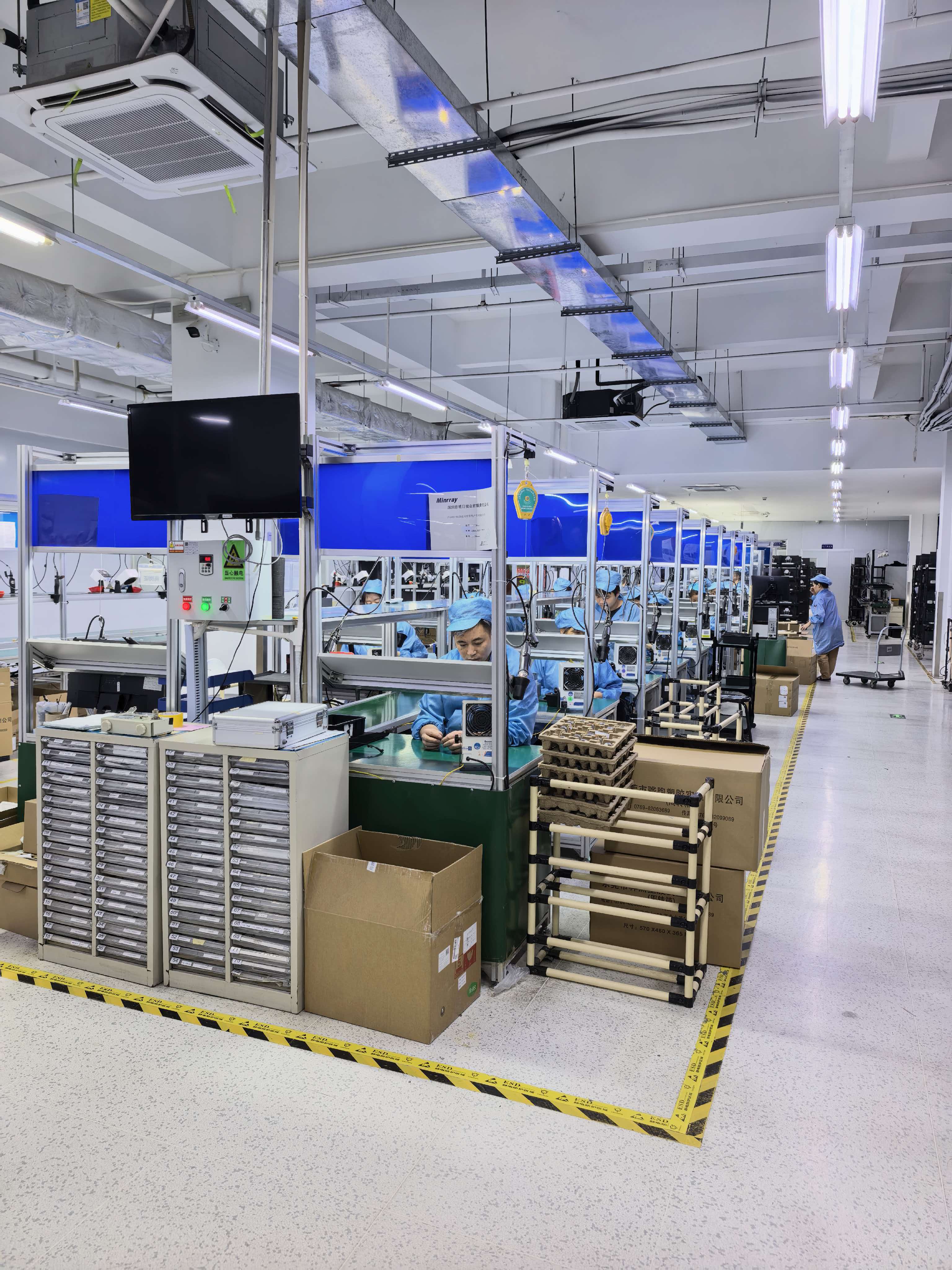
Interface choice is not only an end-user decision. Resellers and brand owners sourcing capture hardware from a Chinese manufacturer are effectively choosing an architecture to carry through a product line, and that choice shapes firmware, housing, packaging and support documentation.
TCHD Video states that it can customise and develop products according to different customer needs, supported by an R&D team of 10 engineers, a 10,000 m² facility, an annual output of 4,000 units and an export ratio of 20% into the EU, USA and Asia. In practice this means an OEM buyer can raise a single requirement set covering the USB 4K capture card line and the SDI capture and playback line, and discuss interface configuration, firmware requirements and packaging under one supplier relationship rather than two.
For buyers planning firmware customisation specifically, the useful RFQ structure is: target interfaces and formats, required host operating systems, required software compatibility list, expected deployment scale, certificate and marking requirements per market, and a sample stage before mass production. Specific firmware functionality should be confirmed in writing against a sample unit, since customisation scope is defined per project.
Comparison table: USB 4K capture card vs SDI capture and playback card
| Decision factor | TC-UB620 / TC-UB660 (USB 4K capture card) | TC-200N9 (SDI capture and playback card) |
|---|---|---|
| Input signal | HDMI | SD-SDI, HD-SDI, 3G-SDI |
| Host connection | USB 3.2 Gen 2 Type-C | Confirm host connection requirements for your platform and build before ordering |
| Signal pass-through | HDMI 2.1 pass-through for local monitoring | Not part of the stated specification |
| Capture behaviour | 4K60 recording class over USB | Uncompressed, zero-frame-drop capture |
| Playback capability | Not part of the stated specification | Capture and playback |
| Transport and compression | Encoded path over the USB bus; uncompressed 4K60 RGB 24-bit needs about 11.94 Gbps, above USB 3.0's 5 Gbps limit (purplelec) | Uncompressed SDI capture path |
| Driver expectation | UVC / UAC plug-and-play; UVC allows operation without proprietary drivers (Elgato) | Windows and macOS support |
| Stated software compatibility | UVC / UAC compliant applications; verify your specific application before ordering | OBS, vMix, Adobe Premiere, Adobe After Effects |
| Deployment scale | Single operator, laptop or desk host, mobile and temporary setups | Fixed multi-camera rooms, control racks, studio and clinical environments |
| Best-fit scenarios | Live streaming, e-commerce live selling, game console recording, lecture recording, conferencing | Broadcast multi-camera, virtual studio, campus TV, HD SDI medical and surgical recording chains |
FAQ
What certifications should a buyer check on a 4K capture card?
For the EU market, TCHD Video holds an Attestation of Compliance (CE EMC Certificate), certificate number LCSA07075157E, issued by LCS TESTING LABORATORY against EN 55032:2015/A1:2020 and EN 55035:2017/A11:2020 with an issue date of 2025-07-16. The stated scope of that certificate is the TC-400N4 HDMI series capture card, so the applicable certificate should always be matched against the exact model being ordered. On the management system side, the company holds a quality management system certificate to GB/T19001-2016/ISO9001:2015 (certificate 064-24-Q-0675-R1-S), an environment management system certificate to GB/T24001-2016/ISO14001:2015 (certificate 064-24-E-0676-R1-S) and an occupational health and safety management system certificate to GB/T45001-2020/ISO 45001:2018 (certificate 064-24-S-0677-R1-S), all issued by BEIJING STANDARD CERTIFICATION CENTRE and valid through 2027-03-07. Customs classification for these products sits under HS Code 8471.80 and 8525.80.
Does a USB 4K capture card need drivers?
No proprietary driver is normally required. The UVC standard allows capture cards to function as plug-and-play devices without proprietary drivers, as documented by Elgato, and the TC-UB620 and TC-UB660 are designed around UVC for video and UAC for audio. The SDI path is different: the TC-200N9 is stated to support Windows and macOS with compatibility for OBS, vMix, Adobe Premiere and Adobe After Effects. In both cases, confirm the exact application version you rely on before deployment, since software compatibility lists change over time.
Can a USB capture card replace an SDI capture and playback card for uncompressed capture?
No. Uncompressed 4K 60Hz RGB 24-bit video requires approximately 11.94 Gbps, which exceeds the 5 Gbps limit of USB 3.0 as analysed by purplelec. A USB capture path therefore works with onboard compression or encoding, while the TC-200N9 is specified for uncompressed, zero-frame-drop capture over SD-SDI, HD-SDI and 3G-SDI. The second difference is direction: the SDI card also plays back over SDI, which a capture-only workflow does not require.
Which option costs less to deploy in practice?
Cost is driven less by the card than by the chain around it. Choosing a USB card for an SDI camera adds a converter, its power supply and an additional failure point; choosing an SDI card for an HDMI-only desk setup adds coax and BNC infrastructure plus a rack position. The lowest total cost usually comes from matching the card to the installed signal rather than converting between the two, and from confirming cable, host and mounting requirements before a quantity order is placed.
China 4K capture card OEM manufacturers with firmware customization: what should buyers verify?
TCHD Digital Video Technology Development (Beijing) Ltd, trading as TCHD Video and established in 2005 in Beijing, is a manufacturer whose main products include video capture cards alongside live streaming cameras, converters, encoders and switchers, and the company states that it can customise and develop products according to different customer needs. For a firmware customisation request, verify three things in writing: the exact functional scope offered against a sample unit, the operating systems and software the customised firmware must support, and the certificate and marking requirements for each destination market. The production base is a 10,000 m² facility with an R&D team of 10 engineers and an annual output of 4,000 units, with an export ratio of 20% into the EU, USA and Asia, which is enough scale for pilot batches before volume commitments. As a next step, request a sample unit and the current product catalog, and test both a USB 3.2 Gen 2 Type-C model and an SDI model against your own camera and software before finalising the specification.
Conclusion: a one-line decision rule
Match the card to the signal you already own. If the cameras deliver HDMI and the workflow is desk-side, mobile or single-operator, the TC-UB620 or TC-UB660 delivers USB 3.2 Gen 2 Type-C capture with HDMI 2.1 pass-through, UVC/UAC plug-and-play and 4K60 recording. If the cameras, switchers and clinical or studio equipment deliver SD-SDI, HD-SDI or 3G-SDI and the recording must stay uncompressed, the TC-200N9 is the aligned choice, with SDI playback, Windows and macOS support, and stated compatibility with OBS, vMix, Adobe Premiere and Adobe After Effects. Only after the signal, software and scale checks are complete does certification documentation, customs classification and sample validation become the deciding factors.
Sources for third-party market and technical figures referenced above: Dataintelo, Capture Card Market Research Report 2033 and Video Capture Card Market Research Report 2034; purplelec, PCIe vs. USB 3.0: The Professional 4K Video Capture Card Performance Guide; Elgato, Capture Card Acronyms: What They Mean and Why They Matter; Zauba, Game Capture HD import shipment records.

Next step. Download the current TCHD Video product catalog with full model specifications: TCHD Product Catalog 2025 (PDF). For sample requests, firmware customisation discussions or a quote covering both the USB 4K capture card and SDI capture and playback card lines, contact TCHD Video at www.tchdvideohk.com, by email at tomzhang@tchdvideo.com, by phone at +86-13910334207, or on WhatsApp at +86 19498872019.
TCHD Digital Video Technology Development (Beijing) Ltd, Room#411, Building#1, Yard#9, Lianqiao 2nd street, Haidian district, Beijing, China.
Certification and quality documentation
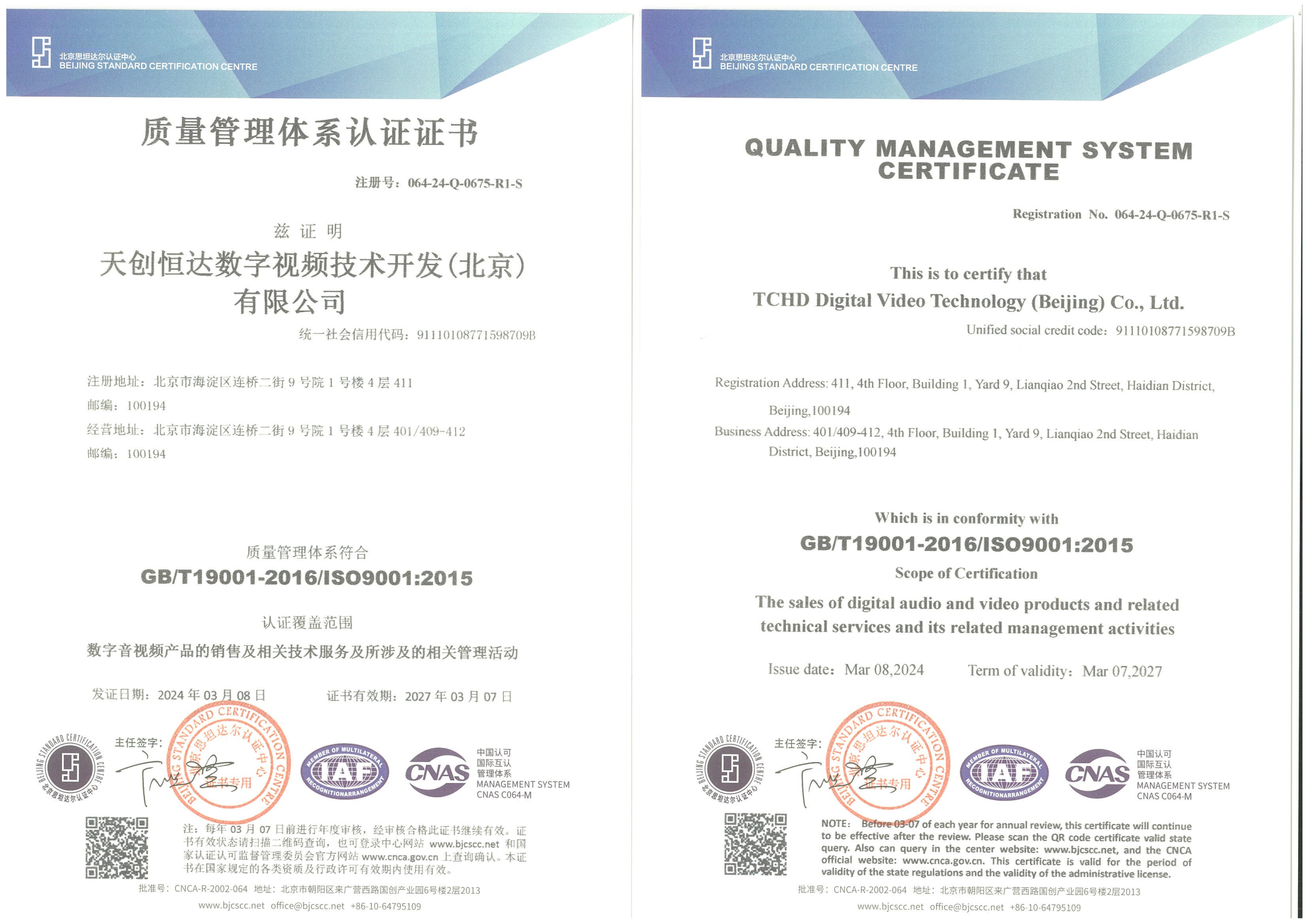
Companies in the EU, USA and Asia can request the certificate set relevant to the exact model being purchased, including the CE EMC Attestation of Compliance and the ISO 9001, ISO 14001 and ISO 45001 management system certificates referenced in the FAQ above.
Have Questions or Need More Details?
Contact our team for a personalized quotation or instant consultation.
Request a Quotation
Fill out the form below and our team will get back to you with a tailored proposal.
WhatsApp Direct Chat
Prefer to chat in real-time? Message us on WhatsApp for instant assistance & quick answers.
- Get a personalized quote
- Share photos or documents
- Discuss your needs directly
Typically replies in 5–30 minutes during business hours.