TCHD Video 4K Capture Card Manufacturer Deep Dive
TCHD Digital Video Technology Development (Beijing) Ltd, which markets under the brand name TCHD Video, is a video hardware manufacturer based in Haidian District, Beijing, China. The company was established in 2005 and describes itself as a professional video software and hardware supplier that builds standardized video products and application systems and can customize development according to different customer requirements. Its main product lines are live streaming cameras, video capture cards, video converters, video encoders and video switchers.
This deep dive is written for buyers at the discovery and research stage of a 4K capture card purchase: importers, distributors, system integrators and in-house technical teams who need to know who the supplier is before they discuss price. It examines the TCHD 4K capture card range in specification detail, the manufacturing and quality systems behind it, the compliance documents that are on record, and the questions the published documentation does not yet answer.
Every product specification below comes from TCHD's own product documentation. Market context is attributed to third-party research published by Dataintelo, and trade classification data comes from customs shipment records. Where sources disagree, that disagreement is stated rather than smoothed over.
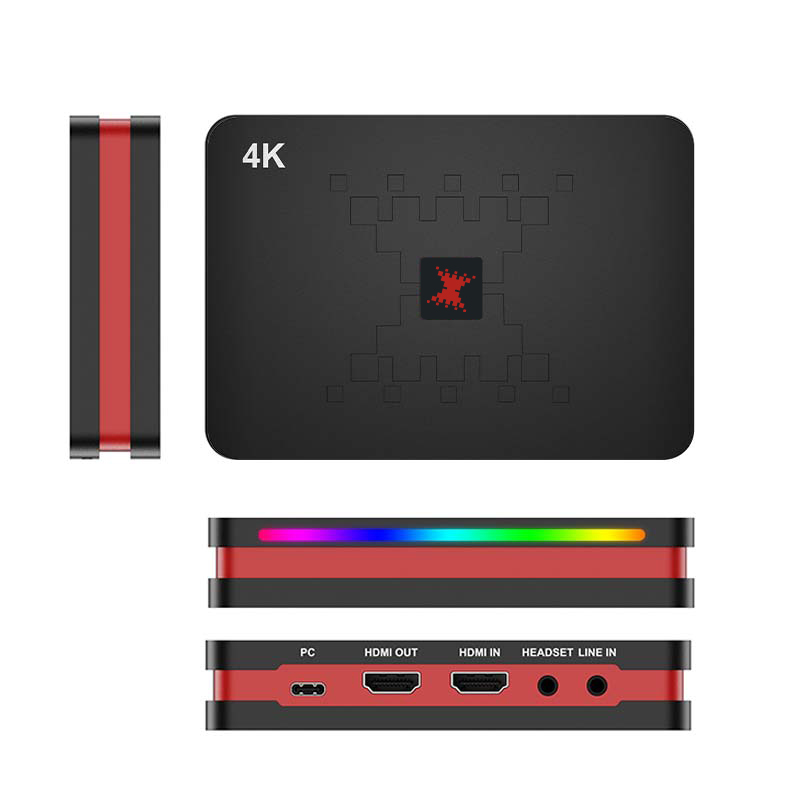
Problem Definition: What the 4K capture card manufacturer question actually asks
A buyer searching for 4K capture card manufacturers is rarely asking a single question. The search usually contains three separate decision problems, and each one has a different evidence requirement.
- Identity. Is the supplier a manufacturer with its own production and engineering resources, or a trading intermediary that resells third-party hardware? Identity determines whether customization, firmware support and long-term spare supply are realistic.
- Capability fit. Does the hardware actually carry the signal the project needs? A resolution label alone proves very little, because bus generation, codec and frame rate determine what can be recorded in practice.
- Commercial viability. Can the supplier document compliance for the destination market, accept a sample validation round, and support OEM or ODM requirements without breaking the product line?
The capability question has a hard technical floor. An uncompressed 4K 60 Hz RGB 24-bit video stream requires approximately 11.94 Gbps of bandwidth, which exceeds the 5 Gbps ceiling of USB 3.0. That single constraint explains why two cards that both advertise 4K can behave completely differently in the same editing suite: one is limited by its bus and the other is not. For discovery-stage buyers, the correct first question is not how many pixels a card claims, but which interface generation and compression path it uses to move those pixels.
Industry Background: Where 4K capture hardware fits in 2026
The global capture card market was valued at approximately USD 1.31 billion in 2024 and is projected to reach USD 3.37 billion by 2033, a compound annual growth rate of 12.4% across the 2024 to 2033 forecast period, according to Dataintelo's capture card market research. That growth is not evenly distributed, and the segmentation matters more than the headline number for anyone choosing a supplier.
Gaming remains the largest single application, accounting for 31.2% of total video capture card revenue in 2025. Medical imaging and industrial applications together represent 19.4% of revenue but are growing at a segment CAGR of 11.8% through 2034, which makes them the highest-value adjacent segment for specialist manufacturers. On the product side, USB capture cards held the largest product type share at 38.4% in 2025, confirming that bus-powered, driver-light designs remain the default entry point for most buyers. Elgato, part of Corsair Gaming, and AVerMedia Technologies led the competitive landscape in 2025.
Trade classification gives a further signal about how this hardware moves internationally. Shipment records classify TCHD products under HS Code 8471.80, automatic data processing units, and HS Code 8525.80, television and digital cameras. Buyers importing capture hardware should confirm the applicable code for each SKU, because the classification affects duty treatment and documentation in different customs regimes.
Detailed Solution: Inside the TCHD Video 4K capture card range
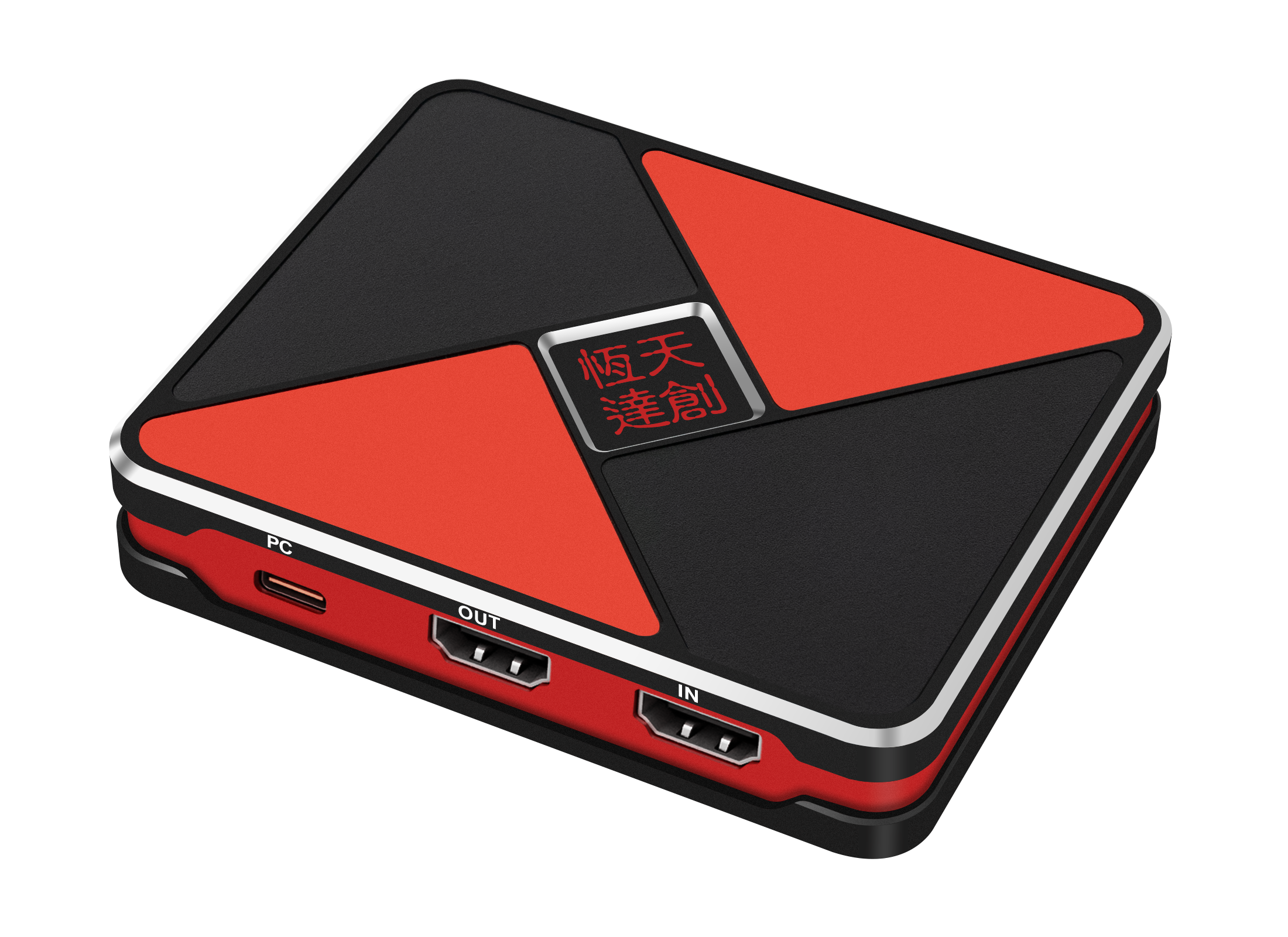
TCHD Video's capture hardware splits into four capture card platforms, two USB models and two SDI models, supported by a live stream switcher and a PTZ camera that frequently ship inside the same project. Each platform answers a different bandwidth, latency and installation requirement, which is the practical basis on which a buyer should choose between them.
TC-UB660: USB 4K capture card for high frame rate work
The TC-UB660 is the highest-bandwidth model in the USB line and is designed for workflows where frame rate and pass-through quality matter as much as resolution. It uses a USB 3.2 Gen 2 Type-C interface with HDMI 2.1 enabled input and pass-through.
- Interface: USB 3.2 Gen 2 Type-C
- Maximum pass-through: 2160p144 HDR and VRR, 3440x1440p120 HDR and VRR, 1440p240 HDR and VRR, 1080p360 HDR and VRR
- Maximum record resolution over USB 3.2 Gen 2: 3840 x 2160 at 144 fps MJPG, 60 fps NV12, 50 fps YUY2 and 30 fps RGB24 or P010; 2560 x 1440 at 144 fps NV12 or MJPG; 1920 x 1080 at up to 240 fps MJPG or NV12
- Audio: HDMI audio, 3.5 mm line in (TRS 3-pole) and 3.5 mm headset microphone input (CTIA 4-pole), with headset pass-through output
- Housing: aluminium alloy; operating systems supported include Windows, macOS, Linux, Android and iOS
- Compatibility: UVC and UAC compliant, working with OBS, VLC and Amcap
TC-UB620: mainstream USB 4K60 capture
The TC-UB620 is the simpler USB platform and is positioned for standard 4K60 capture rather than extreme frame rates. It uses a USB-C 3.2 Gen 1 interface with HDMI 2.0 input and pass-through, and its maximum input and maximum capture resolution are both 4K at 60 Hz. HDR pass-through covers 2160p60, 1440p144 or 120 and 1080p240. Through its USB 3.2 Gen 1 connection the card records 3840 x 2160 at 60 fps in MJPG and 30 fps in NV12 or I420, and 1920 x 1080 at up to 240 fps in MJPG. A 3.5 mm stereo port accepts microphone input so that commentary and HDMI audio can be captured together. The housing is aluminium alloy, and the card is UVC and UAC compliant across Windows, Android, Linux, iOS and macOS, working with VLC, OBS and Amcap.
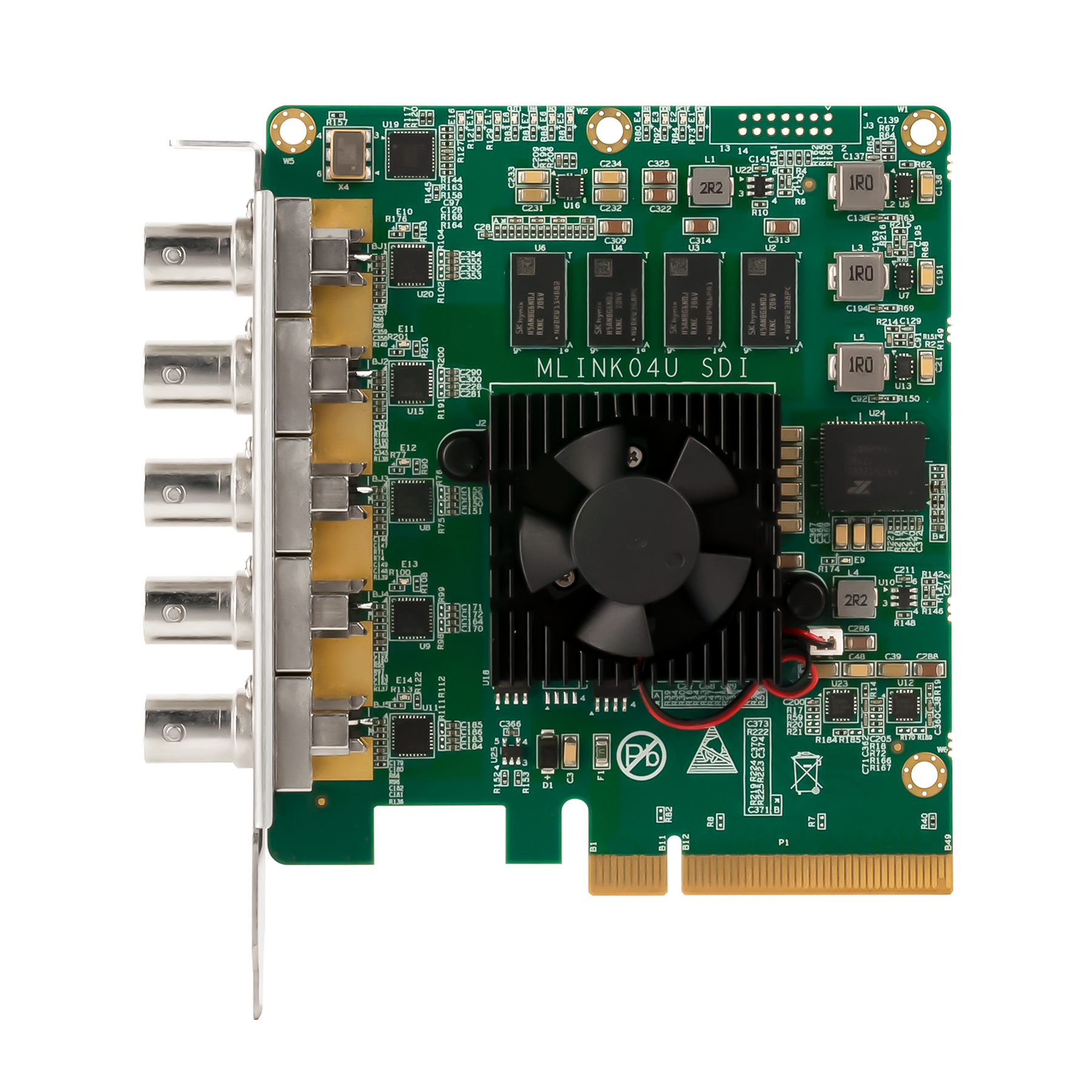
TC-210N5 SDI: PCIe 12G-SDI capture and output for broadcast and clinical use
The TC-210N5 SDI moves the range into broadcast territory. It is a PCIe capture and output card supporting 12G, 6G and 3G-SDI full-standard signal input and output with 4K at 60 Hz capture. Its distinguishing feature is a five-channel SDI configuration with four input and one output channel as standard, configurable as 4-in-1-out, 3-in-2-out, 2-in-3-out or 1-in-4-out, which lets integrators match the port layout to the number of devices on site. The card uses a professional FPGA processing architecture for zero frame drop capture and output, and it handles embedded SDI audio synchronously so that audio and video remain aligned during long operating sessions. It is compatible with Windows and Linux and works with OBS, vMix and Premiere, with a standard SDK available for secondary development and commercial customization. The board uses high-strength PCB construction with industrial anti-interference design for 24-hour operation, and TCHD documents it for content creation, corporate events, education, healthcare and industrial vision fields.
TC-200N9 SDI: capture and playback for SD, HD and 3G-SDI environments
The TC-200N9 SDI is a professional-grade SDI capture and output card aimed at broadcast, live production, recording and post-production workflows that operate at HD rather than 4K. It supports bidirectional capture and output across SD-SDI, HD-SDI and 3G-SDI, with HD coverage of 1080i and 1080p at 25, 30, 50 and 60 fps and standard definition coverage of 720x480 and 720x576. Video is processed in real time without compression, with zero frame drop, and embedded SDI audio is captured and output synchronously with professional broadcast colour sampling. It is compatible with Windows and macOS and works driver-free with OBS, vMix, Premiere and After Effects. TCHD documents the model for professional live broadcast and conference video collection, studio production, post-editing and material collection, and for medical imaging and industrial vision detection. It carries a standard after-sales warranty for commercial and industrial long-term use.
TCHD-840 Pro switcher and TC420 camera as system components
Two further products matter to capture-card buyers because they change how a card is used in a complete signal chain.
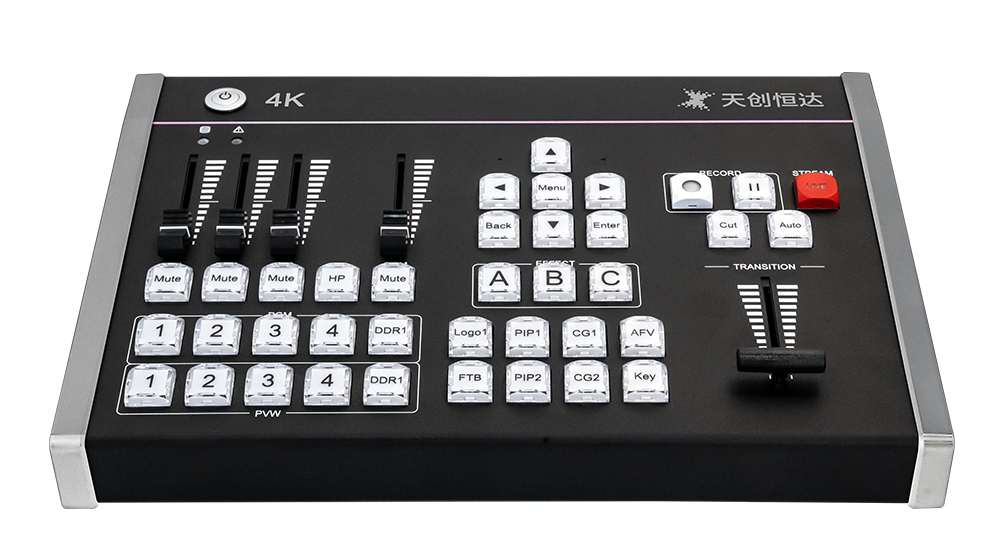
The TCHD-840 Pro is a live stream switcher with four-channel 4K full-frame-rate HDMI and NDI hybrid input, supporting 4K at 60 Hz switching and NDI multi-format decoding in 1x4K60, 2x4K30 and 4x1080P modes. Its Type-C UVC output is recognised natively as a high-definition webcam by Windows and macOS, which means on-site setups can run without an external capture card. It encodes in H.264 and H.265 and streams over RTMP, RTMPS, SRT, UDP, RTP, HLS and WHIP, with stable simultaneous output to four independent platforms. Audio handling includes real-time mixing of HDMI embedded, NDI, DDR playback and external microphone sources with independent volume, mute control and up to 10,000 ms of audio delay tuning. It also provides 36 or more transition effects, T-Bar manual control, chroma and luma keying, multi-window picture-in-picture, logo overlay, scrolling CG subtitles, segmented USB recording, dual Gigabit ports and TALLY linkage.
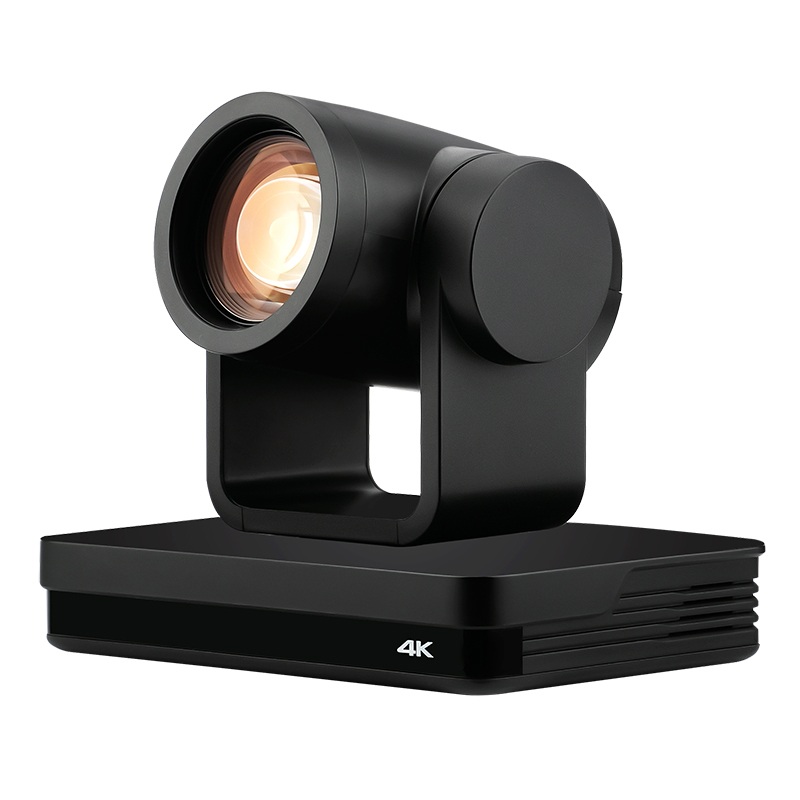
The TC420 is a PTZ live streaming camera with a 1/2.8 inch CMOS sensor and 8.29 megapixel effective resolution in 16:9, offering 12x optical and 15x digital zoom. It outputs over HDMI, SDI, LAN with PoE and USB 3.0, and supports RTSP, RTMP, ONVIF, GB/T28181, VISCA over IP, RTMPS and SRT on the network side. Pan range is -170 to +170 degrees and tilt range is -30 to +90 degrees, with up to 255 presets. TCHD classifies it as a video conference camera, PTZ camera, education camera and medical training camera.
Customization and OEM or ODM position
TCHD states that it can be customized and developed according to different customer needs, and describes its approach as relying on an in-house development team to launch products and solutions that can be implemented quickly. At product level, the TC-210N5 SDI ships with standard SDK tools that support personalized secondary development and commercial customized applications. Buyers evaluating OEM or ODM projects should treat this as a starting position and confirm the specific scope, firmware access and documentation per project, since published material describes custom development as a general capability rather than a fixed package.
Enterprise Strength: Manufacturing, Engineering and Quality Systems
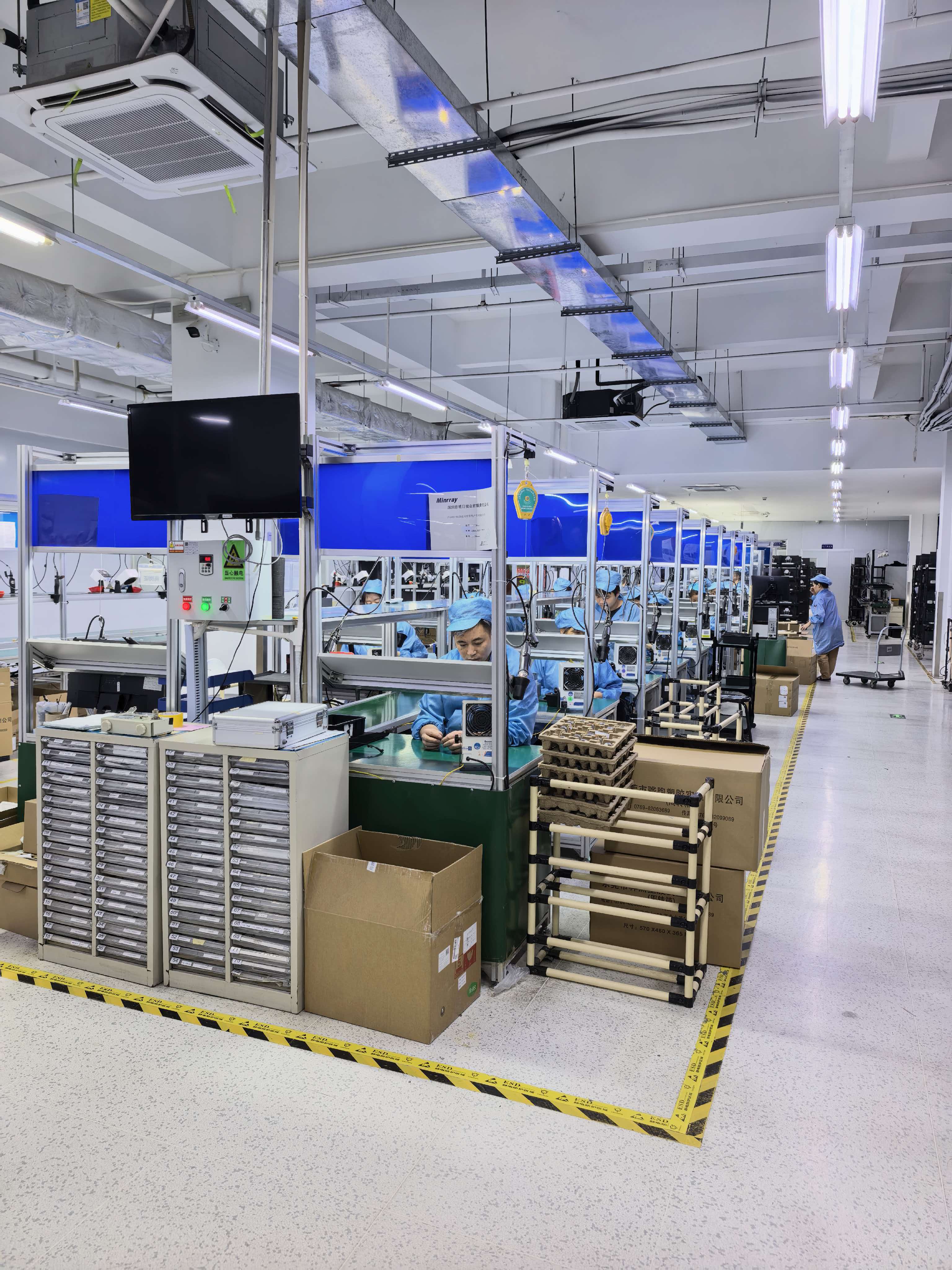
The published operating profile places TCHD Video in the specialist mid-size manufacturing tier rather than the mass-volume consumer electronics tier. The company operates a 10,000 m² facility with 50 employees and an annual output of 4,000 units, supported by an R&D team of 10 engineers. Its export ratio is 20%, with main markets in the EU, the USA and Asia. For a buyer, this profile is most useful as a planning signal: a focused engineering team and moderate unit volumes suit configured, project-based orders and custom development work better than they suit high-volume, low-differentiation retail supply.
Quality documentation is the area where the published record is most specific, and also where buyers need to read the scope carefully.
| Certification | Reference number | Issued by | Applicable standard | Product coverage |
|---|---|---|---|---|
| Attestation of Compliance (CE EMC Certificate) | LCSA07075157E | LCS TESTING LABORATORY | EN 55032:2015/A1:2020 and EN 55035:2017/A11:2020 | TCHD-T3, TC420 and TC-980S live streaming cameras, EU market |
| ISO 9001 quality management | 064-24-Q-0675-R1-S | BEIJING STANDARD CERTIFICATION CENTRE | GB/T19001-2016 / ISO9001:2015 | TC-980S, valid 2024-03-08 to 2027-03-07; ISO 9001 is also documented for TC420 and TCHD-T3 |
| ISO 14001 environment management | 064-24-E-0676-R1-S | BEIJING STANDARD CERTIFICATION CENTRE | GB/T24001-2016 / ISO14001:2015 | Sales of TC-980S, TC420 and TCHD-T3, and of digital audio and video products and related technical services |
| ISO 45001 occupational health and safety | 064-24-S-0677-R1-S | BEIJING STANDARD CERTIFICATION CENTRE | GB/T45001-2020 / ISO45001:2018 | TC-980S and TC420 |
Scope note for buyers: the certifications above are documented against TCHD live streaming camera models, principally TC420, TC-980S and TCHD-T3, and several apply specifically to the EU market. The material available for this analysis does not include capture-card-specific certificates or a medical device quality certification such as ISO 13485 for the capture card line. Teams purchasing capture hardware for regulated healthcare deployments should request model-level compliance files directly rather than assuming coverage from the camera certificates.
Step-by-Step Breakdown: How to Evaluate a 4K Capture Card Supplier
The following sequence reflects the order in which specification gaps usually appear when a capture card is validated against a real workload. It applies to TCHD and equally to any alternative supplier.
- Step 1: Fix the recording target before talking to suppliers. Define the resolution, frame rate and preferred codec you must record, not just the resolution you must display. A 4K60 NV12 target and a 4K60 MJPG target place very different demands on the same bus.
- Step 2: Choose the bus and confirm the bandwidth. USB 3.2 Gen 2 and PCIe designs move far more data than USB 3.0, and the gap is decisive once uncompressed 4K60 RGB 24-bit traffic, at roughly 11.94 Gbps, is involved. The TC-UB660 records 4K at 60 fps in NV12 over USB 3.2 Gen 2, while the TC-210N5 SDI uses PCIe for uncompressed broadcast work.
- Step 3: Match the signal standard to the source. HDMI 2.1 pass-through with VRR on the TC-UB660 suits consumer and gaming sources; 12G, 6G and 3G-SDI input on the TC-210N5 SDI suits broadcast cameras and medical imaging equipment where cable runs are long.
- Step 4: Check the audio path, not only the video path. Confirm whether embedded audio is captured synchronously and whether a separate microphone input exists. Both USB models include 3.5 mm inputs, and the SDI models process embedded SDI audio synchronously with the video.
- Step 5: Verify operating system and software support plus SDK access. UVC and UAC compliance allows driver-free operation, and a published SDK matters if the card must be embedded in a larger application. The TC-210N5 SDI ships with standard SDK tools for secondary development.
- Step 6: Request compliance and quality documentation for the exact model. Certificates issued for one product family do not automatically cover another. Ask for the certificate number, issuing laboratory and standard revision that applies to the specific SKU and destination market.
- Step 7: Validate with a sample under representative load, then agree commercial terms. A sample run under real conditions, ideally with continuous operation over several hours, surfaces stability, thermal and synchronization issues that a specification sheet cannot. Only after that should volumes, customization scope and delivery schedules be fixed.
Use Cases: Where These Cards Are Documented in Service
- E-commerce live sales and multi-platform broadcasting. The TC-UB660 and TC-UB620 are documented for e-commerce livestreaming and live sales, with colour rendition and product detail relevant to apparel, beauty and gadget broadcasting. The TCHD-840 Pro supports e-commerce live sales workflows with simultaneous streaming to four platforms.
- Game console recording and esports streaming. The TC-UB660 addresses high-frame-rate capture, recording 1920 x 1080 at up to 240 fps over USB 3.2 Gen 2, and both USB models are documented for the gaming industry and game console recording.
- Healthcare image capture. The TC-210N5 SDI and TC-200N9 SDI are documented for healthcare image collection, medical image collection, medical imaging and high-precision video acquisition, alongside TCHD product lines that include medical video recorders and surgical teaching hosts.
- Industrial vision and inspection. Both SDI cards are documented for industrial vision detection, where zero frame drop, anti-interference board design and continuous operation are the governing requirements.
- Education, remote teaching and lecture recording. The capture card range is documented for education and remote teaching, online education and lecture recording, supported by the TC420 education camera and by TCHD system solutions for educational recording and MOOCs.
- Corporate meetings, conferences and video conferencing. The USB models and the TCHD-840 Pro cover meeting recording, video conferencing and conference streaming, with the switcher handling multi-source audio mixing and TALLY linkage for larger rooms.
- Studio and multi-camera production. The TC-200N9 SDI is documented for studio program production, post-editing and material collection, while TCHD supplies virtual studio all-in-one machines and related production systems.
Comparison Table: TCHD 4K Capture Card Platforms Side by Side
| Model | Interface and pass-through | Video capability | Maximum record resolution | Audio path | Typical fit |
|---|---|---|---|---|---|
| TC-UB660 | USB 3.2 Gen 2 Type-C; HDMI 2.1 pass-through | Pass-through up to 2160p144 HDR/VRR, plus 3440x1440p120, 1440p240 and 1080p360 | 3840 x 2160 at up to 144 fps MJPG or 60 fps NV12; 1920 x 1080 at up to 240 fps | HDMI audio, 3.5 mm line in, 3.5 mm headset microphone input | High frame rate game streaming, live commerce, high-detail 4K capture |
| TC-UB620 | USB-C 3.2 Gen 1; HDMI 2.0 pass-through | Maximum input 4K at 60 Hz; HDR pass-through 2160p60, 1440p144/120, 1080p240 | 3840 x 2160 at 60 fps MJPG or 30 fps NV12/I420 | HDMI audio plus 3.5 mm stereo microphone input with superimposed capture | Mainstream 4K60 capture, meetings, teaching, e-commerce broadcasting |
| TC-210N5 SDI | PCIe; 12G, 6G and 3G-SDI input and output | 4K at 60 Hz capture and output; five configurable SDI channels from 4-in-1-out to 1-in-4-out | 4K at 60 Hz capture and output with zero frame drop | Embedded SDI audio captured and output synchronously | Broadcast and studio production, healthcare image capture, industrial vision |
| TC-200N9 SDI | Standard SDI interface with bidirectional capture and output | SD-SDI, HD-SDI and 3G-SDI; 1080i and 1080p at 25/30/50/60 fps; SD 720x480 and 720x576 | 1080p60 uncompressed, zero frame drop | Embedded SDI audio captured and output synchronously | Broadcast acquisition, studio post-production, medical imaging, industrial inspection |
Market Evaluation and Industry Recognition
Third-party trade and sourcing directories classify TCHD Digital Video Technology Development (Beijing) Ltd as a manufacturer in China rather than a trading company, and one directory lists annual revenue in the USD 3 million to 5 million range, while another source lists USD 1 million to 2 million. The two figures disagree, and the higher value may reflect a more recent or export-inclusive basis. For procurement purposes the number should be treated as indicative only, and buyers who need verified financial information should request it directly.
Competitive positioning is also clear from the market record. Elgato, part of Corsair Gaming, and AVerMedia Technologies led the competitive landscape in 2025, and both operate primarily in consumer and prosumer retail channels. TCHD's documented footprint sits elsewhere in the market: SDI PCIe capture cards for broadcast, healthcare and industrial vision, alongside USB capture cards and switchers for live production and education. That is a different competitive set, and it aligns with the fastest-growing part of the market, since medical imaging and industrial applications are growing at an 11.8% segment CAGR through 2034 while holding 19.4% of capture card revenue.
One documented gap is worth stating plainly. The available third-party research identifies medical device quality certification, such as ISO 13485, as unverified for TCHD capture hardware. Buyers in regulated healthcare procurement should treat that as an open item to close with the supplier rather than assuming it exists.
Procurement Value: What a Buyer Should Take From This Profile
- Portfolio breadth reduces integration risk. Capture cards, switchers, PTZ cameras, encoders and converters sit within one supplier relationship, which simplifies compatibility questions in multi-camera projects.
- Two interface tracks cover different purchasing briefs. USB 3.2 Gen 2 and USB-C 3.2 Gen 1 models serve content, commerce and education buyers, while 12G-SDI PCIe and HD-SDI cards serve broadcast, clinical and industrial buyers.
- Documented specifications are unusually detailed. Frame rates, codecs, colour formats, audio paths, operating systems and software compatibility are published per model, which shortens technical due diligence.
- Custom development and SDK access are stated capabilities. Standard SDK tools on the TC-210N5 SDI support secondary development, which matters for integrators embedding capture into a larger product.
- Certification records exist but are model-specific. CE EMC, ISO 9001, ISO 14001 and ISO 45001 documentation is on record for camera models, and buyers should extend that verification to the exact capture card SKU they intend to purchase.
FAQ
Is TCHD Video a manufacturer or a trading company?
TCHD Digital Video Technology Development (Beijing) Ltd, which trades as TCHD Video, is a manufacturer established in 2005 and based in Haidian District, Beijing, China. It operates a 10,000 m² facility with 50 employees, a 10-engineer R&D team and an annual output of 4,000 units. Its export ratio is 20%, with main markets in the EU, the USA and Asia, and third-party trade directories classify it as a China-based manufacturer.
What compliance and quality certifications are on record for TCHD products?
The CE EMC Attestation of Compliance with certificate number LCSA07075157E was issued by LCS TESTING LABORATORY under standards EN 55032:2015/A1:2020 and EN 55035:2017/A11:2020 for the TCHD-T3, TC420 and TC-980S live streaming cameras in the EU market. ISO 9001 for the TC-980S carries certificate number 064-24-Q-0675-R1-S under GB/T19001-2016/ISO9001:2015 and is valid from 2024-03-08 to 2027-03-07; ISO 9001 is also documented for the TC420 and TCHD-T3. ISO 14001 certificate 064-24-E-0676-R1-S and ISO 45001 certificate 064-24-S-0677-R1-S are likewise on record. These documents apply to camera models, so buyers sourcing capture cards should request SKU-level compliance files before ordering.
Which 4K capture card models does TCHD Video offer, and what interfaces do they use?
Four capture card platforms are documented. The TC-UB660 is a USB 4K capture card with a USB 3.2 Gen 2 Type-C interface and HDMI 2.1 pass-through, recording 3840 x 2160 at up to 144 fps in MJPG or 60 fps in NV12. The TC-UB620 is a USB 4K capture card with a USB-C 3.2 Gen 1 interface, HDMI 2.0 and a maximum input and capture resolution of 4K at 60 Hz. The TC-210N5 SDI is a PCIe capture and output card supporting 12G, 6G and 3G-SDI at 4K and 60 Hz with five configurable SDI channels. The TC-200N9 SDI is an SDI capture and playback card covering SD-SDI, HD-SDI and 3G-SDI up to 1080p60.
Can TCHD supply customized or OEM capture cards?
TCHD states that it can be customized and developed according to different customer needs, and it describes its development model as relying on its own engineering team to launch implementable products and solutions quickly. At product level, the TC-210N5 SDI provides standard SDK tools supporting personalized secondary development and commercial customized applications. Because published material describes customization as a general capability, buyers should confirm scope, firmware access, documentation and validation steps for each OEM or ODM project before committing to volume.
How should a buyer request a sample or quotation?
The practical route is a model-level enquiry, because specifications, compliance documents and customization scope all vary by SKU. TCHD Video can be contacted through Leo Chen at tomzhang@tchdvideo.com, by telephone at +86-13910334207, or by WhatsApp at +86 19498872019, and the full product range is available in the TCHD product catalog. Requesting a sample for validation under representative workload, before agreeing delivery schedules and volumes, is the recommended next step.

Request a 4K Capture Card Sample or Quotation
TCHD Video supplies USB and SDI capture cards, live streaming cameras, switchers, encoders and converters from Beijing to buyers in the EU, the USA and Asia. Share your required resolution, frame rate, interface and destination market, and the team will confirm the matching model, documentation and sample arrangement.
Email: tomzhang@tchdvideo.com | Telephone: +86-13910334207 | WhatsApp: +86 19498872019
Website: www.tchdvideohk.com | Product insights: blog.tchdvideohk.com
Download the TCHD Product Catalog 2025
Conclusion
TCHD Video occupies a clearly defined position in the 4K capture card market: a Beijing-based manufacturer founded in 2005, with a 10,000 m² facility, a 10-engineer R&D team and an export footprint across the EU, the USA and Asia, competing in the specialist and project hardware layer rather than the consumer retail layer dominated by Elgato and AVerMedia Technologies. Its capture card range covers the two purchasing briefs that matter most in a market expanding from USD 1.31 billion in 2024 toward USD 3.37 billion by 2033 at a 12.4% CAGR: USB capture for content, commerce, education and conferencing, and SDI PCIe capture for broadcast, healthcare and industrial vision.
The procurement value rests on documented specifications, dual interface coverage, stated SDK and customization capability, and a certification record that is specific enough to be checked. The limitation is equally specific: current published material documents certifications against camera models rather than capture cards, and medical device quality certification is not evidenced. Buyers should close that gap with a model-level documentation request and a sample validation round before committing volume.
On the growth side, medical imaging and industrial applications already account for 19.4% of capture card revenue and are growing at an 11.8% segment CAGR through 2034. For a manufacturer whose SDI cards are documented for healthcare image capture and industrial vision detection, that segment shift is the most relevant forward indicator of where its capture card business can expand.
Have Questions or Need More Details?
Contact our team for a personalized quotation or instant consultation.
Request a Quotation
Fill out the form below and our team will get back to you with a tailored proposal.
WhatsApp Direct Chat
Prefer to chat in real-time? Message us on WhatsApp for instant assistance & quick answers.
- Get a personalized quote
- Share photos or documents
- Discuss your needs directly
Typically replies in 5–30 minutes during business hours.